Recent transfer window activity has highlighted significant challenges at Everton Football Club, leading some observers to argue that the club’s ownership, The Friedkin Group (TFG), should solidify manager David Moyes’ position. Despite an otherwise encouraging start to the current season, a perceived lack of strategic investment in the playing squad, particularly in striking options, has drawn criticism and underscored the club’s historical struggles for consistent success.
Everton’s Historical Performance Context
Over the past three decades, Everton has typically finished in the mid-table of the Premier League, with an average position between 10th and 11th. The club’s standout season during this period was the 2004-05 campaign, where they secured fourth place. However, this achievement was characterized by a pragmatic, rather than prolific, style of play, with the team winning 18 of 38 matches and scoring an average of just 1.18 goals per game, finishing with a negative goal difference. Their total of 45 league goals that season was notably lower than their output in the most recent Premier League campaign.
The club’s worst league finishes in the same 30-year span have seen them narrowly avoid relegation on three occasions, reaching 17th place. Cup competitions have also yielded limited major silverware. Everton has reached the FA Cup final once in this period, a 2009 loss to Chelsea where they conceded after taking an early lead. Semi-final appearances have been infrequent, with the last coming in the 2015-16 season. The team has been eliminated in the third round of the FA Cup ten times over these decades.
In the EFL Cup, Everton’s best performance has been reaching the semi-finals twice, with the most recent instance also occurring a decade ago. European campaigns have been rare, with five such ventures over the last 30 years. Their most notable European runs concluded in the Round of 16, first in the 2014-15 season against Dinamo Kiev, and in the 2007-08 UEFA Cup, where they were eliminated by Fiorentina on penalties.
Deadline Day Criticisms and Squad Concerns
The recent transfer deadline day has been described as particularly challenging, leaving Everton with a perceived shortage of recognized attacking talent. Reports suggest the senior outfield squad numbers are limited, raising concerns about depth and options for manager David Moyes. The acquisition of Thierno Barry has been noted, but his classification as a primary striker has been questioned by some commentators.
This situation, according to critics, should paradoxically bolster Moyes’ standing within the club. The argument is that if the team falters, particularly given their otherwise positive start to the season, the responsibility should fall on those overseeing transfer strategy and the club’s ownership, The Friedkin Group.
The Friedkin Group’s Role and Moyes’ Future
The Friedkin Group has been credited with reducing club debt and overseeing the transition to a new stadium, the Hill Dickinson Stadium. The group is reportedly seeking further investment, leading to speculation about their long-term commitment to the club, with some suggesting they might consider a sale if profitable. Many fans, it is suggested, would welcome such a move.
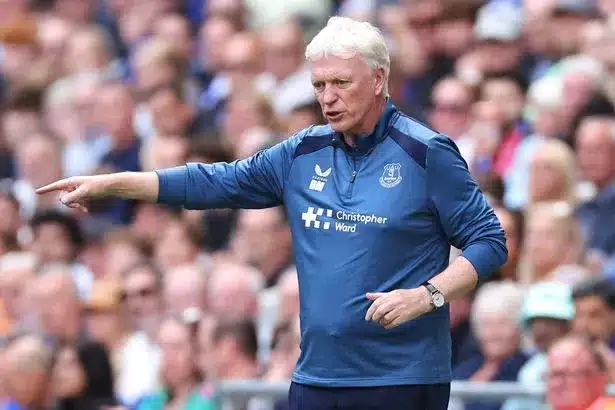
However, before any potential departure, it is strongly recommended that TFG offer David Moyes, aged 63, a contract extension. Despite the ongoing club challenges, Moyes is seen by some as the individual capable of elevating Everton. His perceived enthusiasm and refreshed approach, even amidst club difficulties, are highlighted. His current contract is set to expire at the end of the season, prompting calls for the owners to secure his future promptly.
Conclusion: A Case for Stability
While The Friedkin Group’s long-term vision for Everton remains a subject of discussion, the immediate focus for many appears to be on providing stability and support for David Moyes. The recent transfer window’s outcomes have, for some, reinforced the belief that Moyes possesses the capability to guide Everton towards greater success, potentially recapturing the heights of the mid-2000s. The prevailing sentiment among some observers is that strengthening Moyes’ managerial position, rather than dwelling on transfer window shortcomings, is the most prudent path forward for the club.