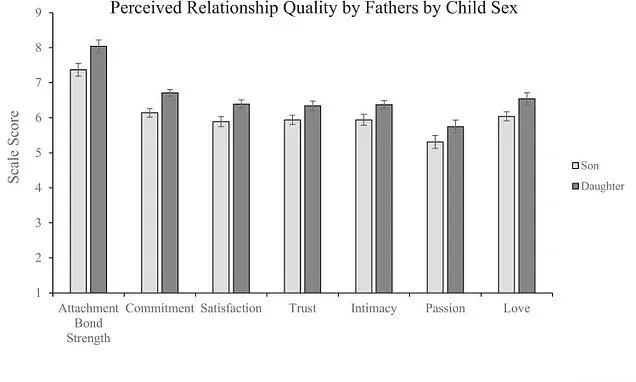
New research suggests that fathers who have daughters may exhibit greater levels of affection, commitment, and support within their romantic relationships compared to fathers of sons. This phenomenon, sometimes referred to as the ‘girl dad’ effect, appears to manifest early in a child’s life and may influence a father’s relationship dynamics significantly.
The ‘Girl Dad’ Effect: A Deeper Dive
A comprehensive analysis pooling data from three distinct studies involving 1,694 parents, spanning from pregnancy through several years post-birth, has shed light on this intriguing trend. The findings, published in the journal Personality and Individual Differences, indicate that fathers of daughters are more inclined to report a stronger emotional attachment to their partners. Furthermore, they tend to express higher levels of satisfaction within their relationships when compared to fathers of sons.
The impact isn’t solely on the father’s perception; mothers of daughters also reported experiencing more affection, encouragement, fairness, and overall support from their partners than mothers of boys. This suggests a reciprocal positive influence on the couple’s relationship stemming from the presence of a daughter.
Early Onset and Lasting Impact
Perhaps one of the most striking aspects of the study is the apparent immediacy of this effect. Fathers of daughters were more likely to report feeling a stronger connection and greater trust in their partners shortly after their child’s birth. This shift in relationship attitudes was observed to be quite noticeable, with fathers becoming more secure and demonstrably supportive of their partners.
The research also posited that the ‘girl dad’ effect might be most pronounced during the early years of a daughter’s life. This observation points to the crucial role fathers play in investing in both their child’s development and the health of their romantic partnership during these formative stages. Interestingly, mothers did not exhibit a similar pattern in relation to their children’s gender, suggesting this particular dynamic is unique to fathers.
Potential Explanations for the Phenomenon
Several theories attempt to explain why fathers of daughters might experience these shifts in relationship behavior. One prominent hypothesis suggests that fathers may instinctively recognize the importance of a stable and supportive partnership for their daughters’ future well-being. This awareness could motivate them to invest more deeply in their romantic relationships.
Another avenue explored by the researchers involves potential biological influences. It’s possible that having a daughter could trigger physiological changes, such as alterations in hormone levels, that naturally encourage nurturing instincts and strengthen pair-bonding behaviors. These biological shifts could contribute to a more affectionate and supportive demeanor.
Social factors also likely play a role. The presence of a daughter might evoke a heightened sense of protectiveness in fathers, consequently amplifying their perceived responsibility towards their family unit. This increased sense of duty could translate into more attentive and supportive actions within the partnership.
Expert Insights
Lead author Krystal Duarte commented on the study’s implications, stating, “Our findings suggest that daughters may do more than shape their fathers’ parenting. They may also strengthen fathers’ investment in their romantic relationships, making them more committed, supportive, and invested partners.” This highlights the profound, multifaceted impact daughters can have not only on their fathers’ roles as parents but also on their roles as romantic partners.
The Role of ‘Dad Jokes’ in Development
In a related but distinct area of research, the concept of ‘dad jokes’ has also been examined for its potential benefits. While often met with groans, these particular forms of humor may serve a valuable purpose in a child’s development. Marc Hye–Knudsen, a researcher specializing in humor at Aarhus University, suggests that ‘dad jokes’ can be an important tool for teaching children resilience and emotional regulation.
According to Hye–Knudsen, fathers who employ these playfully embarrassing jokes are, in essence, teaching their children how to handle minor social discomforts without overreacting. By gently teasing their children’s egos, fathers can help build resilience, enabling children to withstand mild forms of embarrassment or negative emotion. This process, he explains, can foster impulse control and improve emotional regulation skills.
The researcher posits that these seemingly simple jokes act as a pedagogical tool. By consistently delivering humor that is intentionally “bad” or embarrassing, fathers may be pushing their children’s boundaries for handling social awkwardness. This teaches children a valuable lesson: that experiencing embarrassment is not a catastrophic event, thereby enhancing their capacity to cope with such situations in the future.
Conclusion: A Multifaceted Influence
The research on the ‘girl dad’ effect underscores the significant and often subtle ways in which children can influence their parents’ behavior and relationship dynamics. While fathers of daughters appear to demonstrate increased relational investment, the broader impact of fatherhood, including the unique communication style of ‘dad jokes,’ contributes to a child’s emotional and social development. These findings offer a deeper understanding of the complex interplay between family roles, gender, and relationship satisfaction.