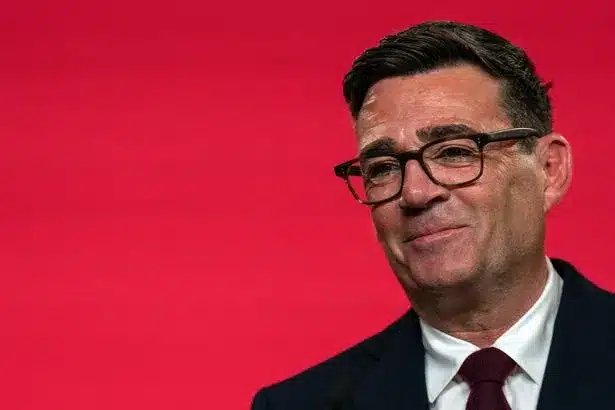
Andy Burnham is set to outline his national vision shortly after assuming the role of Prime Minister. Following his official entry into Downing Street, the new Labour leader faces a series of immediate tasks, including forming his Cabinet and receiving critical national security and economic briefings. Beyond the initial ceremonial duties, he inherits a landscape fraught with complex issues and pressing challenges that demand urgent attention.
Assembling the New Cabinet
A primary task for Prime Minister Burnham will be the swift formation of his Cabinet. Speculation has been rife regarding key positions, particularly the Chancellor of the Exchequer. While details have been closely guarded, anticipated appointments include prominent Labour figures such as Ed Miliband, Shabana Mahmood, and Yvette Cooper. The return of senior party members like former Deputy Prime Minister Angela Rayner and Louise Haigh, a close ally of Burnham, is also expected. The process of selecting a Cabinet, however, carries the inherent risk of alienating those who do not receive appointments, potentially creating internal friction within the party.
Addressing the Cost of Living Crisis
The escalating cost of living is poised to be a central focus for the new administration. Burnham has indicated a commitment to providing immediate relief to households struggling with rising expenses. Allies have suggested a focus on early policy wins designed to ease financial pressures. Miatta Fahnbulleh, an advisor to Burnham, has emphasized the need to address the cost of living as a top priority to offer respite to the public. While the exact mechanisms for tackling issues like increased energy bills remain to be detailed, potential measures, such as a reported £130 annual reduction in energy bills, are being considered to alleviate the burden on households.
Navigating the Thames Water Situation
The future of the crisis-hit Thames Water presents an early test for the new Prime Minister. Concerns have been raised by the Environment Secretary, Emma Reynolds, regarding the adequacy of current plans to support the struggling utility company and protect its customers. Reports suggest the Burnham government might explore placing the firm into a special administration. Burnham himself has previously stated that public ownership of water companies should be considered a viable option. His deputy has also voiced criticism of water privatization, citing rising bills and a lack of market competition.
Preparing for the Labour Party Conference
The annual Labour Party conference, scheduled for late September in Liverpool, will serve as a critical platform for Prime Minister Burnham to articulate his vision. The event, however, presents potential pitfalls, with party activists and ambitious MPs in attendance. Last year’s conference was marked by speculation surrounding leadership, partly fueled by an interview given by Burnham himself, which highlighted his own aspirations. This year, he will address the conference not just as Labour leader but as Prime Minister, necessitating careful messaging and strategic preparation.
Managing International Relations
Global volatility and international relations, particularly with the United States, will require immediate attention. The relationship between the UK and the US has been subject to tension, influenced by geopolitical events. Establishing a constructive relationship between Prime Minister Burnham and the US President will be a priority, with an initial call expected soon after Burnham takes office. Furthermore, the new administration will need to reschedule a significant UK-EU summit that was postponed due to domestic political instability.
Reforming Sickness and Disability Benefits
The government will need to address the complexities surrounding sickness and disability benefits. Burnham has signaled an intention to diverge from previous approaches, particularly regarding controversial plans to reduce Personal Independence Payments (PIP). Following a significant party rebellion against such cuts, Burnham has ruled out “cruel cuts” and will likely scrutinize the findings of a review into PIP reform, led by Sir Stephen Timms, expected in the autumn.
Addressing Youth Unemployment
Supporting the over one million young people not in education, employment, or training (NEETs) is another pressing issue. A review led by former Labour Cabinet minister Alan Milburn is set to deliver recommendations in the autumn to tackle this “urgent national crisis.” The government will closely examine these proposals, which may have financial implications for the Treasury.
The Greater Manchester Mayoral By-election
An early electoral test awaits Prime Minister Burnham with the Greater Manchester Mayoral by-election, scheduled just ten days after his assumption of office. This election was triggered by Burnham’s own resignation from the mayoral post to enter Parliament and contend for leadership. While Reform UK had hoped to influence the outcome, their focus has reportedly shifted to other campaigns, and recent polling suggests the Labour candidate is positioned for a comfortable victory, potentially offering an early point of relief for the new government.
The Autumn Budget and Defence Investment
The first Budget under the Burnham government will be a significant undertaking. While immediate cost-of-living measures are anticipated for the summer, the focus will soon shift to the Budget’s broader fiscal planning. A key challenge will be addressing a £4.7 billion shortfall in the defence investment plan inherited from the previous administration. Burnham has committed to Labour’s manifesto pledge not to increase income tax, national insurance, or VAT for working people. However, he has not ruled out a wealth tax or increased taxes on specific assets, such as empty commercial properties or large warehouses.
Internal Party Cohesion and Immigration Policy
Prime Minister Burnham has expressed a desire to eliminate internal party conflicts and the “insidious briefing culture” within the Labour party, a considerable challenge given the large number of MPs. Disagreements over Home Secretary Shabana Mahmood’s proposed immigration reforms have already emerged, with a significant number of Labour MPs voicing concerns, particularly regarding retrospective changes to indefinite leave to remain. The choices made in Cabinet appointments could also lead to early difficulties.
North Sea Oil and Gas Decisions
The government faces a critical decision regarding new drilling for oil and gas in the North Sea, specifically concerning the Rosebank and Jackdaw fields. Industry unions have urged support for North Sea oil and gas, while environmental campaigners warn against adhering to fossil fuel agendas and argue that such developments will not lower energy bills. Reports indicate Burnham is preparing to announce new drilling, a decision that could spark significant backlash from within his own party, potentially becoming one of the first major flashpoints of his premiership.
Conclusion
As Andy Burnham steps into the role of Prime Minister, he confronts a complex array of domestic and international challenges. From managing the economy and addressing the cost of living to navigating internal party dynamics and making critical environmental and foreign policy decisions, his early premiership will be defined by his ability to effectively tackle these multifaceted issues.