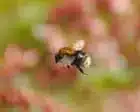
A garden enthusiast’s attempt to welcome a new hedgehog resident led to a surprising discovery, revealing a bustling colony of tree bumblebees instead of the expected prickly visitor. The incident, which occurred in a secluded corner of a garden, highlights the unexpected ways nature reclaims spaces and the fascinating defense mechanisms of insects.
A Welcome Return to the Garden
After a somber period where visiting hedgehogs were lost to traffic, the garden was finally showing signs of renewed life. Fresh droppings, identifiable by the glistening fragments of insect exoskeletons, indicated that a hedgehog had returned. Nighttime camera footage confirmed the presence of a healthy adult hedgehog, marked by a distinctive arrowhead shape on its rump.
Eager to encourage the new arrival, the garden owner decided to clean out the hedgehog house – a specially built shelter designed to provide a safe haven. This structure, previously occupied by a large house spider, was filled with compressed barley straw and dried leaves, forming a robust sphere. The plan was to refresh the bedding and make the house more inviting.
An Unexpected Encounter
As the owner tentatively used a bamboo cane to prod the contents of the hedgehog house, a sudden, sharp sound erupted. Initially mistaken for the defensive huffing of a threatened hedgehog, the noise was, in fact, a high-pitched, snake-like hiss. This startling sound intensified, prompting the owner to recoil.
Before the source of the sound could be fully identified, a swarm of ginger-colored tree bumblebees (Bombus hypnorum) emerged from the shelter, flying directly towards the surprised observer. While bumblebees are generally known for their placid nature, tree bumblebees have a reputation for aggressively defending their nests.
The Reality of Tree Bumblebee Defenses
Contrary to their reputation for fierce defense, the tree bumblebees’ response was surprisingly measured. Although several bees hovered near the owner’s head and gently bumped against exposed skin as a warning, only one bee actively pursued the individual as they retreated across the lawn. Fortunately, the retreat was successful, and no stings were sustained.
The peculiar hissing sound was later identified as a unique defense mechanism employed by the tree bumblebees. Workers vibrate their flight muscles without actually flying, producing a sound that includes strong ultrasonic signals. This noise is believed to deter nest-raiding mice, which are attracted to the protein-rich bee brood. The vibration is triggered by external disturbances, such as the probing of the nest, and the carbon dioxide present in mammalian breath.
Understanding the Hiss
From the perspective of the tree bumblebees, the garden owner’s actions – probing the nest and exhaling carbon dioxide – would have signaled a clear threat. The ultrasonic hiss serves as an auditory warning, designed to make potential predators, like mice, reconsider their approach. This natural defense strategy, while startling to humans, is a crucial element of the bees’ survival and the protection of their colony.
Nature’s Surprises in the Garden
The incident serves as a vivid reminder of the diverse and often surprising life that exists within our gardens. What was intended as a sanctuary for one creature became a thriving home for another, demonstrating the adaptability of wildlife. The tree bumblebee’s nest, hidden within what was thought to be an empty hedgehog house, underscores the importance of observing wildlife from a safe distance and respecting their habitats.
This encounter also sheds light on the specific adaptations of the tree bumblebee. Their ability to produce ultrasonic sounds for defense is a sophisticated evolutionary trait. While the initial shock of the hissing and the swarm was considerable, the experience ultimately provided valuable insight into the natural world, transforming a potentially dangerous situation into an educational moment about insect behavior and garden ecology.
Conclusion: A Shared Garden Space
The garden owner’s initial disappointment at not finding a hedgehog was quickly replaced by fascination with the industrious tree bumblebee colony. This unexpected discovery highlights how different species can utilize the same spaces, sometimes in surprising ways. It’s a testament to the resilience of nature and the intricate relationships that unfold in even the smallest of environments. While the hedgehog house remains a potential future home for its intended occupants, it has, for now, served a vital role in supporting a thriving bumblebee community, complete with its own unique methods of protection.