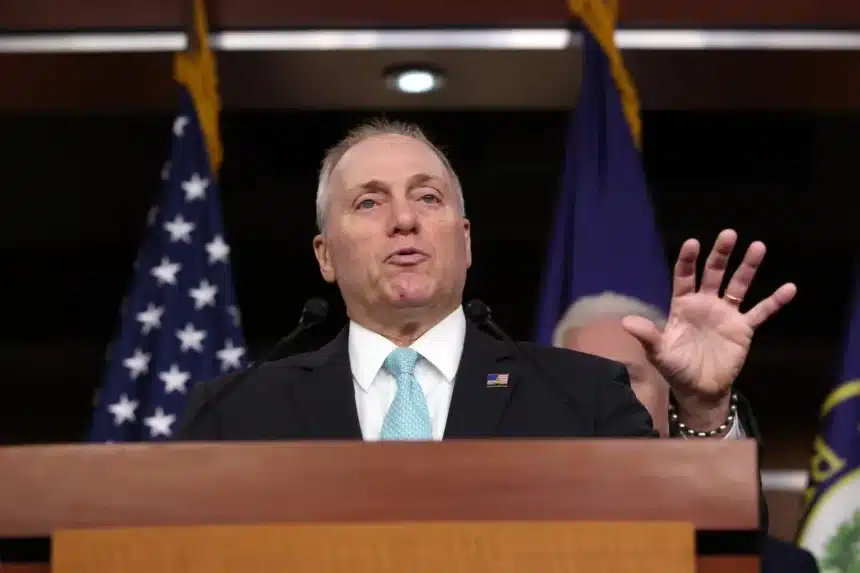
A prominent Republican lawmaker recently drew a parallel between purchasing a popular restaurant deal and the requirement to present photo identification for voting, highlighting a key argument in the ongoing debate over election integrity measures. House Majority Leader Steve Scalise used the example of needing an ID to redeem Olive Garden’s “Never-Ending Pasta Pass” to question why a similar identification requirement isn’t in place for casting a ballot.
The Olive Garden Comparison and Election Reform
During an interview with CNBC, Scalise, a key figure in the Republican party, was discussing the SAVE America Act, a legislative proposal that includes provisions for enhanced voter identification. He stated, “For God’s sake, you can’t go get pasta at Olive Garden without a picture ID. Why not be able to show a picture ID to vote?” The Louisiana representative was referring to the restaurant chain’s limited-time offer, which requires customers to present a photo ID matching the name on the pass to access unlimited pasta, breadsticks, soup, and salad for a set period. This promotion was recently revived after a six-year absence, becoming available to a limited number of customers.
This analogy aligns with a broader strategy employed by many Republicans, who frequently cite everyday scenarios where identification is mandatory to advocate for similar requirements in the voting process. The underlying message is that if identification is necessary for common transactions, it should also be a prerequisite for participating in elections to ensure security and prevent fraud.
Broader Republican Arguments for Voter ID
Scalise’s comparison is part of a wider Republican push for election reforms, often framed as common-sense measures to bolster election security. Other lawmakers have echoed similar sentiments, drawing parallels to various daily activities:
- Air Travel: Scalise himself noted in the same interview that travelers must show identification to board an airplane, posing the question, “Shouldn’t you show an ID to vote?”
- Retail Purchases: Montana Representative Ryan Zinke remarked on NewsMax that an ID is required to shop at places like Costco.
- Alcohol Purchases: Wisconsin Representative Brian Steil pointed out in a Fox News appearance that he needed to show his ID to buy a six-pack of beer, lamenting, “I just think it’s nuts that we protect our beer more than our ballots.”
These examples underscore the Republican perspective that requiring photo identification to vote is a reasonable and consistent measure, mirroring requirements in many other aspects of adult life.
Democratic Counterarguments and Concerns
Conversely, Democrats and opponents of such measures argue that the SAVE America Act and similar proposals address a problem that is exceedingly rare. They contend that widespread voter fraud is uncommon and that the proposed legislation could create unnecessary hurdles for eligible voters, potentially suppressing turnout. Critics also view these measures as a response to former President Donald Trump’s unsubstantiated claims of widespread fraud in the 2020 election.
Senate Minority Leader Chuck Schumer has been a vocal critic, denouncing the SAVE America Act as “one of the most despicable pieces of legislation” he has encountered, labeling it a “voter suppression bill.” He suggested that such legislation is motivated by a desire to protect Republican seats in upcoming elections.
Internal Republican and Senate Opposition
The debate over voter ID laws is not confined strictly to partisan lines. Some Republicans have also expressed reservations or outright opposition to the SAVE America Act. Senator Lisa Murkowski of Alaska, for instance, articulated her stance in an op-ed for The Wall Street Journal, stating that the bill, as written, “isn’t a simple fix to safeguard elections.” She argued that it would impose significant new barriers and could disenfranchise voters, particularly in rural areas. Murkowski specifically highlighted concerns that the bill could effectively eliminate online voter registration, forcing residents in remote locations to travel considerable distances and incur substantial costs simply to register.
The legislative path for the SAVE America Act in the Senate appears challenging. Senate Majority Leader John Thune has acknowledged that there are insufficient votes to overcome a filibuster, indicating a significant hurdle to its passage.
Public Opinion and the Path Forward
Former President Trump has consistently maintained that election integrity is a paramount issue, asserting on social media that “America’s Elections are Rigged, Stolen, and a Laughingstock all over the World.” He has framed fixing the electoral system as essential for the nation’s survival.
Public sentiment on the SAVE America Act remains divided. A survey conducted in May indicated that while 37 percent of Americans support the bill, 21 percent oppose it. A significant portion, 42 percent, expressed neutrality or uncertainty regarding their stance.
The discussion, ignited by comparisons to everyday conveniences like enjoying a pasta meal, underscores the deep divisions and differing priorities surrounding election security and voter access in the United States. As legislative efforts continue, the debate over the necessity and impact of voter identification requirements is likely to persist.