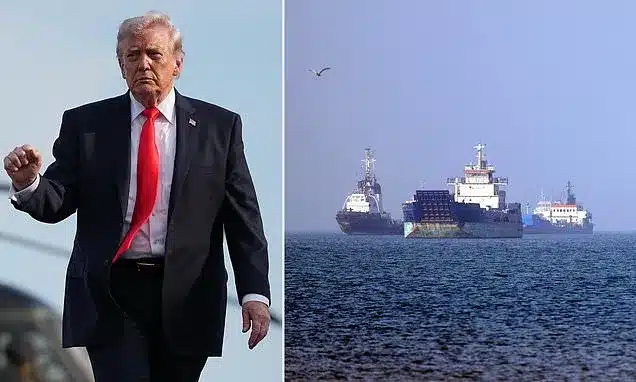
President Trump has pledged to reopen the Strait of Hormuz, a critical chokepoint for global energy and fertilizer shipments. On Sunday, he announced that the US Navy, supported by 100 aircraft, would launch Operation Freedom to release over 2,000 ships and 20,000 crew members currently trapped in the Persian Gulf. The operation aimed to dismantle Iran’s blockade, but visible progress remains limited so far.
Strategic Risks for US Forces
A direct strike by Iran on a US vessel could spark domestic backlash in America, potentially compelling a naval withdrawal. Despite these dangers, the standoff offers leverage as Iran’s economy deteriorates under prolonged sanctions and blockades.
Iran’s Mounting Economic Pressures
Iran grapples with rampant inflation, severe shortages, and plummeting oil exports due to the US shipping blockade. Tehran confronts a looming currency crisis, prompting unconventional export tactics such as small tanker fleets smuggling oil across the Pakistan border and tanker trains traversing Central Asia to China.
Without restoring normal oil flows through the Kharg Island terminal soon, Iran risks exhausting storage capacity. Oil wells could require sealing, with potential permanent damage from water ingress. While munitions stockpiles appear ample, cash shortages threaten military loyalty, as unpaid troops have historically mutinied.
Popular unrest simmers, echoing January protests that authorities quelled harshly. Tehran’s negotiation stance consistently demands sanction relief, underscoring economic vulnerability.
Tehran’s Defiance and US Challenges
Iranian leaders believe they can endure the blockade and retain control of the strait amid US naval presence. Rising US fuel prices add pressure on President Trump, mirroring hardships faced by Iranians.
Should the strait remain closed, Trump confronts tough options, including intensified airstrikes. US forces have repositioned the USS George H.W. Bush carrier to the Red Sea, alongside amphibious carriers transporting up to 15,000 Marines and missile destroyers near Iran’s coast. Prior airstrike campaigns have yet to break the blockade.
Global Ripple Effects
Extended conflict risks a worldwide energy crunch and recession, pressuring US allies to choose between backing Trump or negotiating independently with Iran. Tensions with European partners could provide cover for de-escalation, allowing Trump to claim partial success amid political constraints.
Historical Echoes and Time Constraints
The scenario evokes the 1956 Suez Crisis, where Britain, France, and Israel failed to seize the canal, prompting Winston Churchill’s reflection on the perils of starting and stopping such ventures. Trump displays Churchill’s bust in the Oval Office.
With midterm elections and economic downturns approaching, time favors neither side, transforming what began as a limited operation into a pivotal test of resolve.