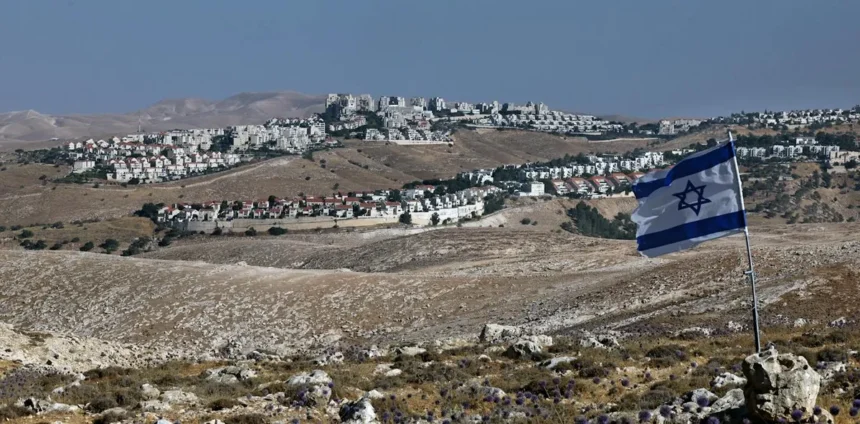
New Zealand has opted not to follow the United Kingdom’s lead in imposing sanctions on goods originating from Israeli settlements in the Occupied Palestinian Territories. This decision contrasts with the actions of 12 other nations, including France and Canada, which have either enacted or signaled their intent to implement similar trade restrictions. The primary objective behind these measures is to preserve the possibility of a future two-state solution for Israel and Palestine.
UK’s Rationale for Sanctions
The UK’s Foreign Secretary, David Miliband, articulated the rationale for the sanctions, describing the situation as involving the “ethnic cleansing of Palestinians […] perpetrated by settler terrorists,” with the Israeli military allegedly being “complicit” in these acts. While acknowledging the increase in illegal settlements, a spokesperson for New Zealand’s Foreign Affairs Minister, Winston Peters, stated that New Zealand “has not traditionally used trade measures to address foreign policy issues.” The spokesperson added that implementing such measures would be complex, necessitate a thorough policy review, and could not realistically be completed before the upcoming election.
Questioning New Zealand’s Official Response
New Zealand’s official position can be challenged on several fronts. Firstly, the country has indeed utilized trade measures for foreign policy objectives in the past. A notable example is the imposition of sanctions against Russia following its invasion of Ukraine, which included prohibitions on gold, oil, and gas imports, alongside a 35% tariff on all Russian goods. Secondly, while New Zealand requires specific legislation to enact sanctions outside the United Nations framework, the swift passage of the Russian Sanctions Act in 2022, just three weeks after the invasion, demonstrates the government’s capacity to act decisively when deemed necessary. Although the UK has conceded that the precise implementation of sanctions can be intricate, the author argues that the political will and intent are paramount.
Furthermore, the proximity of a general election should not preclude New Zealand from upholding its international legal obligations. This is particularly relevant given that the opposition Labour Party has expressed strong support for adopting such sanctions, suggesting that political consensus might be achievable.
The Two-State Solution and International Law
Israel’s occupation of the West Bank, including East Jerusalem, commenced in 1967 and has been repeatedly characterized as a “flagrant violation of international law” by UN bodies. In 2024, the International Court of Justice affirmed that Israel’s actions constitute an illegal annexation of territory, contravening the prohibition on the use of force and the Palestinian people’s right to self-determination.
Despite these international legal pronouncements, Israel has established approximately 160 settlements housing around 700,000 individuals since 1967. Recent reports from the UN Office for the Coordination of Humanitarian Affairs indicate that over 300 Palestinians have been killed by Israeli soldiers or settlers in the past 18 months, with more than 6,000 Palestinians displaced during the same period. Concurrently, 20 Israelis have been killed by Palestinians.
Specific settlement plans, such as the proposed construction of 3,000 homes east of occupied East Jerusalem in the E1 area, have drawn significant criticism. This plan, announced by Israeli Finance Minister Bezalel Smotrich, is seen as a move that would effectively divide the West Bank and isolate East Jerusalem, which Palestinians consider their capital. Smotrich himself has stated that the E1 settlement plan “buries the idea of a Palestinian state.” In August of the current year, Israel opened tenders for 1,200 settlement homes, a development that directly preceded the UK’s sanctions response.
Broader Implications and International Obligations
The UK sanctions extend beyond previous, more limited measures, such as arms export restrictions and targeted sanctions against individual settlers and ministers. They also surpass the UK’s recognition of Palestine as a state in 2025. While broader trade relations between the UK and Israel remain unaffected, Israel has reacted strongly, closing the British consulate in Jerusalem and barring 12 British Members of Parliament from entering the country.
Under customary international law, all states have a duty to cooperate in ending serious breaches of fundamental legal principles, including the prohibition of the use of force, illegal occupation, and the violation of the right to self-determination. The International Court of Justice’s 2024 advisory opinion explicitly underscored this obligation, urging states not to recognize Israel’s illegal presence in the Occupied Palestinian Territories and to “abstain from entering into economic or trade dealings with Israel” concerning these territories.
By aligning with the UK and other nations in sanctioning goods from illegal settlements, New Zealand would be fulfilling its international legal obligations. Remaining an outlier, particularly given its previous recognition of Palestine as a state by 157 countries, including Australia and most European nations, risks undermining the international rules-based order. This order is crucial for New Zealand’s own interests in trade, security, and environmental protection, especially during a period of significant global strain.
Conclusion: Strengthening the Rules-Based Order
Adopting similar sanctions would not diminish Israel’s status as a state but would instead bolster the global response to its illegal activities. It would position New Zealand as a leader in the region and reaffirm its commitment to the international rules-based order. This action is presented as a means for New Zealand to align its foreign policy with its international legal duties and to contribute to a more stable and just international system.