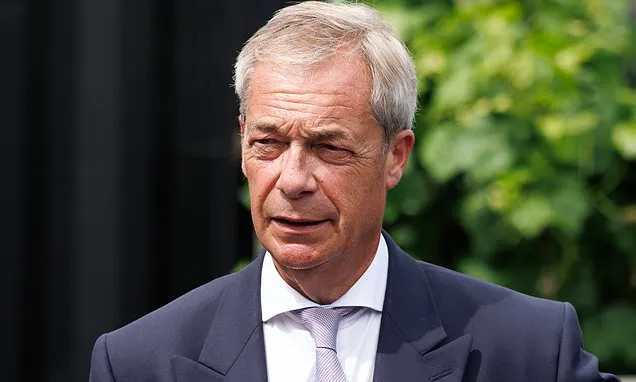
Nigel Farage, the leader of Reform UK, has arranged for his personal service company to pay him £50,000 over five years as rent for a studio located at his own property. This arrangement, detailed in the company’s accounts, involves an annual payment of £10,000 for the ‘rental of studio premises’ by his firm, Thorn in the Side Ltd, to Farage himself. The agreement began last May and is set to continue for a five-year period.
Potential Tax Implications of Rental Payments
This financial arrangement could offer potential tax advantages for Farage. As the sole director and owner of Thorn in the Side Ltd, he has structured the payments as rent rather than salary. This distinction is significant for tax purposes. If the £10,000 annual payment were received as salary, it could potentially trigger additional tax liabilities once it exceeds certain thresholds, particularly concerning the financial limits set for Members of Parliament (MPs). However, by classifying the funds as rent, Farage can effectively reduce his personal tax burden. The rental payments are treated as a business expense, reducing the company’s corporation tax liability. This means the £50,000 is drawn from profits before corporation tax is calculated. In contrast, if the same amount were taken as salary, it would still be deductible from the company’s profits for corporation tax, but it would also incur National Insurance contributions, increasing the overall cost and tax burden.
The threshold for declaring additional income for MPs is very low; receiving even a nominal amount more than the agreed £10,000 annually could necessitate declaring the funds, potentially impacting his status or tax obligations.
Property Declarations Under Scrutiny
The recent rental payment arrangement has brought renewed attention to Farage’s property declarations. Reports indicate that Farage and his wife own a total of five properties across Kent, Surrey, and Essex. However, according to The Times, only two of these properties are formally registered as part of his interests. This discrepancy raises questions about the completeness of his declared assets and interests, a crucial aspect of transparency for public figures.
Past Financial Scrutiny and Unregistered Donations
This situation is not the first time Farage’s financial dealings have come under scrutiny. He has previously faced criticism for failing to declare significant support and donations. Notably, he did not declare a substantial personal gift amounting to £5 million from Christopher Harborne, a cryptocurrency billionaire based in Thailand. Farage received this gift in 2024 but did not refer himself to the Parliamentary standards watchdog regarding the donation.
Further controversy arose from undeclared support provided by George Cottrell, a convicted criminal also known as ‘Posh George’. Cottrell reportedly played a role in Farage’s campaign efforts by recruiting and paying for three staff members to manage his social media presence leading up to the 2024 general election. Additionally, Cottrell continued to allow Farage to use a large, five-storey Georgian property he rented near Buckingham Palace. Farage has publicly dismissed these allegations of undeclared support as an ‘establishment hit job’, maintaining his position against what he perceives as politically motivated attacks.
Upcoming By-Election and Political Landscape
In the wake of these controversies and scrutiny, Nigel Farage announced his intention to resign as the Member of Parliament for Clacton-on-Sea. He plans to contest a by-election in the same constituency. The political landscape for this by-election has taken an unusual turn, with some of his political rivals reportedly vowing to boycott the contest. As a result, Farage is set to face off against a familiar, albeit unconventional, opponent: the comedic candidate known as Count Binface. Count Binface, recognizable by the distinctive bin worn on his head, represents a unique challenge in the electoral race.
The ongoing discussions surrounding Farage’s financial arrangements, property declarations, and past undeclared support highlight the complexities and scrutiny involved in the financial affairs of prominent political figures. The rental agreement with his own company, while potentially offering tax efficiencies, adds another layer to the public’s examination of his financial transparency.