FBI officers say laptop computer farms are a vital means North Korean IT groups trick U.S. firms into believing their distant staff are within the U.S. — offering each a bodily deal with to mail laptops to and a U.S. web connection. As soon as outfitted with sure distant entry software program and instruments, staff can log into these laptops remotely.
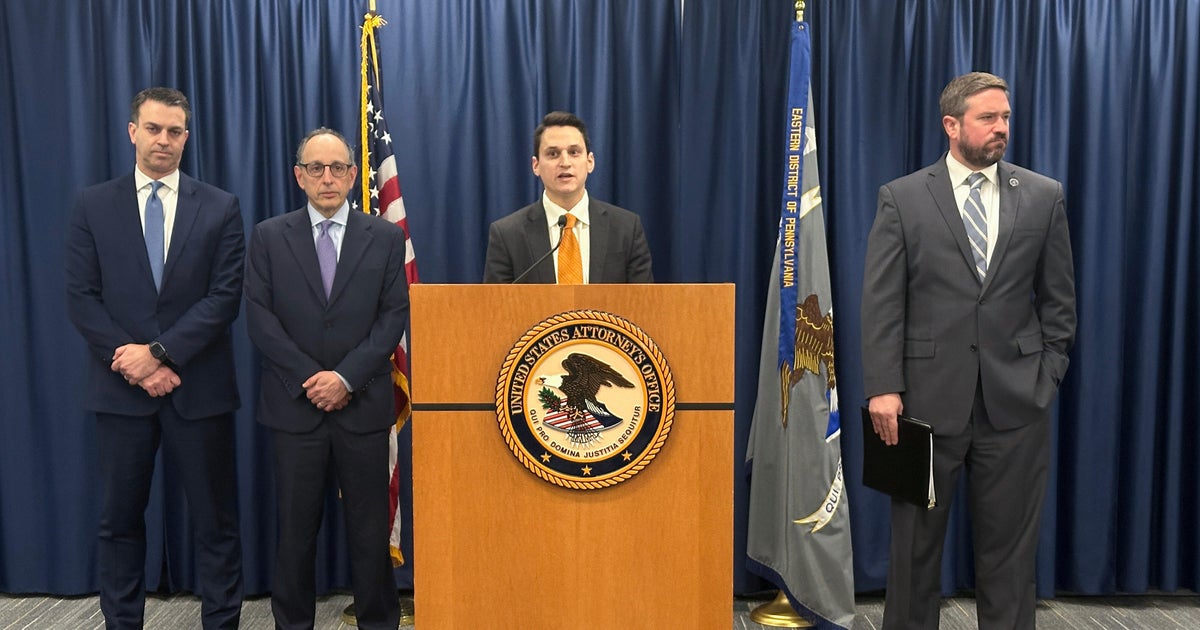
Thus far, a minimum of 10 alleged U.S.-based facilitators have been federally charged, together with one active-duty member of the U.S. Military, for his or her alleged roles in internet hosting laptop computer farms, laundering funds and transferring proceeds by shell firms. Not less than six different alleged U.S. facilitators have been recognized in court docket paperwork however not named.
In a single occasion, an American citizen, Kejia “Tony” Wang, traveled to China in 2023 to fulfill with co-conspirators and IT staff in Shenyang and Dandong, in response to court docket paperwork. Laptops from over 100 U.S. firms, together with a California-based protection contractor, had been despatched to Wang, who additionally arrange shell firms to assist route wages earned abroad. Wang pleaded responsible to prices associated to wire fraud, cash laundering and identification theft and is awaiting sentencing subsequent month.
“We consider there are numerous extra tons of of individuals on the market who’re taking part in these schemes,” stated Rozhavsky, the FBI assistant director. “They may by no means pull this off in the event that they didn’t have prepared facilitators within the U.S. serving to them.”
As soon as illicit cash has been earned, it must be consolidated and transformed to government-issued foreign money. North Korean groups sometimes depend on a maze of Chinese language networks to launder it, in response to business experiences.
“Each unhealthy man you may consider is utilizing Chinese language cash launderers. Now, that is how cash strikes internationally,” stated Nick Carlsen, senior investigator on the worldwide investigations crew on the blockchain analytics firm TRM Labs and a former intelligence analyst on the FBI targeted on North Korea.
Since Kim Jong Un took energy in 2011, North Korea has honed and expanded a portfolio of cybercrime operations past IT work — pulling in billions by cryptocurrency thefts together with a file $1.5 billion heist final yr, in response to the FBI. Analysts say these operations have made Kim wealthier and extra geopolitically related than ever earlier than, validating his long-held view of cyberoperations as an “all-purpose sword.”
In recent times, North Korea’s partnership with Chinese language cash laundering networks has unlocked a brand new stage of velocity and effectivity that North Korean operators had not been capable of obtain independently.
“The transformative factor is the existence of those superliquid Chinese language monetary networks,” Carlsen stated. “They will soak up some huge cash, convert it and switch it in no matter home foreign money you need. That’s the massive change.”
Most of those intermediaries function throughout southern China and Southeast Asia together with Myanmar, Hong Kong, Macao and China’s Fujian province — quickly transferring cryptocurrency throughout blockchains utilizing so-called “mixers” that break stolen funds into smaller items to obscure their origin. IT employee proceeds are sometimes smaller sums and contain fewer intermediaries, stated Andrew Fierman, head of nationwide safety intelligence on the blockchain monitoring firm Chainalysis, whereas the bigger crypto heist sums require advanced, multilayered laundering chains.
Carlsen famous that funds from each IT employee schemes and crypto heists regularly find yourself with Chinese language brokers tied to organized-crime syndicates. “You see overlaps with pig-butchering scams and with drug cartels,” he stated. “These are the identical networks absorbing this cash.” Cryptocurrencies have made that convergence simpler. “It’s the lubricant,” he added. “The oil that permits all these gears to work together with one another.”
The U.S. authorities has taken some steps to deal with North Korea’s IT employee scheme, however consultants warn the menace is intensifying as staff’ use of AI continues to scale up across the globe.
Cybersecurity analysts say U.S. enforcement instruments are struggling to maintain tempo with the size and class of Pyongyang’s cyberoperations. Most of the people concerned function from international locations that lack extradition agreements with the U.S., inserting them largely past the attain of U.S. regulation enforcement.
“It’s a whack-a-mole sport. It’s nearly unattainable to completely disrupt this,” Carlsen stated. “It’s only a endless course of.”
He argues the best technique is to make schemes much less worthwhile by chopping off the regime’s means to money out by cash laundering organizations.
The U.S. authorities has ramped up efforts to try this. On Thursday, the Treasury Division sanctioned six people and two entities for his or her roles in DPRK government-orchestrated IT employee schemes, together with facilitators based mostly in North Korea, Vietnam, Laos and Spain.
Final fall, federal authorities introduced a wave of prison indictments, forfeitures, sanctions and asset freezes focusing on North Korea’s illicit cyber exercise.
In October, the Treasury Division severed Cambodia-based Huione Group, a financial-guarantee community, from the U.S. monetary system, alleging it laundered billions in illicit proceeds, together with a minimum of $37 million in cryptocurrency linked to North Korean operations. Weeks later, eight people and two entities, together with North Korean bankers and establishments, had been sanctioned for laundering funds derived from cybercrime and IT employee fraud schemes.
North Korea, for its half, has denied any wrongdoing.

Final yr, following the Division of Justice’s indictment of a number of North Koreans for his or her alleged roles within the scheme, the nation’s international minister condemned U.S. actions as “an absurd smear marketing campaign” focusing on the “non-existent ‘cyber menace’ from the DPRK,” the Korean Central Information Company reported.
In response to questions on Chinese language nationals’ involvement within the scheme, Chinese language Embassy spokesperson Liu Pengyu stated, “We oppose false allegations and smears which haven’t any factual floor in any respect.”
The scheme itself can also be changing into extra advanced. North Korean IT groups are actually subcontracting work to builders in Pakistan, Nigeria and India, increasing into fields like customer support, monetary processing, insurance coverage and translation providers — roles far much less scrutinized than software program growth.
“Until you will have exterior data, you won’t know they’re North Korean,” stated Michael Barnhart, who leads nation-state menace intelligence at DTEX. “They’re making an attempt to maneuver themselves into center administration, and it’s working.”
That enlargement additionally means considerations that North Korean staff may trigger real-world hurt by jeopardizing lives, one thing Barnhart has seen up shut.
In 2021, as a part of a wave of assaults on NASA and army bases, a North Korean hacking crew contaminated a Kansas hospital’s pc programs with ransomware, crippling servers and demanding roughly $100,000 in bitcoin to revive their perform. The hospital paid. Barnhart helped examine the hack alongside the FBI, and it was that case that made clear to him the methods by which North Korea’s malicious hacking groups typically cooperate with IT groups to help their missions, one thing that was not broadly identified on the time.
What he noticed was a hacking operator engaged in IT work, together with inserting different IT staff in jobs. The revenue from these jobs supported the hacking unit’s major malware operations to commit pc intrusions in opposition to U.S., South Korean and Chinese language authorities or know-how victims.
“It began off as income technology, however the strains are getting blurrier and blurrier. If the time comes, they’ve received chess items inside organizations all around the world — they usually’ll begin performing from the within,” he stated.
Rozhavsky expressed comparable considerations.
“Even when an organization eliminates them, we don’t know what backdoors they might have left for entry sooner or later,” he stated. “So it’s positively a ticking time bomb that would have unfavorable penalties down the road.”
Lawmakers are additionally looking for stronger defenses. Sens. Gary Peters, D-Mich., and Mike Rounds, R-S.D., launched the Defending America from Cyber Threats Act, which might renew key cybersecurity authorities for one more decade and encourage non-public firms, like Nisos, to share details about cyberthreats with the federal authorities.
Nonetheless, hundreds of staff, the driving drive of the IT schemes, stay out of attain, the vast majority of whom are based mostly in China.
“These are the neatest individuals in North Korea. That’s form of the tragedy of it,” Carlsen stated. “They’ve taken their finest and brightest and made them criminals.”