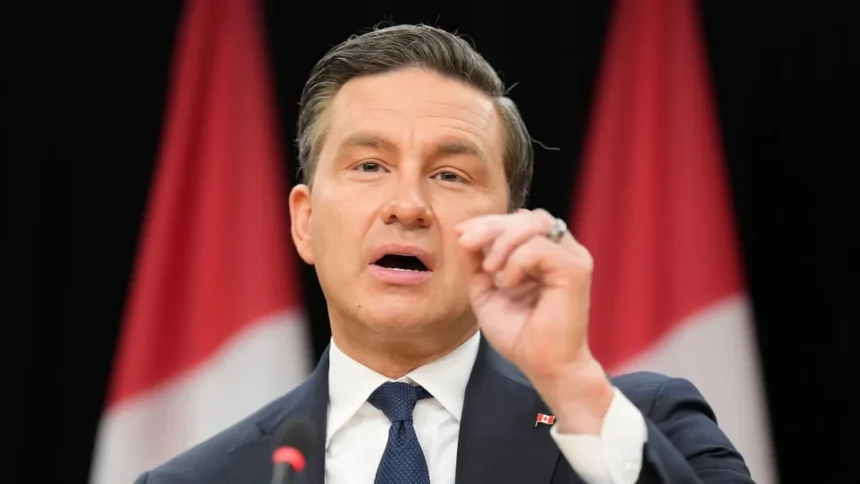
Conservative Leader Pierre Poilievre has penned a forceful letter to Prime Minister Justin Trudeau, urging the government to adopt a more resolute stance in ongoing trade negotiations with the United States. Poilievre contends that Canada has repeatedly conceded to American demands without securing reciprocal benefits, particularly concerning tariffs. He calls for an end to what he describes as a policy of “managed decline” and a refusal to “cave” to U.S. pressure.
Poilievre’s Critique of Current Trade Strategy
In his correspondence, Poilievre outlines a year and a half of what he perceives as unilateral concessions by the Canadian government. He specifically cites the elimination of Canada’s digital services tax and the removal of retaliatory tariffs against the U.S. as examples of giving ground without tangible gains. The opposition leader argues that these actions have not only failed to resolve existing trade disputes but have also led to an escalation of U.S. tariffs on key Canadian exports.
Poilievre highlights the doubling of American tariffs on Canadian steel and aluminum and the tripling of duties on lumber as evidence of the current approach’s ineffectiveness. He asserts that Canadians expect their government to demonstrate strength and secure a fair trade agreement, one that eliminates tariffs across various sectors.
Key Demands for a “Good Deal”
The Conservative leader detailed specific outcomes he believes should constitute a successful trade resolution. These include:
- Zero tariffs on all softwood lumber exports.
- Complete removal of sectoral tariffs impacting the steel and aluminum industries.
- A tariff-free agreement for the automotive sector.
- Full exemption from “Buy America” provisions for Canadian companies involved in infrastructure projects at all governmental levels.
Poilievre’s message is clear: Canada must build domestic strength and leverage to negotiate from a position of power, rather than making concessions that weaken its economic standing.
Impending Tariff Escalation and U.S. Grievances
The backdrop to this exchange is the imminent imposition of new U.S. tariffs, reportedly set to affect a range of Canadian goods at a rate of 50 percent within approximately ten days. A primary point of contention for the United States has been Canada’s supply management system, which regulates the domestic dairy industry and limits foreign access to the Canadian market. U.S. President Donald Trump has frequently voiced dissatisfaction with these arrangements, advocating for greater access for American dairy farmers.
Potential Canadian Concessions
Despite the firm stance called for by Poilievre, sources indicate that the Canadian government is reportedly preparing to offer certain concessions to the U.S. in exchange for tariff relief. These potential concessions, according to industry insiders, may include:
- Ending existing bans on the sale of American alcoholic beverages in Canada.
- Lifting retaliatory tariffs currently imposed on U.S. automotive products.
- Making unspecified adjustments to the dairy sector’s supply management system.
These potential moves come as the Dairy Farmers of Canada have publicly urged the Prime Minister not to compromise on the supply management system, noting that previous concessions have not led to a resolution of trade disputes.
Canada’s Negotiating Objectives
In return for these potential concessions, Canada is reportedly seeking significant objectives from the U.S. administration. These include the withdrawal of the impending 50 percent tariffs, the removal of existing sectoral tariffs on steel and aluminum, and a joint commitment to resume formal negotiations on the Canada-United States-Mexico Agreement (CUSMA) in the fall. The outcome of these high-stakes negotiations remains a critical issue for Canadian industries and the broader economy.
Conclusion: A Call for Stronger Negotiation Stance
Pierre Poilievre’s letter represents a significant intervention in the ongoing trade dialogue, advocating for a more assertive approach to protect Canadian economic interests. The government’s reported willingness to consider concessions, juxtaposed with the opposition’s call for unwavering firmness, highlights the complex balancing act involved in navigating trade relations with the United States. The coming days are expected to be pivotal in determining the direction of these crucial trade talks and their impact on Canadian businesses and consumers.