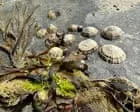
The summer holidays, a time for family fun and exploration, can inadvertently lead to harm for the smallest of creatures. On beaches like the one at Lyme Regis, a unique ecosystem thrives just below the surface, particularly on tidal rock flats. These areas, often teeming with life such as periwinkles, barnacles, and limpets, become magnets for visitors seeking a seaside experience. However, this increased footfall, especially from children armed with fossil hammers, presents a growing concern for the welfare of these sessile marine molluscs.
The Delicate Ecosystem of Tidal Flats
Lyme Regis, renowned for its fossil hunting opportunities, boasts a particularly captivating location: the East Cliff beach, accessible only during low tide. Reaching this secluded spot involves a descent down a steep walkway, winding through a vibrant, untamed landscape. Wild plants and garden escapes mingle, creating a rich habitat buzzing with insect life. The air is filled with the sounds of nature, from the chirping of grasshoppers to the distinct call of a stonechat, a sound reminiscent of pebbles clicking together. This natural symphony often harmonizes with the distant tapping of fossil hammers from the beach below.
Emerging onto the sea wall, visitors are greeted by a panoramic view of Lyme Bay, stretching towards the distant Isle of Portland. Directly beneath this promenade lies a flat expanse of rock, exposed by the receding tide. This intertidal zone is a crucial habitat, densely populated by a variety of small marine life. Limpets, with their conical shells, cling tenaciously to the rocks, while periwinkles and barnacles create a textured carpet across the surface. This area offers a gentle environment for paddling and observing marine biodiversity.
An Unfortunate Encounter with a Fossil Hammer
During a recent visit to this picturesque beach, the author observed numerous families enjoying the shallow waters. Amidst this scene of holiday leisure, a small child was seen vigorously using a fossil hammer. Initially, the action appeared to be directed at rocks, a common pastime in this fossil-rich area. However, a closer look revealed the child was striking a limpet. The author, compelled to intervene, pointed out that the target was a live creature. The child’s mother, seemingly taken aback, offered a brief, noncommittal response, while the child continued the destructive action. This incident was not isolated; it was the second such observation in a short period, highlighting a disturbing trend.
A Pattern of Neglect and Misguided Curiosity
The previous occurrence took place at Battery Rocks in Penzance, another popular coastal spot. There, a couple watched as a boy actively harmed a limpet. When the author approached, one of the adults made a flippant remark about a “vegan coming to protest,” dismissing the act as inconsequential. These encounters underscore a broader issue: the need for adult guidance in shaping children’s natural curiosity towards respect for the natural world.
The Importance of Educating Children About Wildlife
The author posits that these seemingly minor acts of cruelty, often occurring with adult acquiescence, have significant implications. Children possess an innate curiosity about their surroundings, and it is the responsibility of adults to nurture this curiosity into a sense of empathy and care for living organisms. When adults fail to intervene or, worse, make light of such actions, they inadvertently teach children that such behavior is acceptable. This can lead to a desensitization towards the suffering of animals and a diminished respect for biodiversity.
Limpets: More Than Just Rock Clingers
Limpets are fascinating marine gastropods that play a vital role in their intertidal habitats. They are herbivores, grazing on algae that grow on rock surfaces. By consuming this algae, they help to keep the rocks clean and prevent excessive algal growth, which could smother other organisms. Their strong muscular foot allows them to adhere to rocks with incredible force, enabling them to withstand strong wave action. This resilience, however, makes them vulnerable to deliberate harm when exposed during low tide.
The Role of Adults in Fostering Respect for Nature
The summer holidays present a prime opportunity for families to connect with nature. Beaches, rock pools, and coastal paths offer invaluable learning experiences. However, these experiences should be guided by principles of conservation and respect for all living things. Adults can play a crucial role by:
- Educating children about the creatures they encounter, explaining their importance in the ecosystem.
- Setting clear boundaries regarding the treatment of wildlife, emphasizing that all living beings deserve to be treated with kindness.
- Modeling respectful behavior by observing wildlife from a distance and avoiding any actions that could cause harm.
- Redirecting curiosity towards positive interactions, such as sketching, photographing, or learning about the creatures without disturbing them.
The author’s observations suggest a gap in this educational process, where the excitement of fossil hunting or simple amusement can overshadow the need for compassion towards marine life. It is essential to recognize that even small creatures like limpets are integral parts of the coastal environment and deserve protection.
Conclusion: A Call for Mindful Exploration
As families flock to the coastlines during the summer months, a gentle reminder is in order: the beaches are not just playgrounds but living habitats. The creatures that inhabit these spaces, from the smallest limpet to the largest seabird, are part of a delicate balance. By instilling a sense of responsibility and empathy in children, adults can ensure that the joy of discovery does not come at the expense of the natural world. The aim should be to foster a lifelong appreciation for wildlife, transforming innocent curiosity into a powerful force for conservation, ensuring that future generations can marvel at the wonders of the intertidal zone without causing it harm.