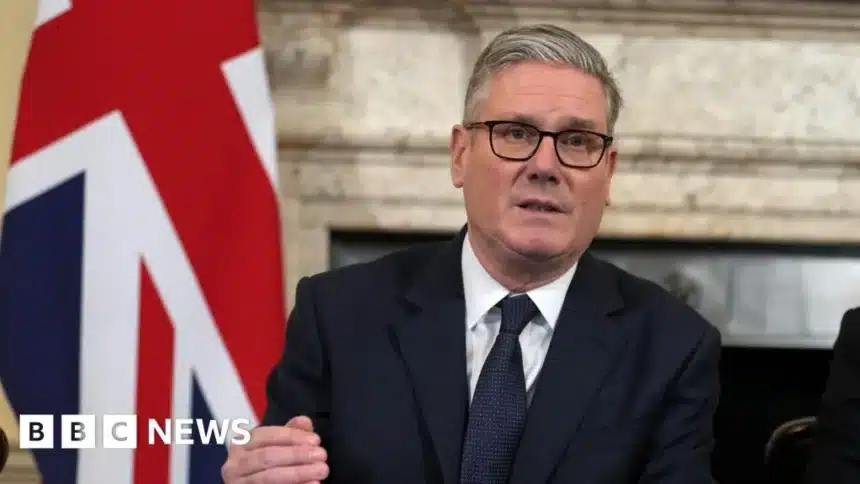
Sir Keir Starmer’s cabinet confronts a profound division over whether the prime minister should remain in office, marking one of the most challenging moments for the government.
Cabinet Ministers Deliver Mixed Advice
Ministers met with Sir Keir last night, offering varied counsel. Some urged him to continue leading, while others suggested establishing a timeline for his exit. Discussions also explored strategies to navigate the escalating crisis.
Labour MPs Publicly Withdraw Support
A wave of Labour MPs has openly expressed loss of confidence in the prime minister, with statements emerging rapidly. Following his key speech on Monday, criticism intensified. One Labour MP described it as “just so devastatingly crap.”
Many MPs worry that Sir Keir alienates too many voters as Labour competes with Reform UK. However, others view the unrest with alarm, preferring stability amid ongoing war, economic pressures from global tensions including Iran, and volatile market conditions on gilts.
“A lot of us are watching this slightly aghast. With a war; an economy struggling due to Iran; market gilt movements etc. I’m still of the view that stability is a premium you give up at your peril,” one Labour MP stated.
Prime Minister Remains Determined
Sources close to recent discussions indicate Sir Keir remains committed to staying, citing risks of a prolonged leadership contest. Such a process could install a successor lacking a strong mandate, unlike his own election victory. One associate described the potential new leader’s authority as carrying a “very questionable mandate.”
Despite this resolve, the political landscape grows increasingly grim, with unfavorable numbers and sentiment worsening.
Tensions Rise Within Labour
A cabinet ally acknowledged the severity: “It’s clearly not good.” Rival factions now engage in mutual briefings, as recriminations over the party’s predicament accelerate.
Critical Cabinet Meeting Looms
Tuesday’s cabinet meeting promises intense friction. Sir Keir’s selected senior team, gathered around the table, must address their disagreements on his tenure.
A Pattern of Leadership Instability
Over the past four years, the UK has seen four prime ministers: Boris Johnson, Liz Truss, Rishi Sunak, and Sir Keir Starmer. This rapid turnover contrasts sharply with earlier eras. It took until age 27 for one observer to witness a fourth prime minister in a lifetime—Gordon Brown in 2007—following just three in the prior quarter-century: Margaret Thatcher, John Major, and Tony Blair.
Short tenures and instability now define the norm, unaffected by large majorities or time out of power.