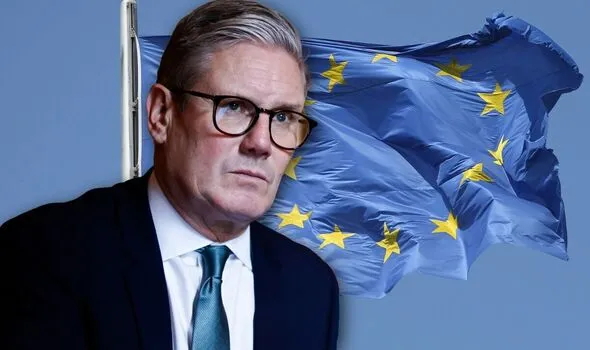
Labour government officials continue to strengthen ties between the United Kingdom and the European Union. Prime Minister Keir Starmer recently stated, “we are not the Britain of the Brexit years any more.”
Reeves Outlines Economic Strategy
Chancellor Rachel Reeves, in a lecture detailing plans to boost the economy, emphasized a strategic need for deeper UK-EU integration to enhance economic resilience. She declared, “So my choice, the choice of this government, is not to turn back the clock but to look towards a new and stable, future relationship.”
Under this approach, the UK aligns closely with EU regulations, making independent regulation the exception rather than the norm. This represents a departure from the previous administration’s focus on divergent regulations and independent trade deals, which Reeves views as less valuable than partnerships with the EU, the UK’s largest trading partner.
Khan Proposes Bold Reintegration Steps
London Mayor Sadiq Khan advocates even further measures, urging the UK to join a customs union with the EU and reenter the Single Market during the current parliamentary term. He suggests Labour campaign on a pledge to rejoin without another referendum, positioning a re-elected Labour government to lead the UK back into the EU.
Constitutional and Political Feasibility
Parliament holds the authority under the UK’s system of parliamentary sovereignty to pursue such changes. The nation joined the European Economic Community in the 1970s via a parliamentary vote, with a referendum following two and a half years later.
Politically, reversing Brexit without a public vote sparks debate. Proponents argue a new referendum provides essential endorsement to safeguard against future reversals. The EU may also seek assurances against repeated exits. However, if rejoining dominates an election and pro-rejoin parties secure a majority with strong popular support, leaders could claim the mandate settles the issue, avoiding further division.
This scenario risks ongoing instability, potentially turning the UK into a fluctuating EU member amid polarized politics.
Ongoing Negotiations and Limits
Currently, Khan’s views diverge from government policy, which focuses on reset talks initiated at last year’s May summit. Officials aim to secure agreements on agrifood, energy, and youth mobility by the upcoming summer summit.
Reeves’ strategy remains unclear in practice—whether it involves voluntary alignment or fresh negotiations for greater benefits. Labour firmly excludes rejoining the Single Market or customs union and rejects freedom of movement.
As Parliament considers legislation to adopt unvoted EU rules, discussions intensify on whether full reintegration, with a seat at the table, offers the best path forward.