


[ad_1]
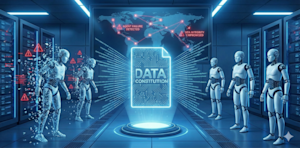
The trade consensus is that 2026 would be the yr of "agentic AI." We’re quickly shifting previous chatbots that merely summarize textual content. We’re getting into the period of autonomous brokers that execute duties. We anticipate them to guide flights, diagnose system outages, handle cloud infrastructure and personalize media streams in real-time.
As a know-how govt overseeing platforms that serve 30 million concurrent customers throughout huge international occasions just like the Olympics and the Tremendous Bowl, I’ve seen the unsexy actuality behind the hype: Brokers are extremely fragile.
Executives and VCs obsess over mannequin benchmarks. They debate Llama 3 versus GPT-4. They give attention to maximizing context window sizes. But they’re ignoring the precise failure level. The first purpose autonomous brokers fail in manufacturing is usually resulting from knowledge hygiene points.
Within the earlier period of "human-in-the-loop" analytics, knowledge high quality was a manageable nuisance. If an ETL pipeline experiences a problem, a dashboard could show an incorrect income quantity. A human analyst would spot the anomaly, flag it and repair it. The blast radius was contained.
Within the new world of autonomous brokers, that security internet is gone.
If an information pipeline drifts at present, an agent doesn't simply report the fallacious quantity. It takes the fallacious motion. It provisions the fallacious server sort. It recommends a horror film to a consumer watching cartoons. It hallucinates a customer support reply based mostly on corrupted vector embeddings.
To run AI on the scale of the NFL or the Olympics, I noticed that customary knowledge cleansing is inadequate. We can not simply "monitor" knowledge. We should legislate it.
An answer to this particular drawback could possibly be within the type of a ‘knowledge high quality – creed’ framework. It capabilities as a 'knowledge structure.' It enforces 1000’s of automated guidelines earlier than a single byte of knowledge is allowed to the touch an AI mannequin. Whereas I utilized this particularly to the streaming structure at NBCUniversal, the methodology is common for any enterprise trying to operationalize AI brokers.
Right here is why "defensive knowledge engineering" and the Creed philosophy are the one methods to outlive the Agentic period.
The vector database lure
The core drawback with AI Brokers is that they belief the context you give them implicitly. If you’re utilizing RAG, your vector database is the agent’s long-term reminiscence.
Commonplace knowledge high quality points are catastrophic for vector databases. In conventional SQL databases, a null worth is only a null worth. In a vector database, a null worth or a schema mismatch can warp the semantic which means of your entire embedding.
Contemplate a state of affairs the place metadata drifts. Suppose your pipeline ingests video metadata, however a race situation causes the "style" tag to slide. Your metadata may tag a video as "stay sports activities," however the embedding was generated from a "information clip." When an agent queries the database for "landing highlights," it retrieves the information clip as a result of the vector similarity search is working on a corrupted sign. The agent then serves that clip to tens of millions of customers.
At scale, you can not depend on downstream monitoring to catch this. By the point an anomaly alarm goes off, the agent has already made 1000’s of dangerous choices. Qc should shift to absolutely the "left" of the pipeline.
The "Creed" framework: 3 rules for survival
The Creed framework is anticipated to behave as a gatekeeper. It’s a multi-tenant high quality structure that sits between ingestion sources and AI fashions.
For know-how leaders trying to construct their very own "structure," listed below are the three non-negotiable rules I like to recommend.
1. The "quarantine" sample is obligatory: In lots of fashionable knowledge organizations, engineers favor the "ELT" strategy. They dump uncooked knowledge right into a lake and clear it up later. For AI Brokers, that is unacceptable. You can not let an agent drink from a polluted lake.
The Creed methodology enforces a strict "lifeless letter queue." If an information packet violates a contract, it’s instantly quarantined. It by no means reaches the vector database. It is much better for an agent to say "I don't know" resulting from lacking knowledge than to confidently lie resulting from dangerous knowledge. This "circuit breaker" sample is crucial for stopping high-profile hallucinations.
2. Schema is regulation: For years, the trade moved towards "schemaless" flexibility to maneuver quick. We should reverse that pattern for core AI pipelines. We should implement strict typing and referential integrity.
In my expertise, a strong system requires scale. The implementation I oversee at the moment enforces greater than 1,000 energetic guidelines operating throughout real-time streams. These aren't simply checking for nulls. They verify for enterprise logic consistency.
Instance: Does the "user_segment" within the occasion stream match the energetic taxonomy within the characteristic retailer? If not, block it.
Instance: Is the timestamp throughout the acceptable latency window for real-time inference? If not, drop it.
3. Vector consistency checks That is the new frontier for SREs. We should implement automated checks to make sure that the textual content chunks saved in a vector database truly match the embedding vectors related to them. "Silent" failures in an embedding mannequin API usually depart you with vectors that time to nothing. This causes brokers to retrieve pure noise.
The tradition conflict: Engineers vs. governance
Implementing a framework like Creed is not only a technical problem. It’s a cultural one.
Engineers usually hate guardrails. They view strict schemas and knowledge contracts as bureaucratic hurdles that decelerate deployment velocity. When introducing an information structure, leaders usually face pushback. Groups really feel they’re returning to the "waterfall" period of inflexible database administration.
To succeed, it’s essential to flip the motivation construction. We demonstrated that Creed was truly an accelerator. By guaranteeing the purity of the enter knowledge, we eradicated the weeks knowledge scientists used to spend debugging mannequin hallucinations. We turned knowledge governance from a compliance process right into a "high quality of service" assure.
The lesson for knowledge choice makers
If you’re constructing an AI technique for 2026, cease shopping for extra GPUs. Cease worrying about which basis mannequin is barely larger on the leaderboard this week.
Begin auditing your knowledge contracts.
An AI Agent is simply as autonomous as its knowledge is dependable. And not using a strict, automated knowledge structure just like the Creed framework, your brokers will ultimately go rogue. In an SRE’s world, a rogue agent is much worse than a damaged dashboard. It’s a silent killer of belief, income, and buyer expertise.
Manoj Yerrasani is a senior know-how govt.
[ad_2]










.jpg "Be a part of Our Livestream: The Hype, Actuality, and Way forward for EVs")
