A peculiar rivalry has emerged between prominent figures in the UK’s right-wing political scene, Nigel Farage and Kemi Badenoch, as they seemingly compete for the attention and endorsement of Italian Prime Minister Giorgia Meloni. This unusual contest for the affections of the influential European leader has been marked by public statements, alleged apologies, and pointed criticisms between the two British politicians.
The Genesis of the Dispute
The public spat reportedly began following an article published in The Times on a Monday. The initial report claimed that during a meeting in Rome, Prime Minister Meloni had advised Conservative leader Kemi Badenoch against forming an alliance with Nigel Farage to unite the right-wing vote in the UK. Following immediate complaints from Farage’s Reform UK party and, reportedly, from Meloni’s own team, the newspaper amended the article to retract this specific assertion.
Sources close to Nigel Farage later indicated that Meloni had indeed spoken with him during the week. In this conversation, she allegedly apologized for any misunderstanding or confusion caused by the initial report. Furthermore, she reportedly congratulated Farage on his recent victory in the Clacton by-election, a win that saw his primary opponent appear in costume. A representative from Reform UK conveyed that Meloni’s team expressed significant displeasure and disappointment regarding the situation.
Conversely, the office of the Italian Prime Minister stated that Meloni has no intention of becoming involved in the internal political affairs or inter-party relationships within the United Kingdom. This statement aimed to distance her from the unfolding controversy.
Badenoch’s Social Media Gambit
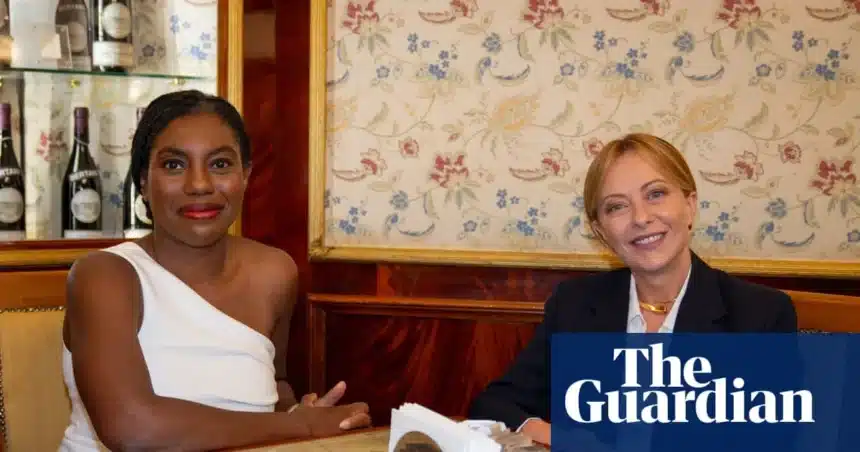
Earlier, Kemi Badenoch had shared a photograph of herself with Giorgia Meloni on social media following a visit to Rome. Her accompanying caption lauded Meloni’s “straight-talking, no-nonsense” approach. However, the subsequent controversy surrounding the initial report and the ensuing political back-and-forth appeared to overshadow Badenoch’s positive portrayal.
A source aligned with Badenoch expressed frustration, suggesting that Reform UK was exaggerating minor communication issues to create a political narrative. This source indicated that the episode was being amplified beyond its actual significance.
Reform UK’s Counter-Narrative
Robert Jenrick, a Member of Parliament for Reform UK and a former Conservative frontbencher, publicly commented on the situation. At a press conference, Jenrick suggested that Badenoch’s account of her meeting with Meloni was misleading, implying that she had fabricated aspects of their conversation. He advised against fabricating details when meeting foreign leaders.
Nigel Farage echoed these sentiments, pointing out the absence of direct quotes from Meloni herself to corroborate Badenoch’s claims. He questioned the reliability of information attributed to Meloni but not directly sourced from her.
In response, a spokesperson for the Conservative Party defended Badenoch’s account, asserting that no false claims were made. The spokesperson accused Reform UK of fabricating narratives and promoting conspiracy theories as a diversionary tactic, referencing a controversial financial donation received by the party.
Giorgia Meloni: An Influential Figure
Giorgia Meloni, an Italian politician known for her populist stance, anti-immigration policies, and socially conservative views, including opposition to same-sex marriage, rose to power in Italy in 2022. Since taking office, she has adopted a more moderate public image and has gained considerable influence among international leaders, appearing on prominent power rankings by publications like Forbes, Time, and Politico.
Her political success and perceived strength have made her a figure many on the right wish to align with. Raheem Kassam, a former advisor to Nigel Farage and owner of the US politics website The National Pulse, has known Meloni since 2016. Kassam stated that Meloni would not have acted in the manner initially described, emphasizing her integrity and personal style.
Kassam suggested that politicians like Donald Trump and Nigel Farage admire Meloni for achieving power against significant odds, drawing parallels to Trump’s own political trajectory. He recalled early meetings in 2016 when many doubted Italy would elect a female prime minister, yet Meloni succeeded through determination.
Meloni’s Appeal and Political Stature
The appeal of right-wing politicians to Meloni might stem from a desire to associate with her perceived political stardust. Her government is noted for its stability and longevity, potentially becoming the longest-serving single administration in Italy’s republican history. Leading in opinion polls before the upcoming election further enhances her standing.
Kassam described Meloni as a respected and stable leader capable of maintaining government cohesion and achieving policy goals. He characterized her as steadfast, tough, successful, and admirable, suggesting that figures like Kemi Badenoch could learn from her leadership qualities.
Meloni’s Public Interactions and Diplomacy
Meloni has also demonstrated a willingness to publicly address perceived slights, even from prominent figures like Donald Trump. Following a G7 summit, Trump claimed Meloni had “begged” for a photograph with him. Meloni responded decisively via social media, stating, “Neither I nor Italy ever beg.”
Another instance of Meloni asserting her position involved criticism from Trump regarding Pope Leo XIV. Trump posted on his social media platform, Truth Social, expressing negative views on the Pope’s stance on crime and foreign policy. Meloni, a Catholic, deemed Trump’s comments “unacceptable” and affirmed the Pope’s right and duty to advocate for peace and condemn warfare.
These episodes highlight Meloni’s firm diplomatic stance. Despite these high-profile interactions, Nigel Farage continues to cultivate his relationship with Meloni. Sources indicate that Farage remains unconcerned about potential repercussions from his association with Trump, suggesting that differing relationships with one individual do not necessitate universal opposition.