In a significant development, Ukraine has launched its largest drone attack to date targeting Moscow, coinciding with Russia’s ongoing parliamentary elections. This aerial assault marks a notable escalation in the conflict, bringing the war directly to the Russian capital during a critical political period.
Ukraine’s Major Drone Offensive on Moscow
The recent, large-scale drone strike on Moscow represents a significant escalation in the ongoing conflict between Ukraine and Russia. Analysts suggest the timing of the attack, coinciding with Russia’s parliamentary elections, was intended to disrupt the electoral process and draw international attention to the war. The scale of the operation, involving numerous drones, indicates a sophisticated planning and execution capability by Ukrainian forces. This event underscores the evolving nature of the conflict, with Ukraine demonstrating an increased capacity to project force deep into Russian territory.
Federico Borsari, a fellow at the Transatlantic Defense and Security Program at the Center for European Policy Analysis, provided insights into the strategic implications of this attack. He noted that such actions aim not only to inflict damage but also to serve as a psychological blow to the aggressor nation and to rally international support for Ukraine’s defense. The targeting of the capital city during an election period highlights the dual-pronged strategy of military pressure and political messaging employed by Kyiv.
German Political Landscape Shifts Amid Election Results
Meanwhile, Germany’s political scene is experiencing significant shifts following recent state elections in Mecklenburg-Vorpommern and Berlin. The Alternative for Germany (AfD) party has reportedly made substantial gains in these elections, a development that has put considerable pressure on Chancellor Friedrich Merz and the Christian Democratic Union (CDU) party, which suffered notable losses. These results suggest a growing dissatisfaction among segments of the electorate and a potential realignment of political forces within Germany.
Laura Fleischmann reported live from Berlin, detailing the electoral outcomes and their immediate political ramifications. The gains by the AfD, a party often characterized by its nationalist and Eurosceptic stance, are being closely watched by political observers across Europe. The CDU’s setbacks in these key states raise questions about the party’s current platform and its ability to connect with voters.
Sabrina Repp, a German Member of the European Parliament for the Social Democrats from Mecklenburg-Vorpommern, offered her reaction to the election results. Her perspective likely focused on the challenges facing traditional parties and the implications of the AfD’s rise for both national and European politics. The performance of the Social Democrats in these elections will also be a crucial factor in assessing the broader political mood.
US-Iran Tensions and Drug Violence in Brussels
Beyond European domestic politics and the conflict in Ukraine, international relations are also under strain. A report from Doha highlighted the escalating standoff between Washington and Tehran. This heightened tension comes as U.S. President Donald Trump prepared to address the United Nations General Assembly, a platform often used to address global security challenges and diplomatic relations.
Separately, Bill White, the U.S. Ambassador to Belgium, addressed the growing issue of drug-related violence in Brussels. The Belgian capital has been grappling with an increase in incidents linked to organized crime and drug trafficking, leading to public concern and a growing wariness among some Belgians regarding the United States’ influence or role in addressing such transnational issues. The ambassador’s comments likely aimed to reassure allies and outline potential collaborative efforts to combat these security challenges.
Understanding Europe Today
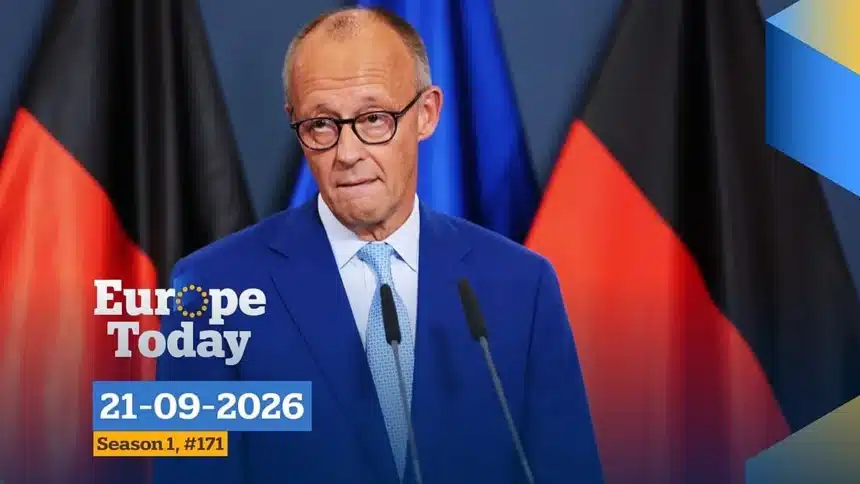
For those seeking comprehensive daily updates on these critical issues, ‘Europe Today’ offers a concise yet in-depth analysis. The program, hosted by Méabh Mc Mahon and Stefan Grobe, provides a 20-minute briefing on the day’s most significant events shaping the European Union and beyond. It is broadcast live every weekday at 8 am Brussels time and is accessible via television, the website, and various digital platforms including YouTube, Facebook, X (formerly Twitter), and Instagram. Additionally, the program’s content is available through a newsletter and podcast, catering to diverse audience preferences for news consumption.
The program’s commitment to delivering timely and relevant information makes it a valuable resource for understanding the complex geopolitical, economic, and social dynamics currently at play in Europe and on the global stage. By covering key events and providing expert analysis, ‘Europe Today’ aims to keep its audience informed about the forces driving change and shaping the future.
Conclusion
The confluence of Ukraine’s bold drone strike on Moscow, the significant electoral shifts within Germany, and the ongoing international diplomatic tensions paints a complex picture of the current global landscape. These events highlight the interconnectedness of security, politics, and international relations, demanding continued attention and analysis from informed observers.