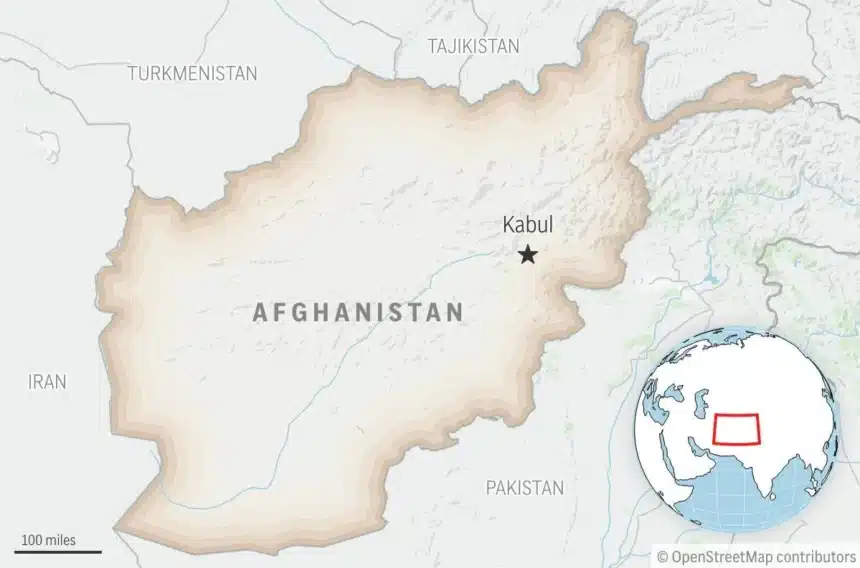
Pakistan conducted airstrikes on suspected militant hideouts in eastern Afghanistan on Monday, with Pakistani officials reporting that 28 individuals were killed. Afghan authorities, however, stated that the strikes resulted in the deaths of three civilians and injured four others. The Pakistani government asserted that its military targeted bases used by militants responsible for recent attacks within Pakistan.
Escalation of Cross-Border Tensions
These airstrikes near the shared border represent a significant escalation in the ongoing tensions between Pakistan and Afghanistan. The action raises concerns about further cross-border hostilities and could potentially complicate diplomatic efforts by regional powers, including China, aimed at mediating between the two nations. This development follows Pakistan’s explicit warning that it might pursue militants operating from Afghan territory, a stance taken after two lethal attacks on Pakistani security forces occurred near the border in the preceding days.
Background of Rising Militancy
In recent years, Pakistan has experienced a surge in militant attacks, predominantly targeting its police and security forces. The current escalation is part of a broader pattern of conflict that has seen hundreds of casualties in cross-border engagements since February. This period of heightened activity began when Afghanistan launched retaliatory strikes following Pakistan’s own airstrikes on Afghan soil.
Pakistani authorities have consistently attributed the majority of this violence to the Pakistani Taliban, also known as Tehrik-e-Taliban Pakistan (TTP), and allied militant factions. It is crucial to note that the TTP, while allied with, is a separate entity from the Afghan Taliban, which regained control of Afghanistan in 2021.
Conflicting Casualty Reports
Pakistani security officials, speaking on condition of anonymity as they were not authorized to speak publicly, maintained that 28 suspected militants perished in Monday’s aerial bombardment. Conversely, the Afghan government presented a starkly different account, reporting that three civilians were killed and four others sustained injuries. Independent verification of these competing claims was not immediately possible.
The Pakistani military had not issued an official statement regarding the strikes at the time of reporting. However, Zabiullah Mujahid, a spokesperson for the Afghan Taliban government, took to social media platform X (formerly Twitter) to condemn the airstrikes. He characterized the action as an act of aggression and oppression, a repetition of past transgressions, and suggested that Pakistani military circles were attempting to deflect from their own domestic security shortcomings.
Details of Afghan Claims
According to Afghan deputy government spokesperson Hamdullah Fitrat, the Pakistani airstrikes commenced around 3 a.m. local time. The targeted areas were identified as Nurgal district in Kunar province and Barmal district in Paktika province. Fitrat provided preliminary information indicating that a residential home belonging to a villager named Noor Ahmad in Nurgal’s Pathan village was destroyed. This strike, he stated, resulted in the deaths of Ahmad and two of his family members, with four other relatives suffering injuries.
Fitrat also reported that strikes in the Rakhah and Tor Kundi areas of Barmal district led to the destruction of a shop and an unoccupied house, though no casualties were reported in these specific locations.
Recent Attacks Fueling Tensions
Monday’s airstrikes followed a series of significant security incidents in Pakistan. Just one day prior, six Pakistani security personnel, including two army officers, were killed in a shootout with militants in Hangu district, situated in the northwestern Khyber Pakhtunkhwa province, close to the Afghan border. This incident occurred on the heels of a deadly suicide bombing and subsequent gun battle in Kohat city on Friday.
In the Kohat incident, a suicide bomber targeted a mosque within a police compound, and eight gunmen subsequently occupied offices, triggering a protracted 20-hour confrontation. Pakistani officials reported that at least 21 individuals, predominantly police officers, lost their lives in this attack, with over 100 others sustaining injuries.
Pakistan’s Stance and Demands
In response to these mounting attacks, Pakistan’s Information Ministry issued a warning on Saturday, indicating the country’s potential to strike militant targets within Afghanistan. The ministry explicitly blamed militants based in Afghanistan for the Kohat attack and accused the Afghan Taliban government of harboring and supporting groups orchestrating violence against Pakistan. The statement emphasized Pakistan’s resolve and capacity to neutralize terrorist threats, irrespective of their location.
Furthermore, the ministry urged the government in Kabul to implement “credible, verifiable and sustained measures” to dismantle what Pakistan asserts are militant sanctuaries, recruitment centers, and training facilities operating within Afghanistan. As of Monday’s airstrikes, no group had officially claimed responsibility for the Kohat or Hangu attacks, though suspicion widely fell upon the TTP.
Ongoing Dispute Over Militant Sanctuaries
Pakistan has consistently accused the Afghan Taliban administration of providing refuge to TTP leaders and enabling cross-border attacks. These allegations have been repeatedly denied by the Afghan government. The dispute over the presence and activities of militant groups operating from Afghan territory remains a significant point of contention in the bilateral relationship.