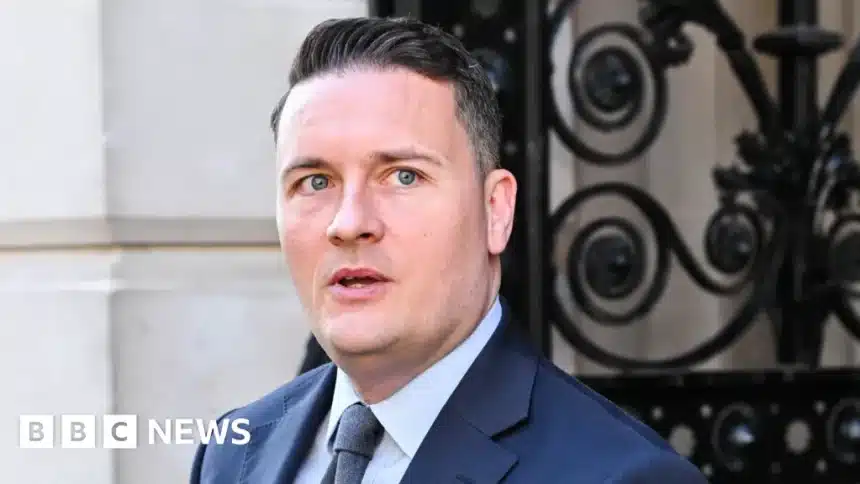
Wes Streeting, the 43-year-old Health Secretary, continues to publicly deny plans for a leadership challenge against Prime Minister Sir Keir Starmer. However, details remain unclear from his recent brief meeting with the prime minister at No. 10 Downing Street.
Streeting openly aspires to the top role someday but has rejected any immediate move against Starmer. As a cabinet member, he stands out amid speculation involving figures like Angela Rayner and Andy Burnham. Known as one of Labour’s strongest communicators, he frequently defends government policies in the media.
Supporters praise his political acumen and articulate style, arguing he could promote the party’s message more effectively than the current leader. Yet, his right-leaning stance within Labour may hinder support from left-wing colleagues.
Early Life and Formative Influences
Born in 1983 in east London to teenage parents, Streeting grew up in poverty in a council flat in Stepney, which he described as “grotty.” His grandfathers, both named Bill, shaped his early years and inspired the title of his 2023 memoir. One served prison time for armed robbery; the other, a traditional working-class Conservative, fought in the Navy during World War II.
This background fostered a cynical view of state institutions among many Labour figures, highlighting both their shortcomings and potential for opportunity. After attending a central London comprehensive school, Streeting studied history at Cambridge University, becoming the first in his family to attend university.
In his second year, he came out as gay—a practicing Anglican, he struggled to align this with his Christian faith at the time. Reflecting on his youth, he recalled: “I won a book token in a school competition and bought a collection of speeches by Tony Blair and read it on the coach to and from games. I mean, what sort of kid reads Tony Blair’s speeches on the bus? I was asking for it really.”
Political Rise and Key Milestones
Streeting launched his political career by winning the presidency of Cambridge University Students’ Union in his final year—a common stepping stone for aspiring politicians. In 2008, he became president of the National Union of Students, relying on the “thick skin” developed during school to weather criticism.
He sharpened his skills in charity work and won election as a Labour councillor in Conservative-led Redbridge in 2010, rising to deputy leader in 2014. He entered Parliament in 2015 as MP for Ilford North, a seat he narrowly held in 2024 with a majority of just 528 against a pro-Gaza independent.
A vocal critic of Labour’s leftward shift under Jeremy Corbyn, Streeting supported Remain in the Brexit referendum and a “people’s vote” on the final deal. He joined the frontbench in 2020 under Starmer, serving in shadow Treasury, schools, and child poverty roles before becoming Shadow Health Secretary in November 2021.
Health Challenges and Leadership Role
A cancer diagnosis during his shadow health tenure provided mixed NHS experiences: prompt care from an excellent surgeon, but also a wrong scan and treatment delays. As Health Secretary since Labour’s 2024 victory, he approved major pay rises for resident doctors (formerly junior doctors) to resolve strikes initiated under the Conservatives—though tensions persist with their union, the BMA, which he accuses of “cartel-like” tactics.
Streeting earns praise across the political spectrum for bold reforms, including decentralizing the NHS, expanding technology like an “online hospital service” for nine conditions via the NHS app by 2027, and empowering patients. He vows to dismiss underperforming managers and labels the service “broken,” while advocating private providers—a stance that irks party leftists.
To pursue Downing Street ambitions, Streeting must leverage his persuasive talents to build broader alliances beyond his ideological base.