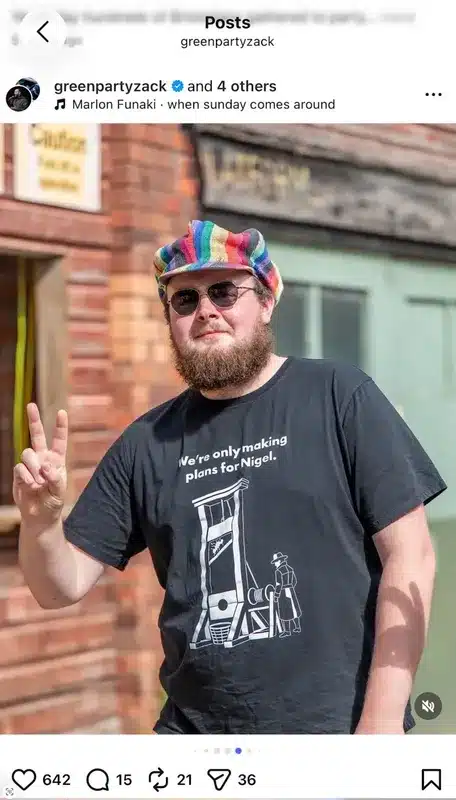
Green Party politician Zack Polanski is facing significant criticism and a police report after sharing an image on Instagram that depicted an activist wearing a T-shirt with a controversial slogan targeting Nigel Farage. The image, which has since been removed, showed a man with a beard wearing a black shirt featuring a guillotine graphic and the text “we’re only making plans for Nigel.”
Controversial Image Sparks Outrage
The photograph, initially shared on Polanski’s Instagram account, quickly drew condemnation from various quarters. Critics argued that the imagery and slogan, referencing a guillotine and a prominent political figure, could be interpreted as inciting violence or expressing support for harm against Nigel Farage. The T-shirt’s message, “we’re only making plans for Nigel,” combined with the guillotine symbol, was seen by many as a direct and alarming threat.
Polanski’s Response and Deletion
Following the widespread backlash and the concerns raised about the post’s content, Zack Polanski deleted the image from his Instagram profile on Sunday. In a subsequent statement, Polanski clarified his position, asserting that he “does not support this type of dangerous message.” He indicated that the image was removed after its contents were “brought to his attention,” suggesting a lack of initial awareness regarding the full implications of the graphic and slogan.
Nigel Farage Reports Polanski to Police
Nigel Farage, the subject of the T-shirt’s provocative message, has taken further action by reporting Zack Polanski to the police. Farage expressed his strong disapproval of the post, stating that if he were to share content of a similarly inciting nature, he would expect to face arrest. He implied that Polanski should be held to the same standard. This police report escalates the situation beyond public criticism, initiating a formal investigation into the matter.
Debate Over Political Discourse and Incitement
The incident has ignited a broader debate about the boundaries of political expression, particularly on social media platforms. Discussions are centering on where the line lies between legitimate political commentary or satire and dangerous incitement to violence. Many are questioning the responsibility of public figures to vet the content they share, especially when it involves potentially threatening imagery directed at individuals.
Key Questions Arising:
- What constitutes acceptable political commentary versus incitement?
- What is the responsibility of politicians when sharing content on social media?
- Should public figures be held to a higher standard regarding potentially violent imagery?
- What are the potential legal ramifications of sharing such content?
The incident also raises questions about the role of social media in amplifying political tensions and the potential for online posts to have real-world consequences. Experts in online safety and political communication have weighed in, emphasizing the need for caution and ethical considerations when engaging with and disseminating content that could be perceived as threatening.
Broader Implications for Political Figures
The scrutiny faced by Zack Polanski highlights the intense pressure and constant monitoring that public figures are under in the digital age. Every post, share, and comment can be amplified and scrutinized, leading to swift and often severe reactions. This case underscores the importance of careful content moderation and a thorough understanding of the potential impact of shared material.
The Green Party, while not directly commenting on the specific incident involving Polanski, generally advocates for robust public discourse. However, like all political parties, they are expected to uphold standards of conduct that do not promote violence or hatred. The party will likely face internal discussions regarding the incident and its implications for their public image and the conduct of their representatives.
Conclusion: A Matter for Investigation and Public Opinion
The situation involving Zack Polanski and the controversial T-shirt image remains a developing story. With a police report filed and significant public debate underway, the incident serves as a stark reminder of the complexities surrounding political expression in the digital era. The outcome of the police investigation, alongside ongoing public discourse, will shape the understanding of accountability for politicians sharing potentially inflammatory content online.