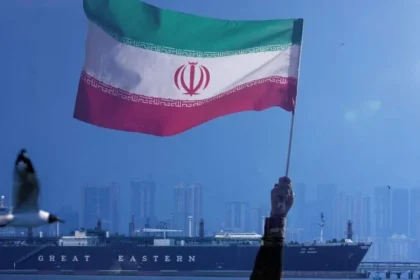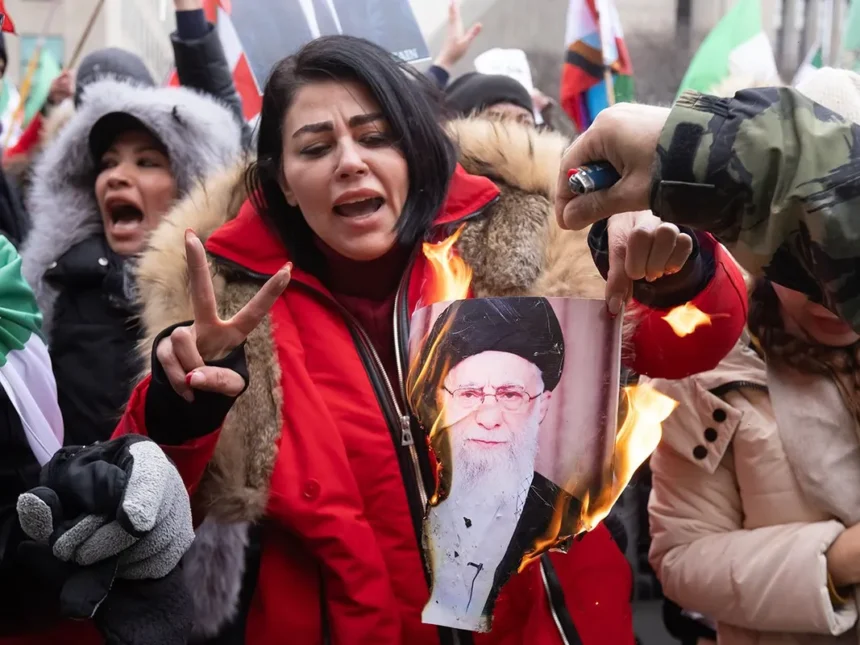
A recent community survey reveals that nine in ten Iranian Canadians strongly or somewhat support regime change in Iran.
Survey Details and Key Findings
The Metropolis Institute, a division of the Association for Canadian Studies, conducted the survey on behalf of the non-profit Advancement of Human Rights Organization for the Middle East (AHROME). Researchers distributed 1,768 surveys from March 29 to April 13 at major Iranian community events in Toronto, Vancouver, and Montreal, with 1,166 fully completed responses.
Respondents showed even stronger views on related issues. An overwhelming 92.3% hold a very unfavorable opinion of the current Iranian government. Nearly all, 98.4%, agree that the regime does not represent the will of the Iranian people. Additionally, 95.9% express a desire for at least normal diplomatic relations with Israel in the future.
Approval of International Military Actions
The survey indicates high support for the joint Israeli-American military campaign against Iran, which began in late February. A total of 90.2% of Iranian Canadians strongly or somewhat approve of these international military actions targeting the Iranian government. Similarly, 89.4% believe such actions contribute at least somewhat to political change in Iran.
Community Leader’s Perspective
Kevin Rod, president of AHROME and a practicing physician in the Iranian Canadian community, stated that the results align with expectations. “Knowing our diaspora community, I was not surprised by any of the responses,” Rod said in a written statement.
Rod urges the Canadian government to heed Iranian Canadians amid the ongoing conflict. “Given the large Iranian diaspora in Canada and Canada’s history of supporting human rights around the world, the Canadian government is well placed to lead the way in raising awareness and supporting the people of Iran in their struggle to change this regime,” he added.
Demographics and Historical Context
Statistics Canada’s 2021 census reports approximately 200,000 Iranian Canadians and another 80,000 who identify as Persian, forming Iran’s largest ethnic group. Most respondents feel very or somewhat attached to Canada, with 84.2% indicating a yes or probable long-term future there.
The majority arrived after the 1979 Iranian Revolution, which overthrew Shah Mohammad Reza Pahlavi and elevated Islamic cleric Ruhollah Khomeini to power. Pre-1980 immigration from Iran totaled just over 2,000 people, per Statistics Canada data.
Strong Backing for Reza Pahlavi
Support remains robust for Reza Pahlavi, the Shah’s son residing in the United States. An impressive 98.6% of respondents are very or somewhat familiar with him, and 89% hold a very or somewhat favorable opinion. Further, 90.2% believe he should play a political role in Iran’s future, while 89.4% view him as a suitable unifying figure for the opposition.
“There is no confusion about who the Iranians inside Iran and the Iranian diaspora want as their leader,” Rod declared. “This leader is Prince Reza Pahlavi; this is the only name called by the people of Iran, and his name was written by their blood on the walls of their cities.”
Rod also calls on Prime Minister Mark Carney’s government to actively support efforts to remove the current regime, warning that actions legitimizing it—such as supporting Iran’s bid for a UN human rights committee seat after killing tens of thousands of citizens—would alienate the community.
Concerns for Family and Methodology Note
Despite strong support for change, 93.6% of respondents express some or great concern for family members’ wellbeing in Iran. “The Iranian Canadian community echoes the voices of their relatives and compatriots in Iran and sees this campaign as a historic liberating effort against a regime that has indiscriminately killed tens of thousands of unarmed protesters just to stay in power,” Rod explained.
The survey uses a non-probability sample, so a traditional margin of error does not apply. A comparable probability sample would carry a margin of error of plus or minus 2.9%, 19 times out of 20.