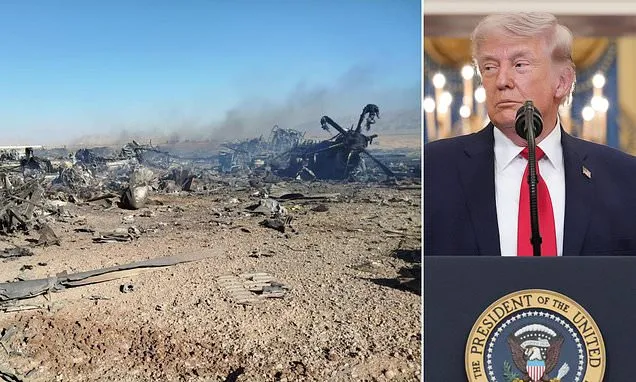
A high-stakes U.S. military rescue operation to extract an airman stranded deep in Iranian territory teetered on the brink of catastrophe, stranding aircraft and personnel as enemy forces closed in.
The Incident and Evasion
An F-15E fighter jet was shot down by Iranian forces early Friday, ejecting both the pilot and the Weapons Systems Officer, referred to as the colonel. The pilot was rescued hours later in a covert operation. The colonel, injured after ejecting, evaded capture using survival techniques. He trekked 70 miles, climbed to 7,000 feet in a treacherous mountain range, and activated an emergency beacon after lying low for nearly two days.
Iranian forces offered a $60,000 reward for his capture, mobilizing Basij militia and locals. Broadcasters urged civilians: “If you capture the enemy pilot or pilots alive and hand them over to the police you will receive a precious prize.” U.S. forces deployed A-10 Warthogs to block roads, strike communications towers, and target approaching vehicles, with Iranian officials reporting at least four killed.
The Rescue Attempt
Hundreds of special forces flew into Iranian airspace for the extraction. CIA efforts confused pursuers by spreading misinformation about the colonel’s location. However, two C-130 transport planes and an MH-6 Little Bird helicopter became stuck in mud at a remote airfield, stranding dozens of U.S. personnel behind enemy lines as Basij fighters advanced.
Three additional transport planes arrived under heavy fire, enabling evacuation just before midnight. The stranded aircraft were destroyed to prevent capture, resulting in significant financial losses for the U.S. military. An MH-6 helicopter, damaged earlier, was also demolished.
Iranian Claims and U.S. Response
Iranian media claimed to have shot down the transport planes but offered no evidence, later dismissing the rescue as a cover-up. State media released images of wreckage from the F-15E, captioned: “The stealth fighter that now has no escape but to lie under the feet of aerospace warriors… this is the very technology they claimed was invisible and untouchable, but now it has been seen and brought down.”
President Trump hailed the mission on Truth Social as “one of the most daring Search and Rescue Operations in U.S. History,” emphasizing U.S. dominance. He noted: “This brave warrior was behind enemy lines in the treacherous mountains of Iran, being hunted down by our enemies, who were getting closer and closer by the hour.” Trump stated both pilots were rescued separately deep in enemy territory without U.S. fatalities, despite reported injuries.
Broader Conflict Context
The downing marked the first U.S. aircraft lost since the conflict began, following an A-10 Warthog shootdown. A Black Hawk helicopter involved in earlier searches sustained injuries to crew from IRGC fire. Iranian parliamentary speaker Mohammad Ghalibaf taunted: “After defeating Iran 37 times in a row, this brilliant no-strategy war… has now been downgraded from ‘regime change’ to ‘Hey! Can anyone find our pilots? Please?’”
Iran rejected Trump’s 48-hour ultimatum issued March 26, with General Ali Abdollahi Aliabadi warning: “The gates of hell will open for you.” Violence continued as Iran launched missiles and drones at Israel, Kuwait, the UAE, and Bahrain. Air defenses in those nations responded, reporting incidents including a refinery fire in Bahrain.
Pakistan offered mediation, with its foreign minister speaking by phone to his Iranian counterpart.