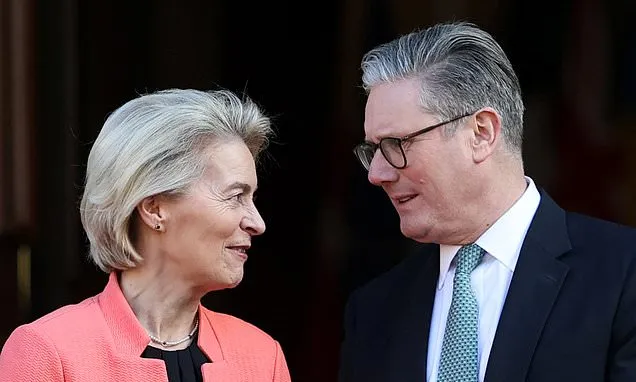
Ministers plan to introduce legislation aligning the UK with future EU single-market regulations, bypassing standard parliamentary scrutiny. This initiative forms part of Prime Minister Keir Starmer’s strategy to strengthen ties with the European Union, prompting strong backlash from Brexit supporters who label it a significant betrayal.
The Legislation Details
Expected in May’s King’s Speech, the bill grants ministers authority to ‘dynamically align’ with EU rules deemed in the national interest. Utilizing Henry VIII powers, it enables adoption via statutory instruments—secondary legislation that MPs can approve or reject but not amend.
Initially targeting a food and drink agreement incorporating 76 EU directives and emissions trading, the measure could extend to other sectors. Officials emphasize that alignment requires national interest justification, with Parliament involved in approvals. Blocking specific rules risks EU tensions and retaliation, though carve-outs remain negotiable, resolved by independent tribunals rather than EU courts.
Opposition and Criticisms
Reform UK leader Nigel Farage condemned the plans as a ‘backdoor attempt to drag Britain back under EU control.’ He stated: ‘Accepting their rules without a vote is a direct betrayal of the Brexit referendum and a total breach of the Government’s manifesto promises. The British people didn’t vote to become rule-takers, and we will fight this every step of the way.’
Conservative business spokesman Andrew Griffith warned that it reduces Parliament to ‘a spectator while Brussels sets the terms’—a rejection of the 2016 referendum outcome. He added: ‘Labour are still fighting the referendum because they fundamentally cannot accept the democratic decision the British people made.’
Professor Anand Menon of the UK in a Changing Europe think-tank highlighted risks of ‘integration with the EU by stealth’ without member-state voting rights. He noted: ‘Changes to UK regulations should be debated in Parliament and thrashed out by politicians. The reality is we are signing up to a deal with the EU that commits us to follow their rules, whether we like it or not.’
Government Justification
Chancellor Rachel Reeves outlined selective alignment in sectors with unique UK needs as exceptional, not routine. Starmer recently stressed collaboration with Europe on defense and trade amid global challenges, anticipating a UK-EU summit for broader alignment—despite disputes over youth mobility schemes.
A government source dismissed critics as haunted by Brexit, advocating bridge-building in tense times. Deputy PM David Lammy and Health Secretary Wes Streeting have voiced support for closer economic links, including the customs union.
A spokesman affirmed: ‘This Bill will allow us to deliver a ‘food and drink’ trade deal worth £5.1 billion a year, backing British jobs and slashing costly red tape for our farmers, producers and businesses. We will provide details of the legislation in due course.’