Garden fences form the initial impression for visitors and frame outdoor spaces. Design expert Jordana Ashkenazi, founder of award-winning studio Element One House, analyzes popular boundary types and what they signal about homeowners.
She notes: “People invest heavily in interiors but overlook boundaries, the first element everyone notices. Whether a fence, wall, or hedge, it sets the tone for the property.”
Treating boundaries as an afterthought diminishes the space, while thoughtful choices elevate it. Here’s what various fences reveal.
Basic and Practical: Lap Panel Fencing
The lap panel features overlapping timber slats in a wooden frame. Jordana describes it as “the most common, affordable choice focused on function over style.”
It conveys a straightforward, no-nonsense approach, common in everyday gardens prioritizing utility. “It gives off a ‘that’ll do’ vibe—practical but uninspired,” she adds.
Middle-Class Choice: Featherboard Fencing
Slightly pricier and sturdier than lap panels, featherboard fencing signals quality and care. Jordana observes: “This upgrade appears in neat, maintained gardens where homeowners value neighborly standards.”
It suits family homes in suburban areas, projecting polish without excess design flair.
Tacky Trend: Grey-Painted Fences
Painting fences grey for a modern look often backfires. Jordana warns: “The grey craze aimed for sophistication but can appear flat and lifeless without balancing elements like plants.”
It risks a “try-hard” impression, feeling downmarket rather than upscale. For better results, opt for warmer tones like soft olives or earthy neutrals that blend naturally outdoors.
Trendy Millennial Pick: Venetian Battens
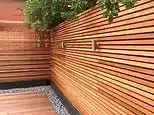
Precisely spaced red cedar battens offer a sleek, architectural screen. Jordana says: “This curated style suits design-savvy younger homeowners seeking an Instagram-worthy garden.”
While polished, it can feel overly controlled if the surrounding space matches its precision.
Truly Refined: Natural Boundaries
In upscale rural areas like the Cotswolds, ivy-clad walls or planted edges prevail over standard fences. “These soft, established borders evoke timeless English charm,” Jordana explains.
They demand annual maintenance to avoid overgrowth, staying elegant with trimming. Stone or brick walls with greenery provide a grounded, cohesive feel hard to match with off-the-shelf options.
Risky Statement: Black Decorative Panels
Ornate black metal panels with patterns aim for drama but can date quickly. Jordana cautions: “They appeal to those chasing bold trends, yet overused designs feel heavy and forced, bordering on nouveau riche.”
Sparingly applied, they intrigue; otherwise, they clash in natural settings.
Quick Fix: Wicker or Bamboo Screens
Budget screens from retailers offer instant rustic updates. However, Jordana views them as “temporary solutions with a student-like stopgap energy.”
Properly installed bamboo fares better for durability and warmth.
Height Matters: Short vs. Tall Fences
Fence height reflects personality. Shorter ones promote openness and sociability, while 6-foot versions prioritize privacy. “Neither is wrong, but they send distinct messages,” Jordana concludes.