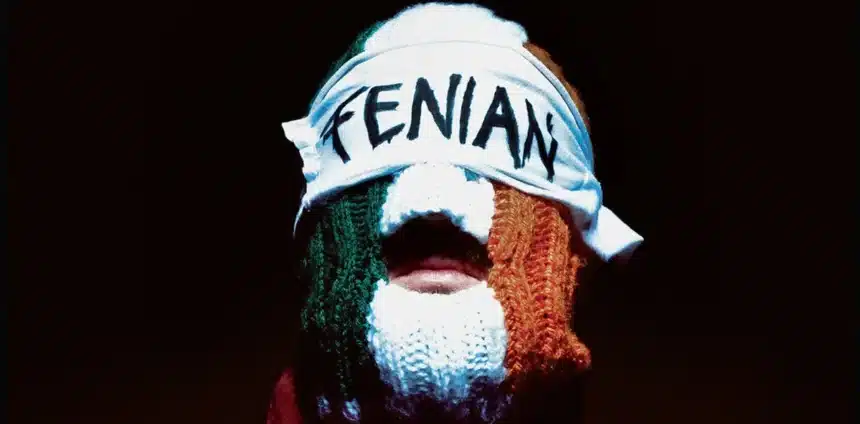
Irish hip-hop trio Kneecap unleashes their latest album, Fenian, boldly reclaiming a term steeped in painful history. Once a derogatory slur linking Irish people to subhuman stereotypes, the title now stands as a defiant symbol of pride and resistance.
Origins and Evolution of ‘Fenian’
The word fenian traces back to Fianna, ancient Irish mythology featuring warrior bands led by hero Fionn mac Cumhaill. Over time, it gained prominence through 19th-century Irish nationalism. Under British rule, Irish Catholics faced religious and cultural suppression since the 17th century.
Nationalist movements, including the Irish Republican Brotherhood—whose members earned the fenian label—pushed for independence, often through forceful means. The term morphed into a slur targeting independence supporters.
Anti-Irish Racism and Hibernophobia
Beyond politics, fenian ties into a legacy of anti-Irish prejudice known as hibernophobia. In the 19th century, social Darwinism—a flawed pseudoscience—ranked human groups on an evolutionary scale, placing white Europeans at the top.
Irish Catholics ranked low, portrayed as backward and savage to justify their oppression. This view deemed them unfit for self-governance. Fenians embodied supposed Irish flaws: stupidity, violence, and brutishness. Their actions appeared innate rather than reactions to British policies.
Cartoons amplified this dehumanization, depicting fenians as ape-like terrorists with exaggerated features. A 1866 illustration shows a simianized fenian threatening a graceful Britannia. Similar xenophobic images appeared in Australia, like an 1886 caricature.
These stereotypes persist today, fueling casual anti-Irish humor.
Who Are Kneecap?
Hailing from Northern Ireland, Kneecap—a rap and hip-hop group—gained stardom with their 2024 semi-autobiographical film. Their raw, irreverent tracks challenge colonialism, echoing calls to end British presence in Ireland.
The trio unites Irish people across religions, advocating reunion of Northern Ireland’s six counties—partitioned in 1921—with the Republic. They rap in English and Irish, boosting the language’s revival. Irish gained official status in Northern Ireland only in 2022 after decades of suppression.
Embracing the Label in Music
The album’s title track, Fenian, features a crowd chanting “F-E-N-I-A-N” in celebration. Band member Mo Chara wrote it amid British terrorism charges for waving a Hezbollah flag at a London concert in November 2024. The charges, later dropped, highlight Kneecap’s Palestinian solidarity, linking to Irish nationalist support for colonized peoples.
Mo Chara noted, “he’s not the first Irish person to be called a terrorist.”
Reclamation and Controversy
While Kneecap embraces fenian—redefining it playfully as members of “a secret socialist society of sound cunts”—they recognize its slur potential. Context matters: London transport authorities reportedly censored album posters by blanking the word.
The group wields the term intentionally, transforming historical pain into cultural empowerment. Others should approach it cautiously, mindful of its anti-Irish roots that echo faintly today.