Football’s Global Showpiece Puts Olympic Compensation Under Scrutiny
This month’s FIFA World Cup boasts a staggering $1.3 billion in prize money. Even teams that fail to advance from the group stage are guaranteed a substantial $13 million for their national federations. This significant financial commitment stands in stark contrast to the current compensation structure for Olympic athletes.
IOC President’s Stance on Athlete Pay
Kirsty Coventry, the International Olympic Committee (IOC) president, recently stated a belief that athletes competing in the Olympic Games should not be directly paid. She indicated that athletes benefit from accommodation in athletes’ villages, competition at world-class venues, and the overall experience of participating in the Games, all funded by the IOC’s revenue.
Historical Roots of Olympic Amateurism
The concept of Olympic amateurism, established when Baron Pierre de Coubertin revived the Games in 1896, originated from the Victorian era’s “gentleman amateur” ethos. This code was designed to exclude working-class individuals, as the gentry could afford to compete without financial recompense. A prominent example of this exclusionary rule was the 1912 disqualification of Jim Thorpe, a multi-talented athlete, for accepting money to play minor league baseball. His Olympic medals were posthumously reinstated seven decades later.
Shift to Professionalism and Perceived Injustice
The term “amateur” was officially removed from the Olympic Charter around 1981, paving the way for professional athletes to compete. This included figures like professional tennis players and, notably, the United States’ “Dream Team” of NBA millionaires in 1992. Critics argue that while the IOC embraced professionalism for athletes who were already financially secure, it has maintained a system that leaves many Olympic competitors in financial hardship. Athletes who represent the pinnacle of their sports, such as race walkers, judokas, and modern pentathletes, often face significant financial strain to pursue their Olympic dreams.
IOC’s Revenue Distribution and Athlete Earnings
The IOC emphasizes that approximately 90% of its income, exceeding $2.8 billion annually, is reinvested into the Olympic Movement. However, this figure often represents funds directed towards national Olympic committees, officials, and infrastructure, rather than direct payments to the athletes who generate the revenue. Furthermore, Article 40 of the Olympic Charter grants the IOC control over athletes’ names, images, and likenesses, preventing them from monetizing their personal brand while their performances are used to promote the Games in perpetuity.
Athlete Testimonials and Financial Realities
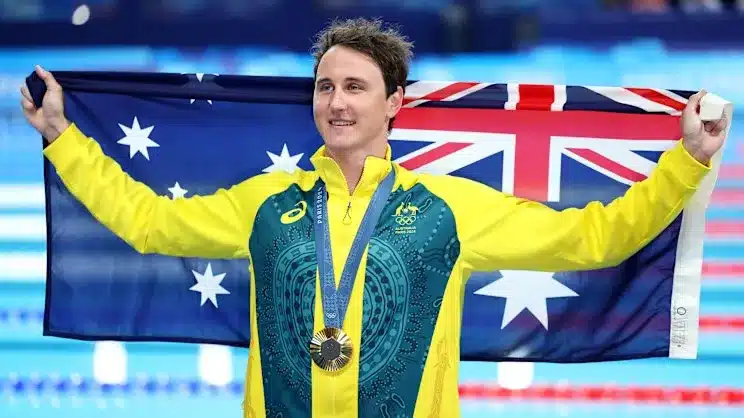
Athletes have voiced concerns about the financial burden of pursuing Olympic glory. Leisel Jones, a multi-medal Olympian, has expressed that she would discourage young people from chasing the Olympic dream due to the potential for accumulating debt. Cam McEvoy, who achieved a world record in Paris without direct financial reward, suggested a compensation model that includes appearance fees for all qualified athletes and six-figure prizes for gold medalists. These are presented not as demands for entitlement, but as the financial realities for individuals who dedicate themselves to their sport.
A Call for Fairer Compensation
The contrast with FIFA’s financial commitment to the World Cup is evident. Football’s governing body distributes substantial sums to participating nations, acknowledging that those who create the spectacle should share in its financial success. While some may argue that football is entirely professional and the Olympics are more about ideals, the shift to professionalism in the Olympics occurred decades ago. The current arrangement sees the IOC profiting immensely from broadcasting rights and administrative structures, while the athletes who are the core of the event are asked to perform with minimal financial reward, often in the name of an ideal the institution itself has largely abandoned.
World Athletics Leads the Way in Athlete Rewards
In a significant development, World Athletics has become the first federation to implement direct financial rewards for its athletes. Ahead of the Paris Games, the organization announced it would pay $50,000 to each track-and-field gold medalist and plans to reward the entire podium at the Los Angeles Games. Lord Sebastian Coe, the head of World Athletics, articulated a straightforward rationale: the revenue generated by the Games is a direct result of the athletes’ performances, and therefore, a portion of that revenue should be distributed to them.
Addressing Criticisms and Proposing Solutions
While some acknowledge that prize money for gold medals may not benefit athletes who do not medal, this argument is seen as a call for a more comprehensive compensation model, not an excuse for the absence of one. The example of FIFA, which pays millions to lower-ranked teams, demonstrates that financial distribution does not necessarily undermine the sport’s viability. A proposal suggests implementing appearance fees for all qualifying Olympic athletes, ensuring no one incurs out-of-pocket expenses simply for participating. Additional rewards for medalists, funded by athlete-generated revenue, are also proposed, following the model set by World Athletics.
The Olympic Movement’s narrative of ideals, epitomized by its motto, is powerful. However, a compelling story does not justify a system where athletes bear the financial burden while others profit. The fundamental question facing the Movement is whether the Olympic ideal is a guiding principle or a convenient justification for an inequitable financial structure. The ultimate decision rests on whether the IOC truly prioritizes its athletes or not.