Global Energy Shipments Surge Amid Delicate Iran Peace Talks
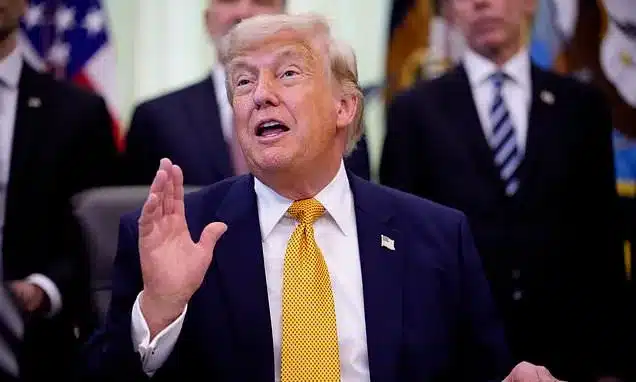
President Donald Trump has publicly celebrated a significant increase in global energy shipments, reporting that an impressive 19 million barrels of oil transited the crucial Strait of Hormuz on Monday. In a statement released Tuesday morning, Trump declared that oil prices are experiencing a notable decline, asserting that the recent stabilization of international energy markets has contributed to a more secure global environment.
Data from AAA indicates that the national average price for a gallon of gasoline stood at $3.92 on Monday, marking a decrease of 13.6% compared to the previous month. These remarks coincide with a period of fragile peace negotiations with Iran, a situation Trump addressed directly from the Oval Office.
Prioritizing Nuclear Security Over Economic Concerns
When questioned by reporters about the potential for future U.S. military actions to trigger global economic repercussions should Iran breach a current Memorandum of Understanding (MOU), Trump emphasized his administration’s priorities. “Nuclear weapons supersede depression,” Trump stated, explaining that a nuclear conflict would lead to far more severe economic consequences than any current downturn. He defended his assertive stance against Tehran’s nuclear ambitions, arguing that the current strategy is fostering economic growth rather than recession, particularly in relation to the heavily monitored Middle Eastern shipping lanes.
Vice President JD Vance, speaking at a press conference, noted that Iranian negotiators nearly withdrew from ongoing talks due to President Trump’s frequent social media posts concerning the agreement. Vance recounted relaying to the Iranian delegation that “when you guys engage in what us millennials might call ‘trash talk,’ you can’t expect the president of the United States not to respond and not to correct the record.”
Economic Optimism and Stark Warnings
Trump expressed optimism about the current economic climate, stating, “The way we’re doing it, we have the opposite of a depression. We are doing really well, the numbers are incredible.” This sentiment is echoed by Energy Secretary Wright, who confirmed that oil and natural gas are currently flowing through the Strait of Hormuz at “pre-crisis levels,” with potential for further increases.
However, the President issued a clear warning to Iranian leadership regarding adherence to the terms of the agreement. “If Iran doesn’t live up to their agreement, or if they’re not behaving, I will do what I have to do,” Trump declared. Pressed on assurances that Iran would not divert unfrozen assets to military buildup, Trump responded, “We’ll see, but they’re supposed to use money to buy food for their people, because right now the people are very hungry.” He also claimed that the economic arrangement is benefiting American agriculture, with Iran exclusively purchasing food stocks from the United States.
Negotiations Tested by Social Media Activity
Despite the President’s portrayal of American leverage, the negotiations in Europe were reportedly tense. The Iranian delegation, led by Parliament Speaker Mohammad Bagher Ghalibaf, with Qatari and Pakistani officials acting as mediators, reportedly threatened to leave the discussions after President Trump posted extensively about the ongoing talks over the weekend. Trump’s posts, made from Camp David, addressed specific aspects of the MOU, including terms related to tolls in the Strait of Hormuz and a 60-day ceasefire period.
These repeated public statements about Iran, including criticism of Hezbollah and claims of dismantling Iran’s military capabilities, reportedly frustrated the Iranian negotiators. Vice President Vance acknowledged that there were “a little bit of threatening” and “whining” from the Iranian side, but emphasized that the talks ultimately continued and significant progress was made.
Key Milestones Achieved in Negotiations
Vice President Vance highlighted a major achievement in the talks: Iran’s agreement to allow inspectors from the International Atomic Energy Agency (IAEA) to return to the country. “The Iranians have agreed to invite IAEA inspectors back into their country. That is a major milestone for the American people,” Vance stated, describing the agreement as the “first step in permanently denuclearizing – permanently ending a nuclear weapons program in Iran.”
Progress was also reported on four key areas: maintaining the open flow of the Strait of Hormuz, coordinating a ceasefire between Israel and Hezbollah, the IAEA inspections, and establishing a process for continued negotiations over the next 60 days.