Steggall Invites Ousted Independents to Join ‘Community Strong Australia’
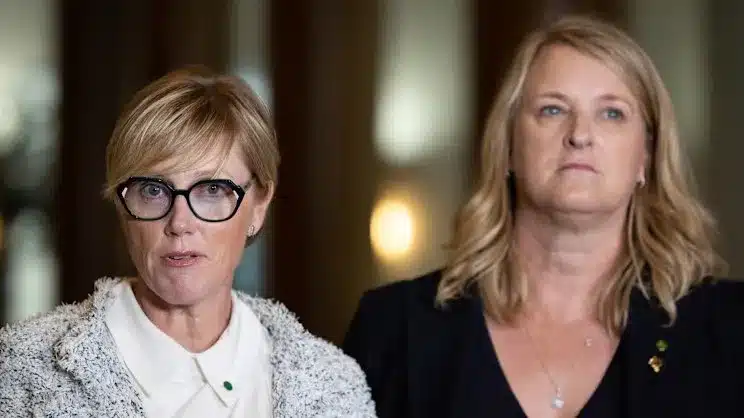
Independent MP Zali Steggall is extending an invitation to former colleagues Zoe Daniel and Kylea Tink to join her newly formed political party, Community Strong Australia. The party, established to foster a “new era” in Australian politics, currently comprises only Steggall and Allegra Spender but is actively seeking broader support, particularly in the Senate.
Senate Ambitions and Independent Support
Community Strong Australia is preparing for a significant challenge in securing Senate seats. The party aims to recruit independent Members of Parliament and prospective candidates to bolster its chances in the upper house. Steggall expressed her hope that Daniel and Tink would consider running for parliament under her party’s banner, commending their previous service to their respective communities.
“For Kylea, the hard thing was the AEC abolished the seat of North Sydney [before the 2025 election]. That is, that a lot of that area is now part of Warringah [Steggall’s electorate]. So I obviously talked with her, and it’s been a great privilege to represent that part of her community,” Steggall stated.
Regarding Zoe Daniel, Steggall added, “Zoe, again, I hope she does decide to run again in Goldstein because I think she really served the people of Goldstein well, represented them and was such a staunch advocate for the duty of care in relation to social media and the push to ban gambling advertising.”
Formation and Divergent Paths
The formation of Community Strong Australia was announced on Thursday by Steggall and fellow independent Allegra Spender. The party is rooted in the community independent movement that has successfully challenged established Liberal MPs in recent federal elections. Other parliamentary ‘teal’ independents, such as Monique Ryan and Kate Chaney, are maintaining their independent status. Sydney MPs Nicolette Boele and Sophie Scamps are currently consulting with their communities on future steps.
Daniel and Tink, who were elected in the 2022 ‘teal’ wave, were unsuccessful in retaining their seats in the May election. Daniel is now a lead plaintiff in a High Court challenge concerning electoral finance reforms, while Tink has taken on a leadership role at the relief organization Foodbank.
Daniel’s Response and Party Vision
In response to Steggall’s remarks, Daniel indicated that she is not currently focused on a parliamentary return or joining the new party in the immediate future. However, she noted receiving “very positive” feedback from voters in her former Goldstein electorate regarding Community Strong Australia.
“People are saying the reason we voted for you was because of your values and principles, so [joining the party is] not going to change our views,” Daniel commented. She also expressed that the traditional party models of Labor, the Liberals, and the Nationals are not effective, and that Steggall and Spender’s new proposal warrants consideration.
Community Strong Australia is expected to operate without a designated leader for the time being. Membership is exclusively for MPs and parliamentary candidates, granting them the liberty of free votes and the ability to campaign on a wide range of issues.
“There are some open questions [about how the party will function], but what they are trying to do is something innovative and different,” Daniel observed, acknowledging the potential for the party to adapt to future challenges.
Challenges and Electoral Analysis
The formation has drawn criticism, with Tim Wilson, who unseated Daniel in Goldstein, characterizing the party as a front for Labor and questioning its core principles. Daniel responded to these criticisms by drawing a parallel: “If your neighbour across the road was doing renovations, would you be worried about their style choices, or your house that’s burning to the ground behind you?” Tink has been approached for comment.
Analysis of voting data from the previous election suggests that Community Strong Australia will require substantial support to achieve Senate representation in 2028. The analysis indicates that while NSW and Western Australia present the strongest prospects, with independent candidates receiving between 70-80% of the votes needed to elect a senator, success would depend heavily on preference flows from other parties.
In Victoria, where independent candidates secured 30-40% of the necessary votes, Ryan and Helen Haines have indicated they will not join the new party. When asked about directing Senate votes, Haines declined to comment, and Ryan stated her team is not yet considering election strategies.
Seeking Allies
Steggall expressed her respect for colleagues who choose to remain independent but stated she would be “seeking for them to be allies of Community Strong and support an upper house ticket.”