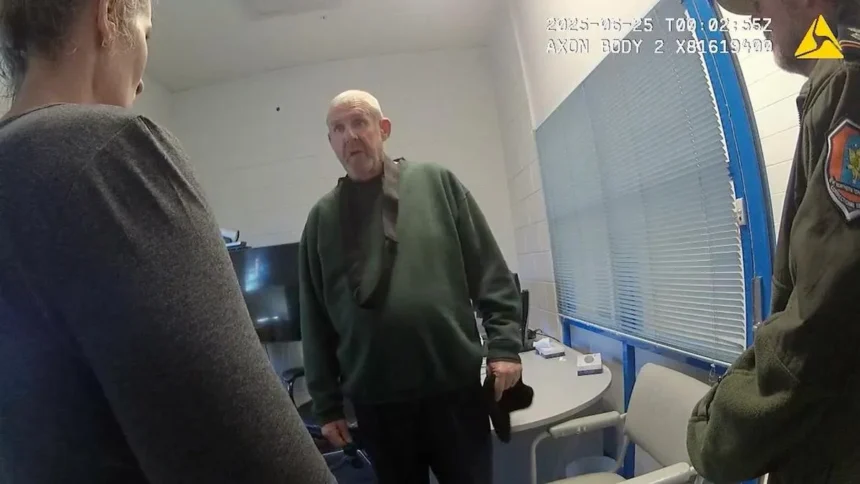
Bradley Murdoch, the convicted killer of Peter Falconio, maintained his innocence until his death on July 15 last year, never revealing the location of Mr. Falconio’s body. Newly released footage, recorded weeks before Murdoch’s passing, shows him vehemently denying any knowledge of the whereabouts of the victim or his remains, a stance he held throughout his 22-year legal battle and numerous failed appeals. This persistent denial, common among some convicted individuals, offers a complex psychological landscape, according to criminologists.
The Psychology of Denial in High-Profile Crimes
Criminologist Dr. Xanthe Mallett from Central Queensland University explained that for some criminals, particularly those convicted of notorious crimes, maintaining secrets is a way to retain a sense of power and control, even after incarceration or in the face of death. “A lot of these crimes are about power and control and dominance, so it’s a way of maintaining that power and keeping people interested in them,” Dr. Mallett stated. She elaborated that divulging certain information, such as the location of a victim’s body, could be perceived by the perpetrator as relinquishing their final leverage or ‘cards to play’.
This dynamic can fuel a desire for continued attention, or what Dr. Mallett terms “infamy.” By withholding crucial details, individuals can ensure they remain a subject of interest, a morbid form of validation that sustains their sense of importance. “So they tend to keep those secrets because then people will keep coming back to them, and they feel important. They love the infamy of it,” she added.
Murdoch’s Final Statements
In the recently surfaced video, Murdoch’s frustration and anger are palpable as he confronts questions about Peter Falconio’s body. “I know nothing. I’ve said this for 22 years. I know nothing,” he declared with increasing vehemence to the officers. “I’ve said the same story over and over and over, and now you’re here at the last minute because I’m f***ing dying.” His defiant stance underscores a lifelong refusal to cooperate with authorities regarding the details of the crime.
The Art of Deception: Psychopathy and Manipulation
Dr. Mallett also shed light on the deceptive capabilities of individuals with psychopathic tendencies, noting their proficiency in mimicking genuine emotional responses. “Practiced liars can appear convincing in their responses because they have learned how to mimic genuine emotions,” she explained. “They’re very good at manipulating people and mimicking responses like outrage.” She characterized Murdoch as a practiced liar, suggesting his 25-year history of maintaining his innocence, coupled with psychopathic traits, contributed to his ability to appear convincing.
The Falconio Case: A Brutal Encounter
The crime itself occurred in December 2001 when Joanne Lees and Peter Falconio were travelling along a remote stretch of the Northern Territory’s Sturt Highway. Bradley Murdoch, driving a road train, signaled for them to pull over, falsely indicating a problem with their vehicle. Once stopped, Murdoch shot Mr. Falconio and then restrained Ms. Lees with cable ties, covering her head. In a remarkable act of survival, Ms. Lees managed to free herself from her bonds and escape into the surrounding bushland. She remained hidden for hours while Murdoch searched for her. Eventually, the then 27-year-old managed to flag down a passing truck, leading to her rescue and the subsequent investigation that eventually led to Murdoch’s conviction in 2005.
The Unanswered Questions
Despite the conviction and the passage of time, the exact circumstances and the ultimate fate of Peter Falconio’s remains have remained a source of anguish for his family. Murdoch’s continued denial, even in his final days, highlights a persistent theme in criminal psychology: the desire to maintain control and a sense of self, even when confronted with mortality. The case of Peter Falconio serves as a stark reminder of the devastating impact of violent crime and the enduring pain caused by the unknown, a pain that Murdoch’s final statements did little to alleviate.