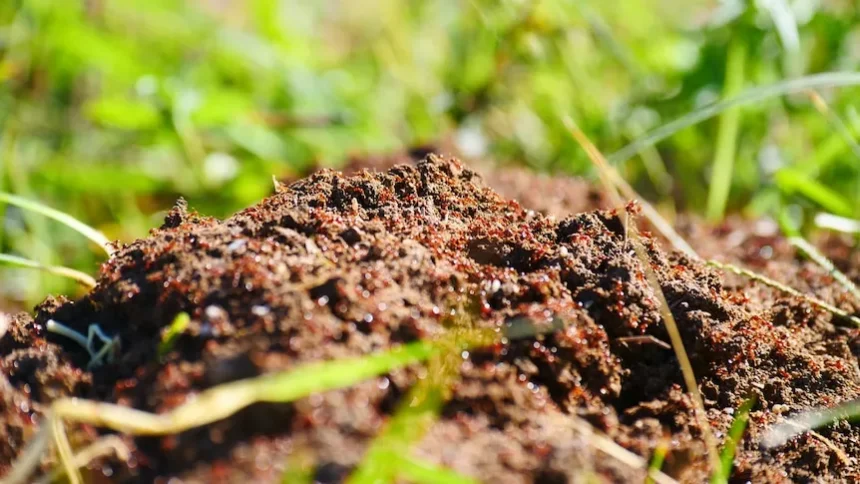
The City of Gold Coast has reported the destruction of over 30,000 fire ant nests on council land since 2022, a significant effort against an invasive species that has rapidly spread across the region. Despite these substantial eradication numbers, local officials express low confidence in achieving complete eradication in the near future, highlighting the formidable challenge posed by the aggressive ants.
Surge in Fire Ant Infestations
The scale of the fire ant problem on the Gold Coast has dramatically escalated. In 2022, only 13 nests were detected. This number surged to more than 13,000 nests in the following year, prompting the City of Gold Coast to establish a dedicated fire ant suppression team. The recent report to the council details the city’s response to this escalating crisis, which has seen the invasive pest infest large swathes of south-east Queensland.
Mixed Reactions to Eradication Efforts
Acting Mayor Mark Hammel described his reaction to the number of nests destroyed as both “alarmed and pleased.” He acknowledged the positive initial signs from the suppression efforts but cautioned that the path to complete eradication is exceptionally long. “While the early signs are pleasing, there’s a long, long way to go,” Hammel stated. “They are superb at multiplying out so my level of confidence of completely eradicating them is pretty low.”
Economic and Environmental Threats
The unchecked proliferation of fire ants poses a significant economic and environmental threat to the Gold Coast. Estimates suggest that if left unabated, the ants could cost the local economy approximately $176 million annually. Their destructive nests also threaten valuable public spaces, including parks and beaches, impacting recreational activities. However, the report noted that disruption has been minimal, with only one park closure recorded during the suppression efforts, allowing for limited impact on weekend sports and leisure.
A Broader Regional Challenge
The spread of fire ants is not confined to the Gold Coast; it represents a major concern for south-east Queensland and beyond. The invasive species has already infested over 800,000 hectares in the region. Furthermore, incursions have been detected in northern New South Wales and central Queensland, facilitated by the movement of goods such as mulch and turf via planes, boats, and trucks. This highlights the mobile nature of the pest and the need for coordinated, widespread control measures.
National Eradication Program and Suppression Zones
A $592 million national program has been established to create an eradication zone around south-east Queensland. Teams from the National Fire Ant Eradication Program are directly responsible for destroying nests within this zone. The Gold Coast operates within a designated “suppression zone.” In these areas, local authorities and private landowners are tasked with managing fire ant populations to prevent further spread, with the ultimate goal of progressively constricting the infestation towards the coast as eradication efforts advance.
The Gold Coast’s Role in the ‘Final Push’
Cr Hammel emphasized the Gold Coast’s critical position in the national strategy. “We’re the last place for the final push to eradicate them,” he explained. He expressed a degree of optimism that by focusing efforts on the Gold Coast, the scale of the problem might be reduced from millions of nests to tens of thousands, making eradication more manageable.
Government Investment and Progress
The Queensland government has committed significant resources to combat the fire ant invasion, investing $61 million over the past two years. This funding has supported suppression efforts across the south-east, with approximately 186,000 hectares treated. Primary Industries Minister Tony Perrett indicated that initial results are promising, showing an 86 percent reduction in fire ant densities in treated areas. However, he stressed that sustained success hinges on collaborative efforts involving all levels of government, industry stakeholders, and the community.
Lessons Learned and Future Outlook
An earlier review of the National Fire Ant Program identified communication breakdowns and the spread of misinformation as factors that had previously eroded public confidence. Despite these challenges, the review concluded that eradication remains an achievable goal. While a spokesperson for the national program was unavailable for comment, the ongoing efforts on the ground, coupled with government investment and a clearer understanding of the challenges, suggest a determined, albeit long-term, approach to tackling the fire ant menace.
The extensive destruction of nests is a testament to the dedicated work being undertaken, but the persistent threat and the low confidence in immediate eradication underscore the need for continued vigilance and robust strategies to protect the Gold Coast and the wider region from this destructive invasive species.