In the landscape of critically lauded television, some series achieve widespread recognition, while others, despite immense acclaim, remain relatively unknown. Halt and Catch Fire, an AMC drama that explored the burgeoning personal computing and internet eras of the 1980s and 1990s, falls into the latter category. Created by Christopher Cantwell and Christopher C. Rogers, the show has garnered a devoted following and significant critical praise, yet it often flies under the radar for many viewers. Despite its limited mainstream fame, fans describe it as a compelling narrative that leaves them “completely hooked.
The series, which premiered in 2014, centers on a compelling ensemble of characters navigating the volatile and rapidly evolving tech industry. At its core are Joe MacMillan, a visionary entrepreneur; Gordon Clark, a brilliant but troubled engineer; and Cameron Howe, a volatile programming prodigy. Together, they embark on ambitious projects, often risking their careers, ethics, and personal lives to challenge established industry titans and drive technological innovation. The show’s title itself is a nod to a computer command that would cause a CPU to halt its operations, reflecting the high-stakes, often precarious nature of their endeavors.
The Evolution of a Tech Saga
Halt and Catch Fire unfolds across four distinct seasons, each charting significant developments in the tech world and the characters’ lives:
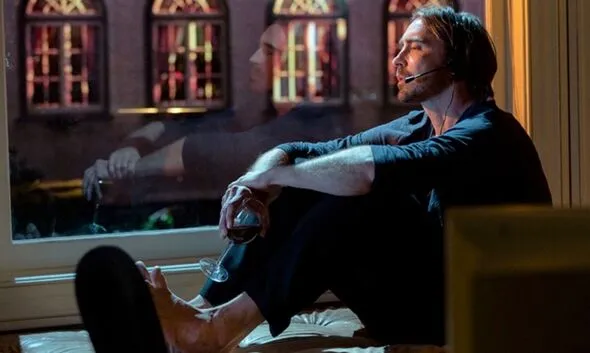
- Season 1: The Dawn of PC Clones: The initial season introduces the fictional company Cardiff Electric as it ventures into the personal computing market. The team’s primary objective is to reverse-engineer an IBM PC and create a viable clone, spearheaded by Joe MacMillan (Lee Pace), Gordon Clark (Scoot McNairy), and Cameron Howe (Mackenzie Davis). This season lays the groundwork for the series’ exploration of ambition, competition, and the personal toll of rapid innovation.
- Season 2: The Rise of Mutiny: The narrative shifts focus in the second season to a startup company called Mutiny, an online community founded by Cameron Howe and Donna Clark (Kerry Bishé), Gordon’s wife. This period delves into the challenges of building an online platform and fostering a digital community in the nascent internet age, while Joe MacMillan pursues his own independent ventures.
- Season 3: Navigating the World Wide Web: The third season continues to explore the growth of Mutiny and the broader implications of the burgeoning World Wide Web. The principal characters grapple with the complexities of online services, the challenges of scaling a tech business, and the evolving dynamics of their relationships.
- Season 4: The Search Engine Wars: The final season brings the principal characters back together, albeit in new capacities, to confront the rise of competing web search engines. This concluding arc provides a sense of closure, reflecting on the characters’ journeys and the lasting impact of their contributions to the digital revolution.
For Cantwell and Rogers, Halt and Catch Fire marked their significant entry into the television industry. Over its run, the show steadily gained critical appreciation, culminating in its recognition by many critics as one of the standout television dramas of the 2010s. Its reputation was further solidified when Rolling Stone, in a 2022 poll involving 46 actors, writers, producers, and critics, ranked it as the 55th-greatest television series of all time.
Critical Acclaim and Awards
Despite its critical success, Halt and Catch Fire garnered relatively few major awards, a common fate for shows that resonate deeply with critics and a dedicated audience but don’t always translate into broad mainstream appeal or Emmy wins. It did receive a nomination for Outstanding Main Title Design, highlighting its strong aesthetic qualities. However, the series was recognized with two awards: the Most Exciting New Series award at the 4th Critics Choice Television Awards in 2014 and the Drama Series Award at the Women’s Image Network Awards four years later. On review aggregation sites, the show consistently scores highly, boasting an impressive 90% on Rotten Tomatoes and an 8.4 out of 10 on IMDb, underscoring its critical and audience approval.
Filmed primarily in and around Atlanta, Georgia, rather than its fictional settings of Dallas and Silicon Valley, the show captured the spirit of innovation and the personal struggles of those at the forefront of technological change. Viewers who discovered the series often surprise at its quality and the depth of its storytelling, with many lamenting its perceived obscurity.
A Cult Following’s Enduring Praise
Even years after its conclusion, fans continue to champion Halt and Catch Fire, often describing it as a hidden gem. Online discussions frequently feature glowing testimonials:
One viewer enthusiastically called it “an absolute 10/10 masterpiece of a show that nobody talks about because it’s stranded on a weird, niche streaming service or on DVD.” Another commenter highlighted its authenticity, stating, “The first season or two was one of the most accurate depictions I recall seeing of what being in a tech startup feels like.” The sentiment of appreciation for its writing and narrative arc is echoed by many, with one fan thanking the network for “one of the best-written shows to have ever lasted four wonderful series. Amazing from start to finish.” Others have revisited the series, finding it holds up remarkably well. One viewer shared, “I watched this when it first came out and was blown away by every series. I’d forgotten the details of the multitude of storylines, so I just binge-watched them all again. It’s as close to perfection in TV drama that I have ever seen.”
This enduring praise from its dedicated audience speaks to the show’s lasting impact and its ability to connect with viewers on a profound level, exploring themes of ambition, friendship, failure, and the relentless march of technological progress.
For those interested in exploring this acclaimed series, Halt and Catch Fire is currently available for streaming on ITVX.