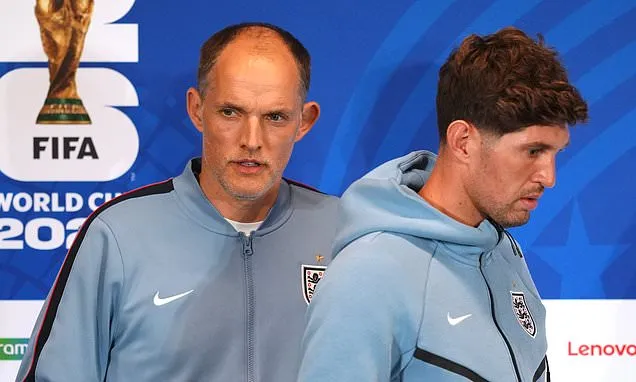
Manager Thomas Tuchel has defiantly stated his intention to continue leading the England team, brushing aside recent criticism following their World Cup semi-final defeat. Despite calls for his dismissal after the agonizing 2-1 loss to Argentina, Tuchel asserted that external opinions would not sway his decision to remain in his post. He emphasized his focus on preparing the team for the 2028 European Championship, identifying a need to elevate England’s performance to compete with the world’s elite.
Addressing the Gap with Top Nations
Speaking ahead of the third-place play-off against France, Tuchel acknowledged the significant gap that still exists between England and perennial powerhouses like Argentina, Spain, and France. “This is my pain, the players’ pain,” he stated, referring to the World Cup semi-final defeat. “It is our scar that we carry. It’s a very painful defeat and we have to live with it.” He expressed a firm belief in the team’s potential but conceded that they are not yet at the level of nations that consistently expect to win major tournaments.
Tuchel elaborated on this perceived gap, attributing it to the sustained success and established footballing cultures of other leading nations. “The gap is there because of the titles they have won as countries. What they built over many years,” he explained. “We are not there yet. There is still a gap to close. This is what we will do, starting tomorrow. We have to play better football under pressure. We still have another level to reach.” He vowed that the team would continue to strive for improvement, stating, “We will not stop hunting and chasing. We have things to improve.”
Defending Decisions and Rejecting Blame
The manager defended his tactical decisions during the crucial latter stages of the Argentina match, where England conceded and ultimately lost. He rejected the notion of a “blame game,” stating, “If the blame game needs to be played then OK, you can do that, but I choose not to engage.” Tuchel took exception to several questions during his press conference, challenging the extent of public criticism and even dismissing comments made by former US President Donald Trump regarding Harry Kane’s positioning during the game.
When questioned about Trump’s assertion that moving Kane into defense was a mistake, Tuchel responded, “That’s what you do if you defend in a block.” He also addressed the criticism from supporters, stating, “I would like to make my own picture. It’s a strong opinion you give, to be an advocate for half the country being against me. Let’s wait for that.” He reiterated his commitment to the role, emphasizing that the pain of the defeat is shared by the team and himself, and that this experience will be used for future growth.
Factors Influencing Performance
Tuchel also pointed to external factors that he believes may have impacted England’s performance in the tournament, including the challenging conditions faced in previous matches. He cited the game played with ten men in Mexico, the altitude, and a significant disruption to the team’s sleep schedule before the Argentina match as potential contributing elements. “Even if we don’t want to admit it because it feels like an excuse, the game with 10 men in Mexico, the altitude, losing the complete night of sleep and then Norway, it cost us more than we maybe thought,” he suggested.
Despite these challenges, Tuchel maintained that the team’s unity, forged over six weeks of the tournament, remained strong. However, he acknowledged the difficulties encountered in controlling possession and winning duels against Argentina. “The togetherness built over these six weeks is not to be questioned. We could not get hold of the ball against Argentina. We couldn’t fight duels anymore.”
Taking Responsibility for In-Game Decisions
Tuchel stood by his in-game management, asserting that he does not regret the decisions made during the match. He explained that his interventions were aimed at preventing the team from becoming too passive and at shifting the momentum when it appeared to be turning against England. “I felt we became too passive, I felt the momentum switched in the match and I tried to help and support,” he said.
He concluded by emphasizing that coaching decisions are made under intense pressure and in real-time. “I took several decisions trusting my instinct, intuition and experience. We didn’t get the result so I take responsibility. The decisions are made under stress. This is live, in-game coaching. I would regret it if I didn’t react.” Tuchel’s resolute stance signals his determination to lead England forward, focusing on development and future success rather than dwelling on the recent setback.
Player’s Perspective
Defender John Stones, who sat alongside Tuchel during the press conference, appeared visibly affected by the defeat. He described the capitulation as difficult to process, particularly as it may have been his final World Cup appearance. His somber demeanor underscored the emotional toll of the semi-final loss on the players.
Looking Ahead to Future Competitions
With the World Cup concluded, Tuchel’s focus shifts entirely to the upcoming European Championship on home soil in 2028. His unwavering commitment suggests a long-term vision for the England team, aiming to build upon the current squad’s potential and bridge the gap with the world’s elite footballing nations. The manager’s defiant attitude indicates a strong resolve to navigate the challenges ahead and prove his critics wrong.