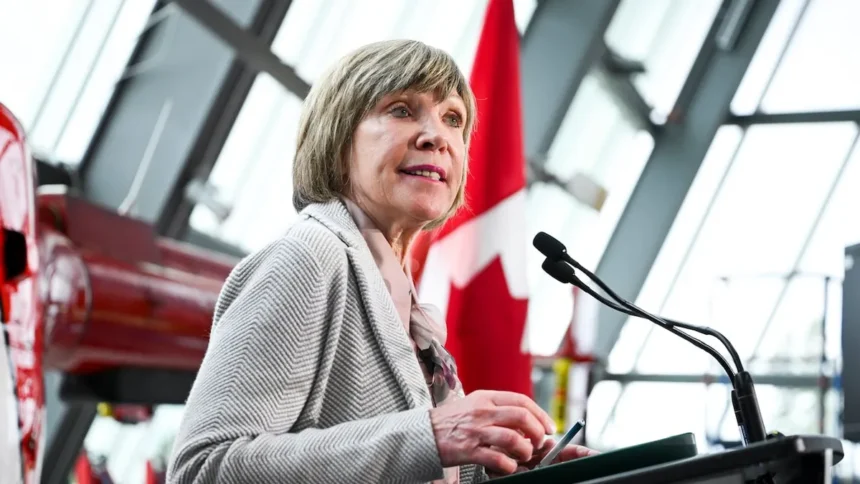
Federal Minister of Emergency Management Eleanor Olszewski has stated that the government’s response to the extensive wildfires currently raging across Ontario was appropriate, asserting that “nothing did go wrong” with Ottawa’s actions. This defense comes as hundreds of wildfires force evacuations and prompt urgent calls for federal assistance, particularly from First Nations communities in the province’s north.
Federal Response Under Scrutiny Amidst Wildfire Crisis
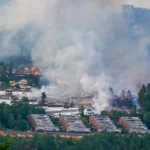
As of Thursday evening, provincial data indicated 129 active fires were burning across northwestern Ontario. The severity of the situation led to an emergency resolution passed by the Assembly of First Nations (AFN) at their gathering in Ottawa. The AFN resolution alleged that both the federal and Ontario governments failed to provide adequate support to northern First Nations, compelling some communities to organize their own evacuations.
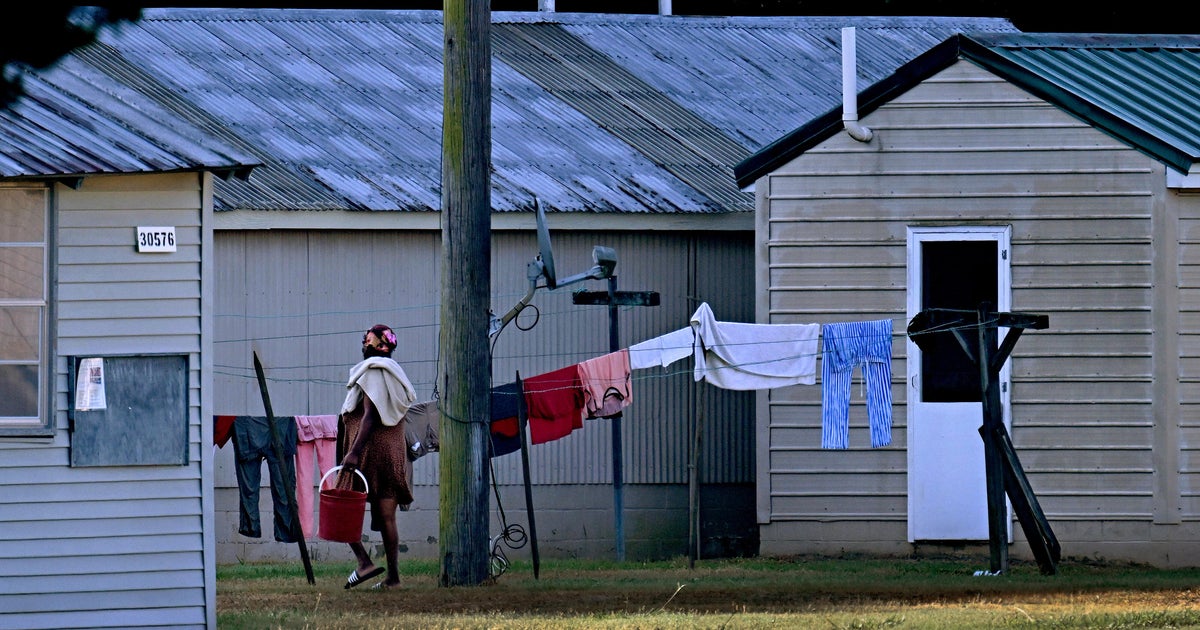
Specifically, the resolution called for immediate federal aid to Namaygoosisagagun First Nation, located approximately 250 kilometers north of Thunder Bay. Members of this community were reportedly forced to evacuate their homes by boat on Monday as a wildfire rapidly approached. Chief Helen Paavola of Namaygoosisagagun First Nation described the harrowing escape, stating in a message to the assembly that community members, including children, had to use small 12- and 14-foot boats to flee the encroaching flames. “We had no help, they had no help,” Paavola recounted, emphasizing that the community undertook the dangerous evacuation independently.
Indigenous Services Minister Mandy Gull-Masty acknowledged the situation, confirming that while the Ontario government would provide support to Namaygoosisagagun, her department would also play a role. Minister Olszewski expressed deep sympathy for those affected, stating, “My heart does truly go out to anyone, First Nations peoples included, that have had to deal with this wildfire situation, that have had to worry and have anxiety about evacuating.”
Ontario Seeks Federal Support for Evacuations and Firefighting
Ontario Premier Doug Ford had previously indicated that his government requested federal readiness to deploy resources, including the Canadian Armed Forces, to assist with evacuations. In a letter to Minister Olszewski, Ontario’s Minister of Emergency Preparedness and Response, Jill Dunlop, urged the federal government to ensure aircraft and crews were on standby for rapid deployment, with less than 24 hours’ notice, should provincial assistance be required. At the time of the request, 15 communities in northern Ontario were either undergoing evacuations or were preparing to do so.
Minister Olszewski confirmed receipt of Ontario’s request, characterizing it as “precautionary in nature.” She informed reporters that she had maintained consistent communication with Minister Dunlop since the beginning of the week and that the federal government was prepared to offer assistance once specific details of the request were provided. “We are as the federal government indeed standing by and ready to assist Ontario as soon as they provide us with some more detail in terms of what that request will be,” Olszewski stated.
Premier Ford also voiced a need for federal support in acquiring water bombers, essential aircraft for aerial firefighting, suggesting they could be deployed nationwide. However, his government subsequently announced its intention to purchase six such firefighting planes as part of a larger $650-million acquisition of 11 new aircraft. When questioned about the federal government’s capacity to provide more firefighting planes, Olszewski asserted that Ottawa currently possesses sufficient aircraft. She highlighted that federal funding allocated in the 2025 budget, amounting to $316 million over five years, is intended to bolster Canada’s national aerial firefighting surge capacity. In May, funds from this budget were used to lease 10 new aircraft, including Bird Dog planes, water bombers, and heavy-lift helicopters, which have been actively engaged in combating wildfires across the country since the season began, with several currently deployed in Ontario.
Broader Context: Climate Change and Emissions
The intense wildfire season has also brought renewed attention to Canada’s climate commitments. Prime Minister Mark Carney recently acknowledged that Canada’s emissions are projected to be higher in the coming years than previously anticipated under prior government plans. This shift in projection drew criticism from environmental advocates.
Julia Levin, associate director of Environmental Defence, expressed concern over the government’s approach, particularly in light of the immediate impacts of climate change. “This week, because of the wildfire smoke, I couldn’t take my child outside to the park,” Levin said, drawing a parallel between personal inconvenience and the severe consequences faced by others, including First Nations communities losing their homes. “The climate crisis is no longer a future risk,” she emphasized. “It’s a present reality and it’s being paid for right now with Canadian lives and Canadian dollars.” Levin specifically pointed to the government’s consideration of a new pipeline proposal, which she described as “more climate-wrecking fossil fuel infrastructure.”
In response to questions about reconciling increased emissions with wildfire impacts, Minister Olszewski reiterated the government’s commitment to climate action but stressed the need for adaptive strategies. “We haven’t changed our commitment to climate action, but it’s necessary for us to adapt our approach given the moment in time that we are in,” she explained. She cited global trade tensions as a factor necessitating Canada, and specifically Alberta, to maximize its natural resources and diversify export markets. Simultaneously, Olszewski acknowledged the escalating intensity and frequency of natural disasters like wildfires. She concluded by stating that her department is actively working with communities to enhance preparedness for the ongoing impacts of climate change.