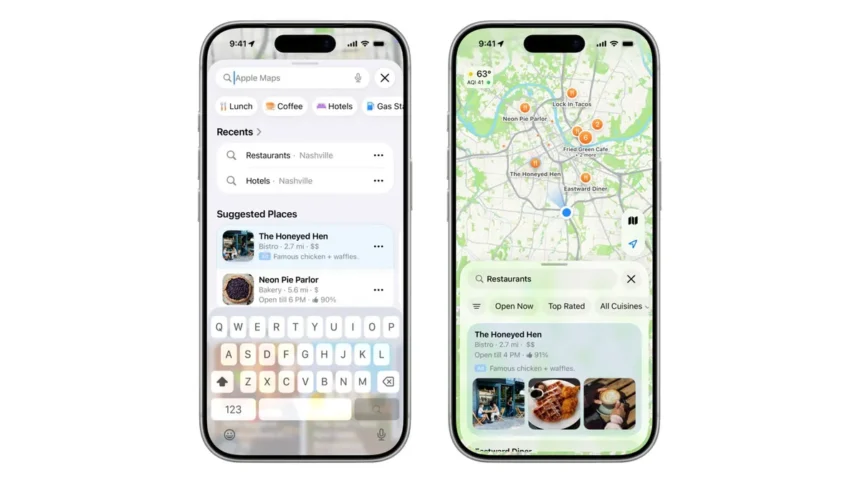
Apple has unveiled new advertising guidelines for its upcoming Maps ads, notably prohibiting content related to home services. This strategic decision suggests a focus on local businesses and points of interest, aiming to create a distinct user experience compared to competitors. The company plans to introduce ads to Apple Maps starting this summer in the US and Canada, with a broader rollout expected in March 2026.
New Advertising Guidelines Emerge
The recently published advertising guidelines share similarities with Apple’s existing App Review guidelines, forbidding content that is defamatory, profane, or promotes illegal activities. Deceptive, drug-related, or political advertisements are also prohibited. However, Apple has introduced specific categories of forbidden ads, with a prominent exclusion being “home services.”
“Ad content that contains or directly or indirectly promotes home services — including but not limited to plumbing, electrical, locksmith, HVAC, pest control, roofing, or general contracting services — is prohibited,” the company stated in its guidelines. This marks a departure from platforms like Google Maps, which commonly feature advertisements for local service providers such as electricians and plumbers.
Cultivating a Different User Experience
Apple appears intent on fostering a unique environment within Maps, emphasizing discovery and navigation. The company’s landing page for Ads in Apple Maps highlights its role in helping users explore new places and discover local establishments. “People rely on Apple Maps to explore new places and try new things. From discovering coffee shops and restaurants, to stores and landmarks, Maps is where ‘what’s around here?’ becomes ‘I’m on my way.’ Soon local businesses can run ads on Apple Maps — right where customers are deciding where to go,” Apple explains.
While discovering a coffee shop or a landmark aligns with a user’s exploratory mindset, Apple acknowledges that services like pest control might not evoke the same sense of discovery. By excluding such categories, Apple might be aiming to maintain a more curated and perhaps aspirational feel for its advertising within Maps. This approach could also make the introduction of advertising feel more palatable to users.
Strategic Ad Placement and Apple’s Services Growth
The decision to reserve ad space for local businesses, landmarks, and other points of interest could be a strategy to mitigate potential user backlash against the introduction of ads. Furthermore, Apple’s prohibition of ads for bail bonds and cryptocurrency ATMs aligns with this effort to maintain a certain brand image and user trust.
Advertising represents a growing segment of Apple’s Services business, which encompasses subscriptions, in-app purchase platform fees, and ad sales. Beyond the upcoming Maps ads, Apple already offers advertising opportunities within Apple News and various sections of the App Store. In 2022, the company significantly expanded its App Store advertising, moving beyond search results to include app pages and the App Store’s home screen.
A Restrained Approach to Maps Advertising
The current guidelines suggest that Apple is adopting a more measured and potentially more user-centric approach to advertising in Apple Maps compared to its other platforms. By restricting the types of businesses that can advertise, Apple aims to ensure that ads are relevant to the discovery and navigation functions of the app, potentially enhancing the user experience rather than detracting from it.
This focus on local discovery and the exclusion of broad home service categories could set Apple Maps apart in the competitive digital mapping landscape. The company’s commitment to refining the advertising experience indicates a thoughtful strategy for integrating commerce into its popular navigation service.
Future Implications for Local Businesses
While home service providers are currently excluded, the long-term strategy for Apple Maps advertising remains to be fully seen. The initial focus on local businesses and points of interest suggests an emphasis on businesses that users might actively seek out during their travels or explorations. This could include retail stores, restaurants, entertainment venues, and tourist attractions.
Local businesses that fall within Apple’s approved categories may find Apple Maps advertising to be a valuable tool for reaching potential customers at the precise moment they are looking for services or places to visit. The integration of ads directly into the navigation experience could offer a powerful new channel for customer acquisition.
Conclusion
Apple’s decision to ban home services from its upcoming Maps ads signals a deliberate strategy to prioritize local discovery and a curated user experience. By focusing on businesses and points of interest that align with navigation and exploration, Apple aims to differentiate its advertising offering. As the launch approaches, the full impact of these guidelines on both users and local businesses will become clearer, but the initial direction points towards a more selective and discovery-oriented advertising model within Apple Maps.