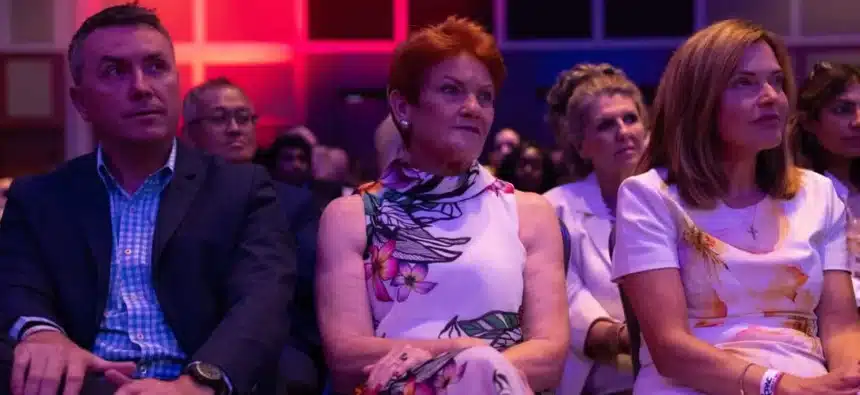
Pauline Hanson, leader of Australia’s One Nation party, has delivered a speech at the Conservative Political Action Conference (CPAC) in the United Kingdom, urging her audience not to apologize for their racial identity. Speaking to a reportedly small gathering, Hanson also voiced concerns about immigration levels and the direction of social policies in Australia, particularly regarding transgender rights.
Hanson’s Address and Key Themes
During her address, Hanson stated, “Do not apologise for being white. I’m sick of hearing about white privilege.” This sentiment was part of a broader critique of what she described as Australia becoming “completely woke.” Her comments touched upon several contentious issues, including the perceived impact of transgender rights legislation and the nation’s immigration policies.
Hanson specifically criticized Australia’s approach to transgender rights, suggesting the country was “too stupid” to enact appropriate laws. She expressed approval of a UK court ruling that defined a woman based on biological sex, warning of potential “psychological damage” to future generations. Her remarks on these social issues have drawn criticism from various quarters within Australia.
Controversy Over Migrantion and Associations
The One Nation leader’s European tour, which preceded the CPAC speech, included a podcast interview with Tommy Robinson, an anti-immigration activist with a prior criminal conviction. This association, along with an appearance at a fashion show with prominent donor Gina Rinehart, has generated significant feedback and criticism in Australia. Hanson addressed this directly at the conference, recounting media reactions questioning her decision to associate with Robinson.
Hanson also reiterated her stance on immigration, asserting that Australia had been “flooded” with migrants and that this influx was straining the housing system. She emphasized her belief that migrants should be willing to assimilate into Australian culture, expressing opposition to the introduction of practices such as Sharia Law, child marriages, and the wearing of burqas in public spaces.
These comments echo sentiments expressed earlier in her trip. During her interview with Tommy Robinson, Hanson reportedly linked current migration challenges in Australia to the historical dismantling of the White Australia policy. This statement prompted a response from Australian Prime Minister Anthony Albanese, who stressed that the policy was abolished through bipartisan efforts and challenged the opposition to disavow any future political dealings with One Nation.
Hanson later released a social media video denying any intention to reintroduce the White Australia policy, clarifying her position as being “strong on immigration” but advocating for a measured approach that prioritizes individuals willing to assimilate.
Reactions and Criticisms
Hanson’s remarks have been met with strong reactions from Australian political figures and community representatives.
- Gamel Kheir, from the Lebanese Muslim Association, challenged Hanson’s claims regarding Sharia Law and child marriages, demanding evidence and calling such accusations “farcical.” He stated he had not encountered any Muslims advocating for laws that compete with Australian legislation.
- Andrew Bragg, a Liberal moderate, described Hanson’s rhetoric as an attempt to make life difficult for minorities and dismissed the idea of transgender people taking over Australia as “insane.” However, he refrained from commenting on potential coalition dealings with One Nation.
- Jane Hume, Deputy Liberal Leader, characterized Hanson’s comments on the White Australia policy as “unnecessary,” “divisive,” “inflammatory,” and “totally un-Australian,” noting that such issues were not raised in her conversations with constituents.
- Chris Minns, NSW Premier, deemed Hanson’s statements “blatantly unfair” and untrue, warning that a return to race-based immigration policies would render Australia a “pariah nation.”
Broader Context of the CPAC Event
The London CPAC event featured other notable speakers, including Nationals Senator Bridget McKenzie, Reform UK leader Nigel Farage, and former UK Prime Minister Liz Truss. Hanson’s interactions at the conference included a brief meeting with Nigel Farage on the sidelines.
Recent polling in Australia has indicated a significant level of support for One Nation, with some surveys suggesting it was once the country’s most popular political party, although more recent data shows a decline in primary support, it remains ahead of the Coalition parties.
Conclusion
Pauline Hanson’s address at the UK CPAC conference has reignited debates surrounding immigration, cultural assimilation, and social policies in Australia. Her strong stance on national identity and her criticisms of current social trends have drawn both support and significant opposition, highlighting ongoing divisions within the Australian political landscape and society.