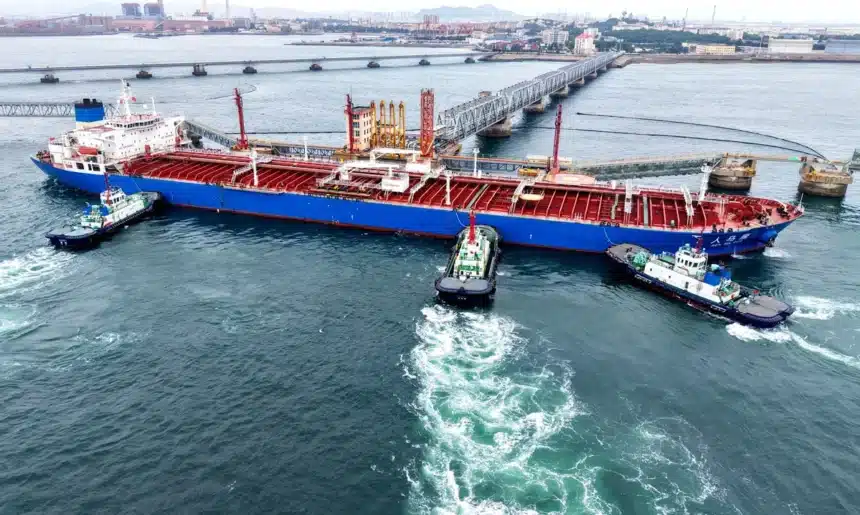
Escalating conflict in the Middle East has sent crude oil prices surging, reigniting concerns about tightening global supplies. Hostilities between the U.S. and Iran intensified for an eighth consecutive day on Sunday, leading to casualties and renewed fears of a wider war. This renewed confrontation has jeopardized a previously established memorandum of understanding aimed at fostering peace and has resulted in Iran closing the critical Strait of Hormuz, a vital artery for international oil shipments.
Oil Price Surge and Market Impact
The international crude benchmark, Brent, experienced a significant rise of over 10 percent in the past week. This surge reflects traders’ anxieties about dwindling global crude and product inventories, which had previously helped stabilize energy markets. The renewed fighting has reversed the recovery of oil flows from the Persian Gulf region.
West Texas Intermediate (WTI), the U.S. benchmark, closed at US$82 a barrel on Friday, a notable increase from dipping below US$70 earlier in the month. Brent crude concluded the week at US$88 a barrel. Analysts note that the market may be underestimating the current tightness in global oil supply.
Goldman Sachs had previously estimated that Gulf oil exports had recovered to more than 80 percent of pre-conflict levels in the two weeks following the memorandum of understanding. However, these flows have reportedly halted since the recent resumption of hostilities.
Strait of Hormuz and Shipping Disruptions
The Strait of Hormuz, through which a significant portion of the world’s oil passes, has seen reduced vessel traffic. Data from maritime intelligence firm Kpler indicated that crossings fell to an eight-year low late last week, coinciding with intensified attacks on ships and the reimposition of a U.S. naval blockade. On Thursday, crossings dropped to just eight vessels.
The price pressure is also affecting consumers and the global trucking industry, with prices for gasoline and diesel resuming their upward trend last week.
Depleting Strategic Reserves
Energy analysts like Kyle Bertamini of Enverus highlight that crude and product stocks have drawn down significantly and are expected to continue declining into the fourth quarter, potentially leading to sustained higher oil prices. Bertamini suggests that markets are currently underpricing the supply constraints.
Governments have been drawing down emergency crude reserves to stabilize prices and compensate for lost supply from the Persian Gulf, which accounts for approximately one-fifth of global oil production. In March, 32 member countries of the International Energy Agency (IEA) agreed to release 400 million barrels from their strategic reserves. The IEA recently reported that nearly three-quarters of this planned amount has been released.
U.S. Strategic Petroleum Reserve at Historic Lows
The U.S. Strategic Petroleum Reserve (SPR), once the world’s largest publicly known emergency oil stockpile, has been significantly depleted. Before the recent conflict, it held approximately 415 million barrels, more than half its capacity. However, the ongoing situation has pushed reserves to their lowest levels since 1983.
In March, the U.S. announced a plan to draw 172 million barrels from the SPR to address global oil supply disruptions and stabilize markets. As of July 10, approximately 317 million barrels of crude oil remained in the reserve, according to the U.S. Energy Information Administration. Reports suggest these frequent withdrawals are straining the SPR’s infrastructure, which was established in 1975.
While Bertamini acknowledges that the U.S. still has some capacity to draw down reserves, concerns are emerging about the long-term ability to continue such withdrawals and the potential risks to the structural integrity of the storage caverns if levels drop too low.
Global Demand and Supply Dynamics
The depletion of emergency reserves by governments and refiners raises questions about how and when these stocks will be replenished. China, a major crude importer, saw its crude imports fall by more than 40 percent year-over-year in June, reaching their lowest point in nearly a decade.
China has managed to mitigate the impact of reduced Gulf supply by also cutting refinery production. Eric Nuttall, senior portfolio manager at Ninepoint Partners, noted that China had substantial refined product stocks it could utilize. He added that while China reduced imports and refinery runs, domestic consumption appeared robust.
Initially, China banned all fuel exports as global markets tightened, permitting only state-owned companies to export gasoline, diesel, and jet fuel. However, restrictions on refined fuel exports were lifted for the remainder of July, and a private refiner was allowed to resume shipments after a four-month pause, potentially aiding a rebound in oil shipments to China.
Potential for Price Increases
Nuttall believes China is on the verge of returning to the market as a significant buyer. If China and other nations with dwindling domestic stocks increase their imports while Gulf oil supplies remain constrained, it could lead to a substantial increase in oil and fuel prices. Nuttall explained that a dramatic drop in available supply necessitates demand curtailment, which can only be achieved through significantly higher prices.
The interplay of escalating geopolitical tensions, reduced supply from a key region, and the drawdown of strategic reserves creates a complex and volatile environment for global energy markets. The potential for China’s return as a major importer, coupled with ongoing supply disruptions, suggests that oil prices could remain elevated.