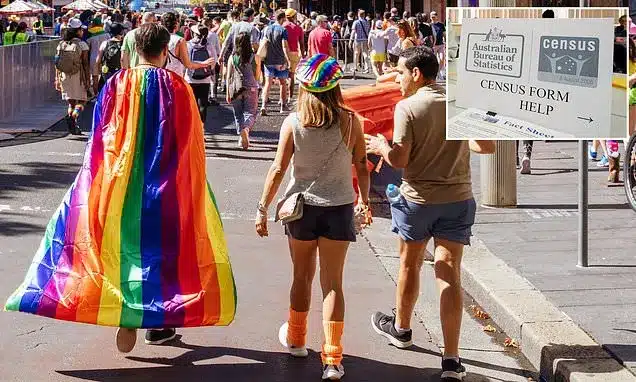
Australia’s national census, a crucial tool for understanding the nation’s population, is undergoing significant changes for its upcoming iteration on August 11. For the first time, Australians will be asked about their sexual orientation, a move aimed at providing better insights into the LGBTQ+ community. Concurrently, a long-standing question about the number of children ever born will be removed, reappearing only every second census, with its next inclusion slated for 2031.
Key Changes in the Australian Census
The Australian Bureau of Statistics (ABS), responsible for conducting the census, has introduced several modifications designed to reflect the country’s evolving demographics and social landscape. These updates aim to enhance the data collected, offering a more nuanced picture of Australian society.
Introduction of Sexual Orientation Questions
A significant addition to the 2021 census is the inclusion of questions pertaining to sexual orientation for individuals aged 16 and over. These questions will explore a person’s sexual identity and their attractions, a move intended to provide vital statistics on the LGBTQ+ population in Australia. This marks a departure from previous census iterations, which did not directly address this aspect of identity.
Modified Gender Question
The wording of the gender question has also been adjusted. It will now specifically ask for a person’s ‘sex recorded at birth.’ This change is part of a broader effort to refine the data collected on gender and sex, aligning with contemporary understandings and classifications.
Expansion of Ancestry Information
To better accommodate individuals with diverse heritage, the census now allows respondents to list up to four ancestries, an increase from the previous limit of two. The ABS states this change will enable people with more complex family backgrounds to accurately represent their heritage.
Removal of ‘Children Ever Born’ Question
The question regarding the ‘number of children ever born’ has been removed from the current census. This question will now be included only every five years, alternating with other censuses, with its next appearance scheduled for 2031. The ABS has indicated this is to streamline the census process and focus on specific demographic data points in alternating cycles.
Rationale Behind the Changes
According to the ABS, the primary driver for these modifications is to enhance the census’s ability to capture Australia’s increasing cultural diversity and to gain a deeper understanding of the experiences of LGBTQ+ Australians. By collecting more specific data on sexual orientation and refining gender-related questions, the census aims to provide policymakers, researchers, and service providers with more accurate and relevant information.
The expansion of ancestry options is also intended to reflect the multicultural nature of modern Australia, ensuring that the census data accurately represents the heritage of its population. The decision to alternate the ‘children ever born’ question is presented as a method to manage the survey’s length and focus.
Demographic Insights and Concerns
While the ABS emphasizes the benefits of the updated census questions for understanding contemporary Australia, some experts have raised concerns. Demographers and social analysts suggest that the removal of the ‘children ever born’ question could impact the ability to track specific family structures, such as single-child families or trends related to childlessness among women.
Social analyst and demographer Mark McCrindle commented that such debates risk distracting from the fundamental purpose of the census, which has historically been a non-political, essential tool for national data collection. He noted that the timing of these changes, amidst a broader societal re-evaluation of culture and identity, makes their impact on public discourse particularly noteworthy.
Census Participation and Compliance
The Australian census is a mandatory undertaking for all individuals residing in Australia on census night, August 11. This includes citizens, permanent residents, international visitors, students, and individuals on temporary visas. The ABS has begun distributing instructions for completing the census forms. Failure to comply with the census requirements can result in penalties, including fines.
The census data collected is vital for national planning, resource allocation, and understanding societal trends. It informs decisions on everything from healthcare and education to infrastructure and social services. The ABS encourages all eligible individuals to participate accurately and fully to ensure the census provides a comprehensive and reliable snapshot of the Australian population.
Conclusion
The 2021 Australian census introduces significant new questions on sexual orientation and modifies existing ones related to gender and ancestry, while pausing the ‘children ever born’ query. These changes reflect an effort to modernize data collection and better represent the diverse Australian populace. While aiming to provide richer insights, particularly for the LGBTQ+ community, the modifications also prompt discussions among demographers about potential impacts on long-term demographic tracking. As census night approaches, participation remains crucial for maintaining the integrity and utility of this fundamental national survey.