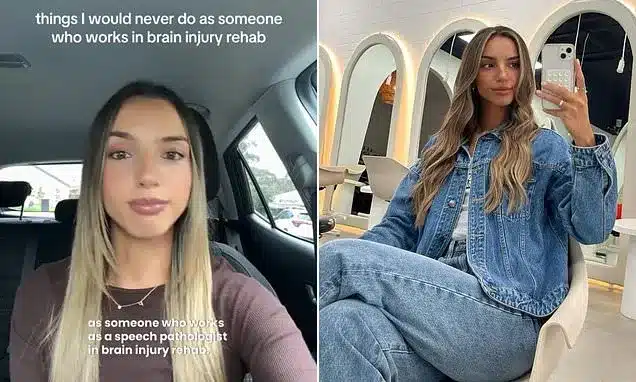
A speech pathologist specializing in brain injury rehabilitation has identified four common activities she strictly avoids, based on firsthand experience with traumatic brain injury patients.
Riding Bikes, Motorbikes, or E-Scooters
Georgia Zadow, who treats brain trauma patients daily, refuses to ride bicycles, motorbikes, or e-scooters—especially on busy urban roads shared with cars. “This is probably the most obvious but I would never ride a bike, motorbike, or e-scooter… Let alone on a busy road in a busy city,” she states.
She emphasizes that helmets offer protection but cannot eliminate all risks. “I’m absolutely pro-helmet. Helmets can prevent some head injuries and reduce the severity of others,” Zadow explains. “My point is simply that they can’t prevent all brain injuries, especially those caused by the brain moving inside the skull. Wear a helmet.”
Climbing Tall Ladders
Zadow also steers clear of tall ladders, particularly for household tasks like roof repairs. “I will never climb a tall ladder, especially to do some sort of housework task at home on the roof—that is just not happening. Neither will my partner,” she says.
Her caution stems from numerous cases where patients suffered severe injuries from falls while attempting DIY fixes instead of hiring professionals.
Playing Contact Sports
Contact sports are off-limits for Zadow and her family due to research linking repeated head impacts to chronic traumatic encephalopathy (CTE) and post-concussive syndrome (PCS). “I would never play any sort of contact sport, nor will I let my kids play any contact sport,” she declares.
CTE represents a progressive neurodegenerative disease from repeated head trauma, while PCS involves lingering symptoms after a single concussion that can impair daily life and work. “You can have PCS just from one concussion. It doesn’t have to be repeated head knocks like CTE—but to me, it’s just so not worth it,” Zadow notes.
Taking Life for Granted
Above all, Zadow urges appreciating life’s fragility. “The main thing that this job has taught me is that life is too short,” she reflects. “No matter how healthy you are, there can always be freak accidents that lead to a head injury and they can just totally change the trajectory of your life. So if there’s something that you want to be doing, this is your sign. Just go and do it because life is way too short.”
Her video message has attracted over 64,000 views, drawing support from fellow health professionals. Speech pathologists, nurses, and physiotherapy students echo her warnings, sharing personal stories of patients devastated by similar incidents despite precautions like helmets.