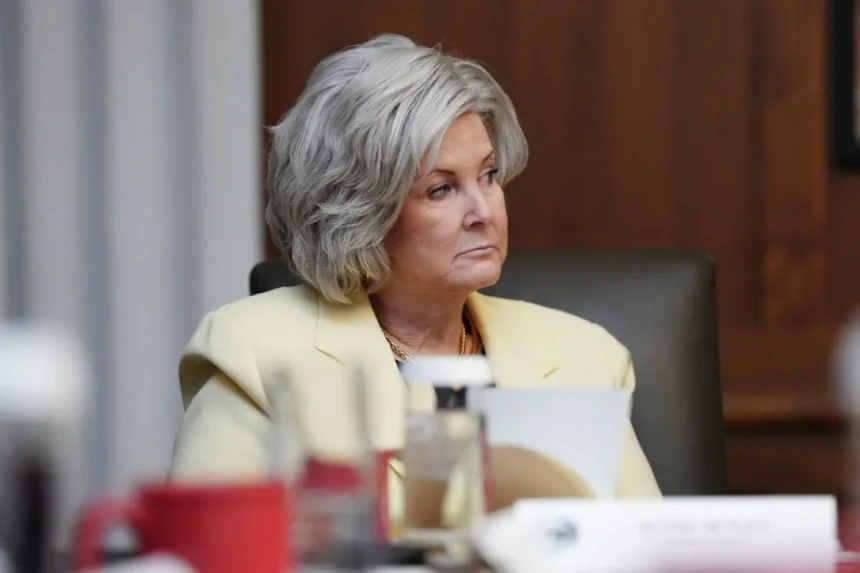
The White House is reportedly advocating for a delay in implementing a ban on intoxicating hemp products, a move that could significantly benefit the son-in-law of White House Chief of Staff Susie Wiles. This reported shift in policy comes after a previous spending bill, signed by President Donald Trump, included provisions to prohibit hemp products with certain levels of THC, the primary psychoactive compound in cannabis. The ban was initially slated to take effect on November 12.
Background of the Hemp Ban
The controversy stems from a spending bill enacted last fall, which aimed to end a prolonged government shutdown. A key component of this legislation was a ban on hemp-derived products containing specific concentrations of THC. This measure was intended to address concerns about the proliferation of intoxicating substances marketed as hemp. However, recent reports suggest the White House is now seeking to postpone the enforcement of this ban.
Allegations of Conflict of Interest
Multiple news outlets, including The New York Times and MS NOW, have published reports alleging that the White House’s current position on delaying the ban could directly benefit Bret Worley, the son-in-law of Chief of Staff Susie Wiles. Worley is identified as the CEO of MC Nutraceuticals, a company that supplies hemp products globally. Reports indicate that Worley’s company has been actively engaging industry associates to lobby lawmakers for a postponement of the ban.
Worley married Wiles’ younger daughter, Caroline, in June. The potential financial implications for his business have raised questions about the motivations behind the White House’s reported efforts to delay the ban, which is currently scheduled to become effective on November 12.
Legislative Maneuvers and White House Response
In an effort to prevent another government shutdown at the end of September, senators have introduced a temporary spending measure. This measure reportedly includes a provision to extend the deadline for the hemp product ban until December 11. The legislative package is expected to be put to a vote in the coming week.
A spokesperson for the White House, Kush Desai, issued a statement asserting that the Chief of Staff has not engaged in lobbying efforts regarding the hemp issue. Desai stated, “The only interest guiding the Trump administration’s decision-making is the best interest of the American people, and the Administration continues to explore a Gold Science Standard-based framework on hemp to expand treatment options for American veterans and patients.” The administration’s stated goal is to develop a science-based framework for hemp that could potentially enhance treatment options for veterans and patients.
Following the announcement of the stopgap spending measure, MC Nutraceuticals reportedly communicated to prospective buyers that the hemp industry had secured a significant position, described as having “a seat at the table.”
Dissenting Voices in Congress
Not all lawmakers are in agreement with the proposed delay. Senator Ted Budd, a Republican from North Carolina, has publicly opposed the extension of the hemp ban’s implementation. He announced his intention to offer an amendment to the continuing resolution that would remove the provision delaying the ban. Senator Budd expressed his concerns, stating, “I’m offering an amendment to the CR [continuing resolution] to strip out an extension of the hemp loophole to ensure unregulated, dangerous intoxicants are not sold, especially to kids.”
The Food and Drug Administration (FDA) has previously voiced concerns regarding hemp products containing delta-8 THC, particularly when presented in forms appealing to children, such as candies, chips, and cereals. The FDA issued a notice in October 2024 highlighting these worries.
Senator Budd characterized the White House’s reported stance as “absolutely ridiculous,” questioning the sudden push for a delay after the issue was seemingly resolved last year. He remarked, “We fixed this thing last year. We fixed it last November. They’ve had nine months to work on this, so why, all of a sudden, pop up for some seemingly innocent delay?”
Prioritizing Government Operations
Conversely, Senator Shelley Moore Capito, a Republican from West Virginia, indicated a willingness to accept the delay if it meant averting another government shutdown. She acknowledged the significant disruptions caused by the previous shutdown, including widespread airport delays attributed to staffing shortages resulting from a lack of funds to pay government employees. “I prefer that we don’t extend it, but I can live with a monthlong extension in exchange for keeping the government open,” Capito stated, emphasizing the priority of maintaining government operations over the immediate implementation of the hemp ban.
Conclusion
The White House’s reported push to delay the ban on intoxicating hemp products has ignited debate, with allegations of potential conflicts of interest due to family ties involving Chief of Staff Susie Wiles’ son-in-law, Bret Worley, CEO of MC Nutraceuticals. While the White House maintains its actions are in the public interest and focused on developing a science-based framework, critics like Senator Ted Budd argue against the delay, citing concerns about public safety and the sale of unregulated products. The legislative process is ongoing, with a temporary spending measure that includes a delay provision set for a vote. The outcome will determine whether the ban’s implementation is postponed, a decision influenced by both policy considerations and the pressing need to avoid government shutdowns.