The City of Calgary and Rockyview County have formalized a significant partnership with the Canada Infrastructure Bank (CIB) to accelerate the development of the Prairie Economic Gateway, a major logistics and economic hub planned for Calgary’s southeast. This memorandum of understanding (MOU) aims to expedite the transition from the design phase to actual construction activities for this multi-billion dollar project.
Prairie Economic Gateway: A Vision for Growth
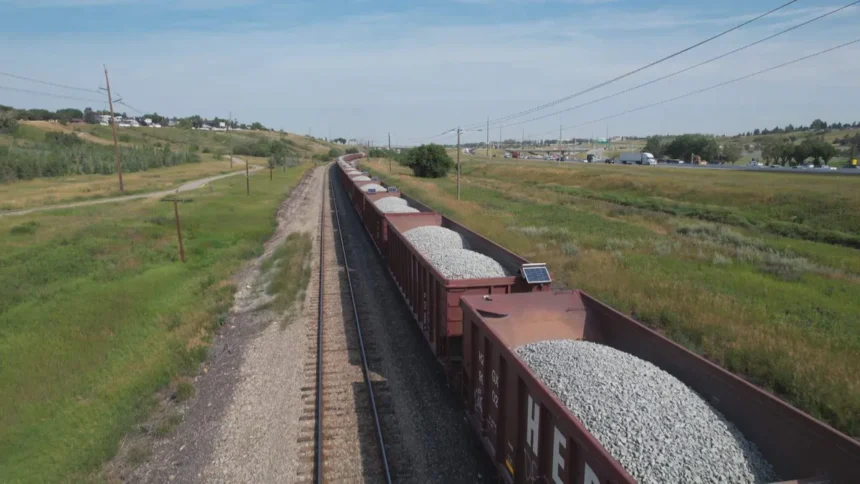
The Prairie Economic Gateway is envisioned as a sprawling “inland port” covering approximately 1,300 acres along 114 Avenue S.E. This ambitious project, a result of regional collaboration between Calgary and Rockyview County, is poised to become one of Canada’s largest centers for trade, logistics, and manufacturing. Its strategic location will be anchored by the Canadian Pacific Kansas City (CPKC) rail network, facilitating efficient transportation and commerce.
Oyin Shyllon, the City of Calgary’s project manager for the Prairie Economic Gateway, emphasized the agreement’s importance. “This is about moving from regional potential into coordinated action,” Shyllon stated. He highlighted that the partnership with the CIB is instrumental in transforming the project from a conceptual idea into a tangible reality, signaling strong confidence in Calgary’s economic future and regional development.
Framework for Infrastructure Development
The newly established agreement provides a clear framework for the involved parties to conduct thorough assessments of the commercial, technical, and financial viability of the necessary public off-site infrastructure. This infrastructure is crucial for enabling future development within the Gateway. Ben Manshanden, Rockyview County’s manager of intergovernmental services and economic development, praised the CIB’s involvement, describing their expertise as “second-to-none from an investor lens” and the “gold standard of due diligence.” This rigorous approach is intended to provide all stakeholders with the necessary assurance to move forward.
This latest MOU builds upon an earlier agreement signed in early 2025 by the same entities, which explored the CIB’s potential role in the project. Calgary Mayor Jeromy Farkas commented that the agreement represents a vital step towards securing the infrastructure investments required to unlock new trade, logistics, and industrial development opportunities. He anticipates the project will create jobs and enhance Calgary’s overall competitiveness.
Infrastructure Timeline and Investment
The projected timeline for the construction of essential off-site infrastructure spans from the current year through 2031. This includes critical components such as water, wastewater, and stormwater systems, along with road enhancements and emergency response planning. Specific projects detailed by the City of Calgary include a stormwater trunk line slated for completion by 2028 and a 10.6-kilometer feeder main expected to be operational by 2029. The exact timing for road improvements on 114 Avenue and Glenmore Trail is still under review.
The financial commitment for these public infrastructure projects is substantial, with a portion expected to be borne by municipal taxpayers. The precise scale of these investments will become clearer in November when city council deliberates on the upcoming four-year budget. However, project officials project a significant return on public investment, estimating that the Prairie Economic Gateway will stimulate over $7 billion in economic activity and generate more than 30,000 jobs across the Calgary region within the next decade.
Shyllon further elaborated on the economic multiplier effect, stating, “Every dollar is going to generate at least $8.90, or roughly nine dollars of private investment. It is the catalyst, it’s what gets things going.” He underscored the foundational role of robust infrastructure, noting, “Without the major road network, without the underlying water infrastructure, those developments can’t happen.”
Business Community Welcomes Development
The Calgary Chamber of Commerce has expressed strong support for the memorandum of understanding, anticipating that the logistics hub will significantly alleviate existing supply chain bottlenecks. Ruhee Ismail-Teja from the Chamber highlighted the widespread impact of supply chain issues, noting that nearly 40 percent of member businesses have been affected, with one in six reporting that these challenges have hampered their growth. She observed that supply chain disruptions, initially thought to be a short-term pandemic-related trend, have proven to be a more persistent challenge. Ismail-Teja believes that a concrete plan to address these structural issues is a crucial step forward.
Projected Completion and Future Phases
Project officials aim to have the initial phase of the Prairie Economic Gateway operational by 2031. Construction on the enabling infrastructure is anticipated to commence next year. The development of subsequent phases will be contingent upon market demand and the uptake of available facilities. Both the City of Calgary and Rockyview County councils approved the project’s deal structure and statutory plan in February 2025, paving the way for this collaborative acceleration.
Conclusion
The partnership between the City of Calgary, Rockyview County, and the Canada Infrastructure Bank marks a pivotal moment for the Prairie Economic Gateway. By streamlining the path from planning to construction and addressing critical infrastructure needs, this initiative is set to unlock substantial economic potential, create thousands of jobs, and bolster the region’s position as a key logistics and trade center in Canada.