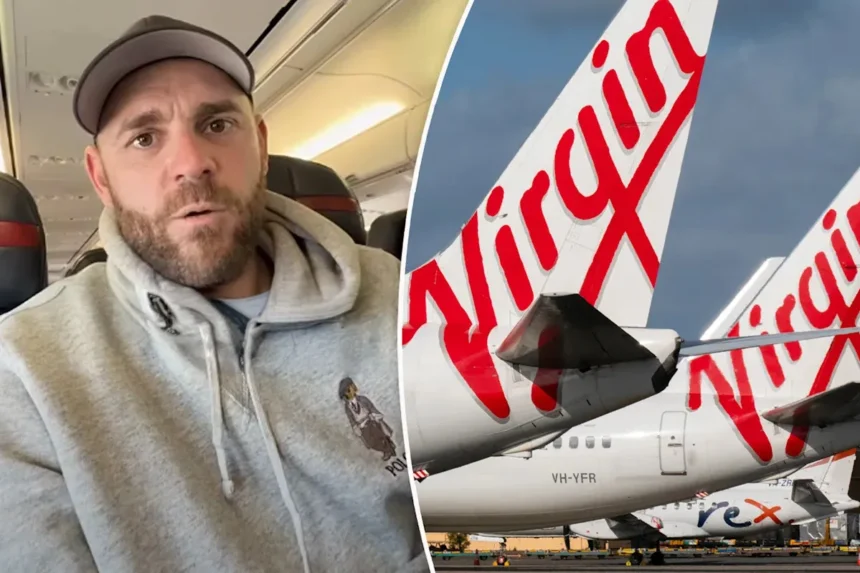
A disability advocate and wheelchair user has described feeling “humiliated” and “degraded” after being removed from a Virgin Australia flight bound for Adelaide from Sydney. Shane Hryhorec, who relies on a manual wheelchair and uses a powered assist device called a SmartDrive, was asked to leave the plane shortly before takeoff on Monday.
Incident Details and Mobility Device Stowage
Hryhorec explained that his SmartDrive, a device that attaches to his wheelchair to provide powered assistance, is too large to fit under a standard airplane seat. Previously, he had been permitted to stow the device in the overhead locker. However, on this occasion, he was informed of a recent rule change by Virgin Australia that prohibited this practice. Instead, he was instructed to place the device under the seat in front of him.
The specific seat assigned to Hryhorec presented a problem. He stated that the area lacked sufficient space due to an obstruction, making it impossible to stow the SmartDrive as required by the new policy. Hryhorec, who has an incomplete quadriplegia and uses the SmartDrive to maintain independence, requested a different seat to accommodate himself, his service dog, and the device. He noted that he had successfully occupied the same seat and stowed his device similarly on previous flights during his trip without any issues.
Alleged Refusal and Removal from Flight
According to Hryhorec, his request for a seat change was denied by airline staff. He expressed frustration that a situation that had not been a problem on prior flights suddenly became an issue. “All of a sudden it’s an issue, and the way that the airline dealt with it was absolutely appalling and disgusting, humiliating, and it shouldn’t be happening in the year 2026,” he stated, reflecting on the experience.
Hryhorec believes the new Virgin Australia policy was implemented without adequate consideration for the implications it would have on passengers with disabilities. He recounted that the airline staff were inflexible and ultimately decided to remove him from the aircraft to prevent further delays. “It made me feel so humiliated, so small, so degraded, and it actually just made me feel sick,” he told reporters the following day. “I was so embarrassed because the plane was full, I was holding up the plane, and the airline made me feel like I was a criminal.”
He emphasized his intention to comply with regulations but felt constrained by the airline’s rigid application of its rules. “I wanted to follow the rules, but the rules were non-negotiable with the restrictions that were placed upon me by the airline,” Hryhorec explained. He further criticized the demeanor of the crew, describing their communication as “absolutely disgusting” and asserting that no individual should be addressed in such a manner. Hryhorec concluded that the incident demonstrated a lack of genuine care for passengers with disabilities on Virgin Australia’s part.
Virgin Australia’s Response and Review
The entire ordeal reportedly lasted approximately 30 minutes before the decision was made to deplane Hryhorec and arrange for him to travel on an alternative flight. A spokesperson for Virgin Australia acknowledged the incident and stated the airline’s commitment to providing an accessible and inclusive travel experience.
“While the safety of our guests and crew is always our highest priority, we are reviewing the circumstances of yesterday’s experience to understand whether there are opportunities to better identify specific seating or stowage requirements in advance and how our teams can support guests in similar circumstances,” the spokesperson said. The airline indicated that its policies require battery-powered mobility aids to be carried and stowed in accordance with aviation safety regulations and Virgin Australia’s specific requirements.
Virgin Australia’s website offers guidance on traveling with battery-powered mobility aids, detailing requirements for different battery types, preparation, and cabin stowage. The airline confirmed it has been in contact with Mr. Hryhorec to gather more information about his experience. “We are reviewing the circumstances that led to this unfortunate outcome for one of our guests,” the spokesperson added.
Understanding Mobility Device Regulations
Aviation regulations concerning mobility devices, particularly those with batteries, are stringent due to potential safety risks. Airlines must adhere to guidelines set by aviation authorities regarding the transport of such equipment. These regulations often cover:
- Battery Type and Safety: Lithium-ion batteries, commonly found in powered mobility aids, can pose fire risks if damaged or mishandled. Regulations specify how these batteries must be protected from damage and, in some cases, may require them to be disconnected or removed.
- Stowage Requirements: The size and nature of mobility devices often dictate where they can be stowed. While some smaller devices might fit in overhead lockers or under seats, larger or heavier items may need to be checked as baggage or stowed in designated cargo areas.
- Advance Notification: Airlines typically encourage or require passengers with specific mobility needs or equipment to notify them in advance of travel. This allows the airline to make necessary arrangements, such as ensuring appropriate seating is available or that staff are briefed on handling the equipment.
- Crew Training: Proper training for airline crew is crucial in handling passengers with disabilities and their equipment respectfully and effectively. This includes understanding different types of mobility aids and the procedures for assisting passengers.
Hryhorec’s experience highlights a potential gap between evolving mobility assistance technology and the current implementation of airline policies. While Virgin Australia states it is reviewing the situation and committed to accessibility, the incident underscores the importance of clear communication, flexible application of rules, and thorough consideration of the needs of passengers with disabilities.
Conclusion
The removal of Shane Hryhorec from a Virgin Australia flight has brought attention to the challenges faced by passengers with disabilities when traveling with essential mobility equipment. While Virgin Australia has stated it is reviewing the incident and reaffirming its commitment to inclusivity, Hryhorec’s account emphasizes the emotional toll such experiences can take. The situation serves as a reminder for airlines to ensure their policies are not only compliant with safety regulations but also practical and considerate of the diverse needs of all passengers, fostering an environment where individuals feel respected and supported throughout their journey.