Iran has firmly rejected threats of what U.S. President Donald Trump described as “economic warfare and isolation on an unprecedented scale.” The Iranian foreign minister characterized the proposed actions as a diversion and predicted further failure for the United States if it continues its current policies.
Iran’s Response to Economic Threats
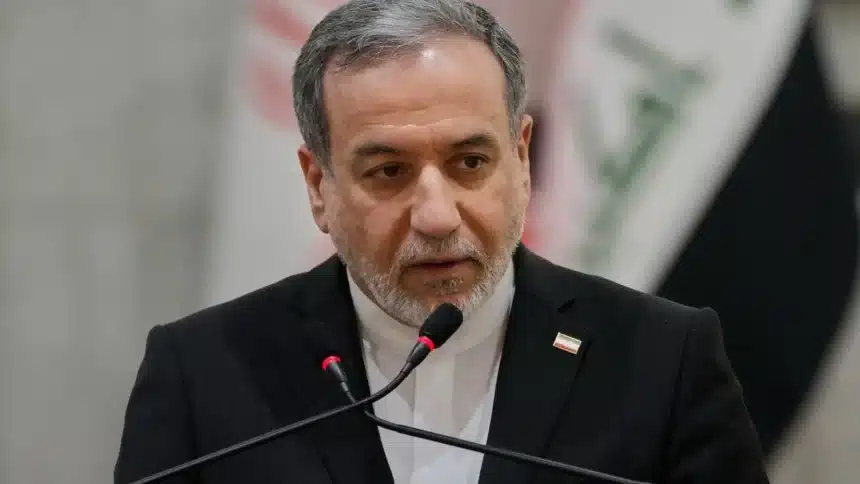
Iranian Foreign Minister Abbas Araghchi responded directly to President Trump’s statements via a post on X, formerly Twitter. Araghchi dismissed Trump’s planned “Economic D-Day” as a tactic to distract from domestic American issues, specifically citing the nation’s “unprecedented debt & surging interest costs.” He asserted that persisting with unsuccessful strategies would only lead to greater defeat and alienate the Iranian people. Furthermore, Araghchi accused the U.S. of engaging in “economic terrorism” that poses a threat to the global economy and international sovereignty.
These remarks followed President Trump’s announcement on his Truth Social platform, where he detailed his intention to implement what he called the “MOST CRUSHING ECONOMIC OPERATION EVER TAKEN” against Iran. Trump stated that this move was a consequence of failing to secure a comprehensive agreement to end the ongoing conflict, which has persisted for several months. He also issued a stern warning to other nations, threatening “TREMENDOUS Economic Consequences” for any country that provides support or a “lifeline” to Iran. Trump emphasized the need for allies to unite with the United States to isolate and counter the perceived threat from Iran, framing the initiative as an “ECONOMIC D-DAY.” However, the president did not specify which countries might face repercussions or outline the exact measures the U.S. would undertake.
International Reactions and Expert Analysis
The potential for heightened economic pressure on Iran has drawn attention from key global players. China, a significant trading partner for Iran, has historically purchased a substantial portion of Iran’s oil exports. Data from analytics firm Kpler indicated that China accounted for over 80 percent of Iran’s shipped oil in 2025. However, any direct economic confrontation between the U.S. and China over this issue could invite retaliatory measures. When questioned about Trump’s economic threats during a press briefing, Chinese Foreign Ministry spokesperson Lin Jian stated that sanctions and pressure tactics are not effective solutions. He urged all parties involved to act responsibly and prioritize political and diplomatic avenues for resolution.
Experts have offered critical perspectives on the potential effectiveness and consequences of such economic escalations. Dan Shapiro, a former U.S. ambassador to Israel and a fellow at the Atlantic Council, suggested that Trump’s approach overlooks Iran’s capacity to withstand economic hardship and its ability to retaliate against the U.S., its partners, and the global economy. Shapiro noted that regardless of whether Trump pursues military or economic confrontation, he often fails to recognize that escalation is a two-way street and that Iran possesses agency. Shapiro posited that if U.S. partners face economic repercussions and domestic gas prices rise, Trump might be compelled to de-escalate and seek a diplomatic resolution. He described the current situation as being “stuck in a cul-de-sac of our own making.”
Background on Iran’s Economic Sanctions and Conflict
Iran has been subjected to severe economic sanctions for many years. The Trump administration implemented a series of stringent measures starting in February, intensifying the economic pressure on the country. These sanctions have been in place amidst a protracted conflict, which has resulted in thousands of casualties. Efforts to negotiate a lasting peace agreement have faced significant obstacles.
A crucial 60-day negotiation period aimed at establishing a peace deal between Iran and the U.S. concluded earlier this week without any indication of an extension. Reports suggest that both sides remain distant from reaching a resolution, with their positions seemingly unchanged since the outset of the talks. President Trump reportedly commented to reporters that negotiations might potentially resume at a later date, according to U.S. media outlets.