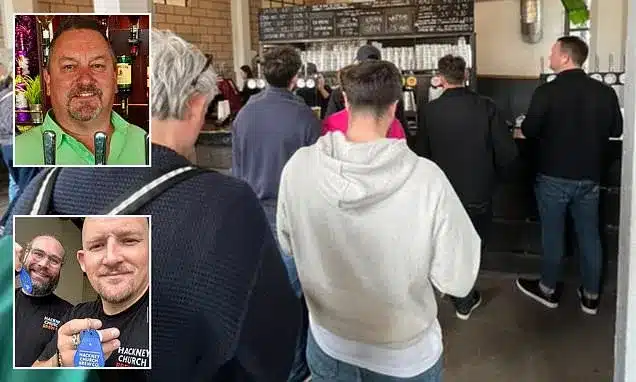
Publicans are urging a return to traditional bar service, calling time on the single-file queuing that has become a common sight in many pubs since the Covid-19 pandemic. Owners argue this post-pandemic practice, while initially a safety measure, is now detracting from the social experience and negatively impacting business. The orderly lines, more akin to a post office than a bustling pub, are increasingly being adopted by drinkers, particularly younger patrons.
The Rise of the Single-File Queue
The shift towards single-file queues emerged during periods of social distancing. However, publicans report that the habit has persisted, leading to several issues. For businesses, it can mean longer serving times. Instead of multiple staff members serving customers spread along the bar, a single line often forces staff to serve patrons one by one. This can create an awkward atmosphere, with queues sometimes extending through the venue and even out onto the street.
Hamish Glenn, owner of Hackney Church Brew Co in East London, has actively tried to discourage the practice. His pub has displayed signs urging customers to use the full length of the bar, but he notes that the habit is proving difficult to break. Glenn has even considered implementing measures to deter queueing, expressing frustration over the loss of spontaneous social interaction at the bar.
“No one’s really striking up conversations at bars anymore and having a chat and going, oh yeah, no, he was next or whatever, which is the way it’s always been. Which is a real shame, but from a financial standpoint, it’s a killer. It’s not doing anyone any favours.”
Glenn believes this trend is a combination of a hangover from Covid-19 restrictions and a generational shift in how people interact in pubs. He observes that many people in queues are engrossed in their phones, slowing down the ordering process when they reach the bar.
Financial and Social Impacts
The financial implications for pubs, already facing rising operational costs, are significant. Glenn highlights that slower service can lead to customers walking out, directly affecting revenue. With increased costs for ingredients and rent, efficient service is crucial for independent businesses.
The phenomenon has even garnered international attention, with The Wall Street Journal publishing an article titled ‘The queue: pub culture’s mortal threat,’ discussing how this practice challenges traditional British pub etiquette. Historically, ordering a drink involved approaching the bar directly, finding a space, and making eye contact with the bartender.
Greg Grundy, owner of The Egremont in Worthing, West Sussex, shares similar concerns. He refuses to tolerate single-file queues at his establishment, likening them to the impersonal service found in banks or post offices. Grundy emphasizes that efficient bar service, with multiple staff serving simultaneously, is key to managing busy periods and maintaining a welcoming atmosphere.
“We don’t condone it at all. Queueing just doesn’t work. It’s as if you’re in a bank or a Post Office. They’re just sucking all the joy out of life.”
Grundy stresses that the traditional method of standing at the bar and acknowledging others is part of the social fabric of British pubs, fostering a sense of fairness and community.
A Divided Nation
Public opinion on the matter appears divided. A YouGov poll of 6,000 Britons revealed that 40% preferred queuing at the pub, while 39% were against it, with 21% undecided. This split reflects differing views on convenience versus tradition and social interaction.
Some younger drinkers, like marketing executive Molly Walsh, 23, find single-file queues fairer, especially when they are short and might be overlooked at a busy bar. She believes it prevents people from ‘butting in’ and ensures a more orderly process.
Conversely, others, such as Alice James, 33, who has extensive experience working in pubs, find the practice to be an unwelcome, modern imposition. She describes it as having a “cold, clinical feel” that deviates from the traditional English pub experience.
Campaigns and Political Commentary
Campaign groups like ‘Pub Queues’ are actively working to end what they deem ‘un-British’ single-file queuing. Rod Truan, the founder, shares humorous observations on social media, advocating for the return of the traditional bar interaction. He argues that standing at the bar is a social activity that encourages conversation and acknowledges fellow patrons.
The debate has even reached political circles. While not directly involved in the pub industry, figures like Andy Burnham have commented on the trend, expressing disapproval of single-file queues as a practice that detracts from traditional social habits. The sentiment aligns with broader discussions about preserving the social character of public spaces.
Conclusion: Reviving the Traditional Pub Experience
As pubs navigate the post-pandemic landscape, the call to abandon single-file queues signifies a desire to reclaim the social heart of the British pub. Publicans are keen to move away from practices that hinder interaction and slow service, aiming to restore the spontaneous conversations and communal atmosphere that have long defined the Great British boozer. The focus is on encouraging a return to the traditional method of ordering at the bar, fostering a more dynamic and sociable environment for both customers and staff.