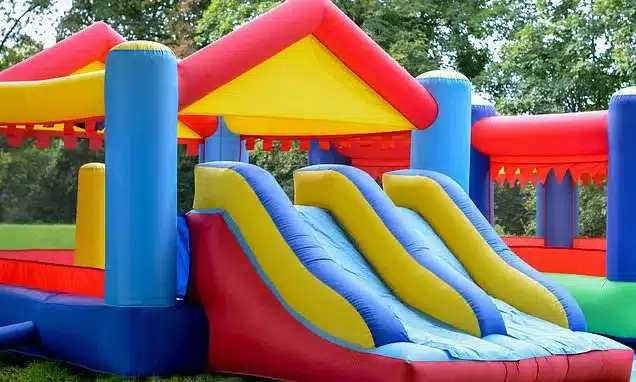
Two children have been hospitalized following an incident where a jumping castle was lifted into the air by a strong gust of wind, causing them to fall out. The event occurred on Saturday morning at a private residence in Mount Duneed, a suburb of Geelong, Victoria, Australia.
Jumping Castle Incident Details
Emergency services were dispatched to a home located on Lower Duneed Road shortly before 11 a.m. on Saturday. At the time of the incident, several children were reportedly playing on the inflatable jumping castle. A sudden and powerful gust of wind swept through the area, catching the large inflatable structure and lifting it into the air.
During the unexpected airborne event, two children were ejected from the jumping castle. Paramedics and other emergency personnel were quickly on the scene to provide immediate assistance. Both children were then transported to University Hospital Geelong for medical evaluation and treatment. Authorities have stated that both children were in a stable condition following the incident.
Safety Concerns Regarding Inflatable Structures
This incident highlights potential safety risks associated with inflatable play structures, particularly in outdoor settings where weather conditions can change rapidly. Jumping castles, while popular for parties and events, can become dangerous if not properly secured, especially during periods of high wind.
Factors Contributing to Wind-Related Incidents
- Wind Speed: Even moderate winds can exert significant force on large, lightweight structures like jumping castles.
- Anchoring: Inadequate anchoring or securing of the inflatable to the ground is a primary cause of such incidents. Proper staking or weighting is crucial.
- Supervision: Constant adult supervision is essential to monitor weather conditions and ensure the safe use of the inflatable.
- Location: Placing inflatables in open areas with less natural windbreak increases their susceptibility to wind.
Preventative Measures for Jumping Castle Safety
To mitigate the risks associated with jumping castles and similar inflatables, several safety precautions are recommended:
- Manufacturer Guidelines: Always adhere to the manufacturer’s instructions regarding setup, anchoring, and maximum wind speed limits.
- Secure Anchoring: Ensure the jumping castle is firmly secured to the ground using all provided stakes and ropes, or additional weights if necessary.
- Weather Monitoring: Continuously monitor weather forecasts and be prepared to deflate the structure if winds become strong. Many inflatables have a recommended maximum wind speed for safe operation, often around 20-25 mph.
- Supervision: Maintain active supervision by adults who are aware of the safety rules and can intervene if necessary.
- Site Selection: Choose a sheltered location away from potential hazards like trees, fences, or power lines.
Community Response and Ongoing Investigation
The incident has prompted concern within the local community regarding the safety of recreational equipment. While the immediate focus was on the well-being of the injured children, authorities may review the circumstances to ensure adherence to safety protocols. Further details regarding the specific cause of the jumping castle becoming airborne are expected as investigations proceed.
The event serves as a stark reminder for parents and event organizers to prioritize safety when using inflatable play equipment. Ensuring proper setup, constant supervision, and awareness of environmental conditions are paramount to preventing similar accidents.
Conclusion
The swift response of emergency services ensured that the two children involved in the Mount Duneed jumping castle incident received prompt medical attention. They are reported to be in a stable condition. This event underscores the importance of stringent safety measures and vigilance when utilizing inflatable play structures, especially in outdoor environments susceptible to unpredictable weather changes.