United States President Donald Trump is set for a concentrated two-day engagement at the United Nations General Assembly in New York, marked by a series of high-profile bilateral meetings and international discussions. The President’s agenda includes engagements with leaders from Ukraine, the United Kingdom, and other key global figures, amidst a complex international landscape where the post-World War II order faces significant challenges and the UN itself navigates questions of relevance and funding.
Key Engagements and Global Context
President Trump’s arrival in New York is scheduled for Monday afternoon, with his address to the UN General Assembly slated for Tuesday. According to US Ambassador to the United Nations Mike Waltz, the President’s speech will focus on his administration’s approach to global challenges and underscore the imperative of preventing Iran from acquiring nuclear weapons. This address comes at a critical juncture, with the ongoing US-Iran conflict, now exceeding six months, posing risks of escalation, particularly with Houthi militant actions in Yemen impacting crucial shipping routes.
The conflict with Iran is expected to be a central topic during a planned meeting with leaders of the Gulf Cooperation Council (GCC). Following this, President Trump will host a reception for the GCC, during which he is anticipated to hold his inaugural in-person meeting with Delcy Rodriguez, Venezuela’s interim president, who has the backing of Washington. This meeting follows the US military’s role in the ousting of former Venezuelan President Nicolas Maduro.
Bilateral Meetings and Diverse Discussions
President Trump’s schedule also includes a meeting with New York Mayor Zohran Mamdani on Monday. Despite differing policy stances and worldviews, the two leaders have maintained a cordial relationship, with their previous encounters described as friendly and productive. This engagement highlights a willingness to foster dialogue across political divides.
A significant bilateral meeting is also on the agenda with Ukrainian President Volodymyr Zelenskiy. The Ukrainian leader confirmed the planned meeting via social media, indicating an agreement to convene in New York. While the exact timing was not specified by President Zelenskiy, sources suggest the meeting is likely to occur on Tuesday. This discussion will undoubtedly address the ongoing conflict and security concerns in Ukraine.
Further bilateral engagements on Tuesday include meetings with British Prime Minister Andy Burnham and Japanese Prime Minister Sanae Takaichi. These will mark the first face-to-face discussions between President Trump and Prime Minister Burnham, offering an opportunity to strengthen bilateral ties and discuss shared interests.
Additionally, reports from Iraqi media indicate that President Trump is scheduled to meet with Iraqi Prime Minister Ali Faleh al-Zaidi during the UN gathering. This meeting underscores the continued diplomatic engagement with Middle Eastern nations amidst regional instability.
The Broader UN Landscape
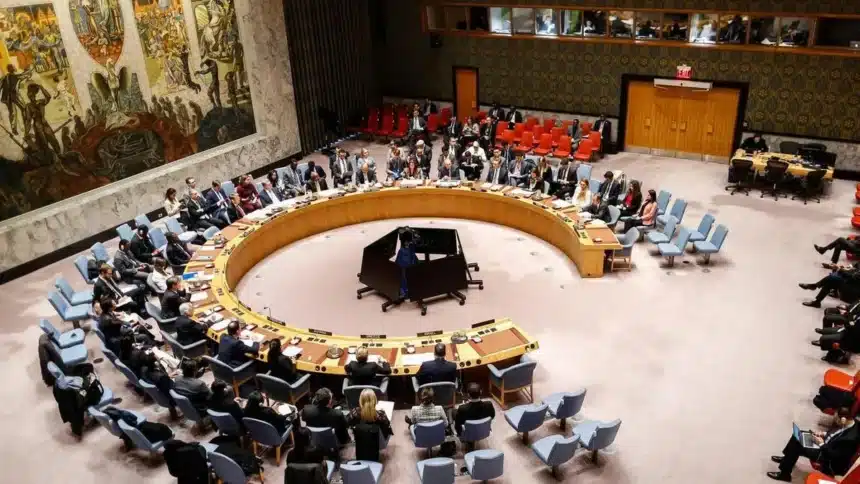
The presence of nearly 130 heads of state in New York underscores the significance of the UN General Assembly as a platform for global dialogue. However, the assembly convenes at a time of considerable strain on the international order established after World War II. President Trump has historically expressed skepticism towards international institutions, including the UN, and his administration has previously reduced US funding for various UN programs. This context adds a layer of complexity to the discussions, as leaders grapple with both immediate geopolitical crises and the long-term efficacy and relevance of multilateral organizations.
The President’s engagement at the UN General Assembly, therefore, represents a critical opportunity to articulate US foreign policy objectives, address pressing global security issues, and engage in direct diplomacy with world leaders. The outcomes of these meetings could have significant implications for ongoing international relations and conflict resolution efforts.
Conclusion
President Trump’s participation in the UN General Assembly is set to be a period of intense diplomatic activity. With a packed schedule of bilateral meetings and a key address to the international community, the President aims to highlight his administration’s foreign policy achievements and priorities. The discussions are expected to cover a range of critical issues, from regional conflicts and nuclear proliferation to the future of international cooperation, all within the challenging context of a shifting global order.