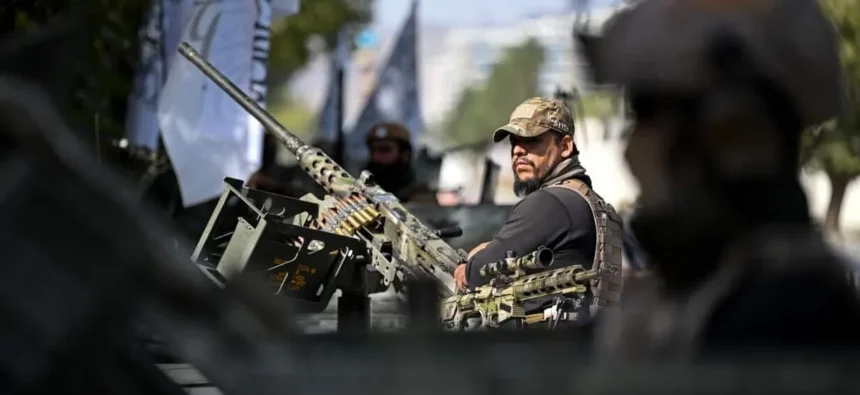
Five years after the Taliban regained control of Kabul, the group is commemorating their takeover with celebrations, while international bodies and governments, including Australia, highlight a worsening humanitarian crisis and severe restrictions on women’s rights. White flags of the Islamic Emirate and abandoned US military vehicles, remnants of the chaotic 2021 withdrawal, marked the anniversary in the capital. Taliban authorities organized sporting events, from which women are excluded, to mark the occasion, asserting that their rule has ushered in national security and economic stability. Zabihullah Mujahid, the chief spokesman for the Taliban government, stated that authorities are focused on laying the “foundations of the economy” and requested patience from the international community.
Economic Challenges and Humanitarian Concerns
Despite official claims of economic progress, World Bank data indicates a decline in per capita Gross Domestic Product (GDP). This economic downturn has been compounded by the return of over six million Afghans from neighboring Iran and Pakistan in the past three years, placing further strain on resources. The ongoing humanitarian situation remains a significant concern for international organizations.
Australia’s Stance and Commitment
In a joint statement, Australian Prime Minister Anthony Albanese, Deputy Prime Minister Richard Marles, Foreign Minister Penny Wong, and Immigration Minister Tony Burke acknowledged the five-year milestone. They reaffirmed Australia’s commitment to holding the Taliban accountable for their actions. The statement expressed solidarity with the people of Afghanistan, who are enduring what the leaders described as “violent repression at the hands of the Taliban,” and with the Afghan diaspora globally.
The Australian leaders also paid tribute to the service of over 39,000 Australian Defence Force and civilian personnel who served in Afghanistan during the two-decade mission. They remembered the 41 soldiers who lost their lives during operations and acknowledged the sacrifices of those who faced challenges after returning home. Australia has provided approximately $310 million in direct aid through non-governmental channels since September 2021. Furthermore, the nation has implemented an autonomous sanctions framework targeting senior Taliban figures and supports international efforts under the Convention on the Elimination of All Forms of Discrimination against Women (CEDAW).
Ministers emphasized that “Australia has not stepped back from that responsibility,” pointing to enhanced migration pathways for displaced Afghans and continued support for locally engaged Afghan employees who are now residing in Australia. This commitment underscores Australia’s ongoing engagement with the Afghan crisis.
Crackdown on Aid Workers and Rights Groups
The anniversary coincided with growing concerns over the detention of aid workers and human rights advocates. Human Rights Watch (HRW) reported the forced disappearance of six male employees from an Afghan legal rights non-governmental organization (NGO) in Kabul. Additionally, Taliban intelligence officers apprehended two staff members of the UN Assistance Mission in Afghanistan (UNAMA) in Herat. Farhan Haq, a spokesperson for UNAMA, confirmed the detentions, noting that the UN had not been informed of any charges and had not been granted access to the detained individuals. Zabihullah Mujahid indicated to news outlets that he was “trying to gather details” regarding these arrests.
Rights agencies have warned that this escalating crackdown could jeopardize the delivery of essential aid to a country heavily reliant on dwindling foreign assistance. The detentions highlight the precarious environment for humanitarian and human rights work within Afghanistan.
Systematic Repression of Women and Girls
Data released by UN Women paints a stark picture of the systematic repression faced by Afghan women and girls. According to the report, half of Afghan women now venture outside their homes only once or twice a month, citing security concerns and Taliban restrictions, which include mandatory male chaperones. UNESCO estimates that approximately 2.4 million girls have been denied secondary education since 2021, making Afghanistan the sole country globally to prohibit female education beyond the age of 12.
In response to these findings, Saif-ul-Islam Khyber, a spokesman for the Afghan Ministry for the Propagation of Virtue and Prevention of Vice, disputed claims of insecurity. He asserted that citizens are experiencing security “for the first time in approximately 50 years” and that women’s rights are upheld under Islamic law. However, UN Women’s report contradicts this, detailing over 100 decrees issued over the past five years that have curtailed women’s rights and significantly reduced female employment to just 7 percent, compared to 84 percent for men. The psychological toll is also substantial, with seven out of ten women surveyed reporting their mental health as “bad” or “very bad.”
International Recognition and Future Outlook
While Taliban officials have engaged in diplomatic relations with several nations, Russia remains the only country to have formally recognized the current government. The ongoing challenges, including economic instability, humanitarian needs, and severe human rights restrictions, particularly for women, continue to be a focus of international concern and diplomatic efforts. The situation underscores the complex and deeply challenging path ahead for Afghanistan.