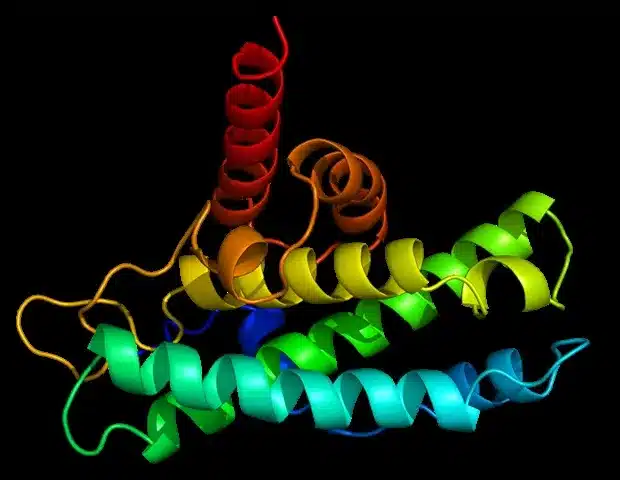
A novel artificial intelligence method, dubbed PRIME, is revolutionizing the identification of metal-binding sites on proteins. Developed by researchers at Hokkaido University, this deep-learning approach significantly accelerates and enhances the accuracy of predicting where metal ions attach to proteins, a crucial step for understanding protein function. Metals are essential for life, involved in countless biological processes, yet pinpointing their exact binding locations within proteins has historically been a complex and time-consuming challenge.
Understanding the Importance of Metal-Binding Sites
Metals play indispensable roles in biological systems. For instance, zinc acts as a cofactor for numerous enzymes, facilitating chemical reactions. Iron is vital for oxygen transport in hemoglobin, while calcium ions are key signaling molecules within cells. Potassium ions are critical for maintaining cellular electrical potentials, essential for nerve and muscle function, including the heart. Despite the widespread reliance on metals, precisely locating the specific sites on proteins where these ions bind and perform their functions has remained a significant hurdle for scientists.
Introducing PRIME: A Deep-Learning Solution
The new method, PRIME (Probe-based Identification of Metal-binding sites), leverages advanced deep-learning techniques to tackle this challenge. Published in Nature Communications, PRIME operates in a sophisticated two-stage process. Initially, a language model analyzes the protein’s amino acid sequence, scoring each segment based on its likelihood of interacting with a metal. This stage effectively identifies potential candidate regions.
Following the sequence analysis, PRIME deploys virtual ‘probes’ to these promising locations. A second model then scrutinizes the three-dimensional environment surrounding these probes. This evaluation determines the probability of metal binding and predicts the precise location of the binding site. This dual approach allows PRIME to overcome the difficulty of finding small binding sites within large protein structures, akin to finding a needle in a haystack.
Evolutionary Clues and Data Integration
Professor Akira Onoda, the lead author of the study, highlighted that evolutionary processes have conserved critical protein regions, including metal-binding sites, over millions of years. “That information still survives in today’s protein sequences,” Onoda explained. “And so, a great deal of information about where metals bind is written in our DNA.” The research team integrated this evolutionary information with extensive datasets of known protein structures to train PRIME, enhancing its predictive capabilities.
PRIME’s Performance and Speed Advantage
When tested across 14 different metal ions, PRIME demonstrated superior performance compared to existing methods. It not only accurately predicted binding sites for well-characterized transition metals like zinc, copper, and iron but also showed remarkable proficiency in identifying binding sites for metals that interact more loosely, such as sodium and calcium. These latter cases have traditionally posed significant difficulties for prediction tools.
A key advantage of PRIME is its speed. The method can predict metal-binding sites in just 11 seconds, making it approximately ten times faster than current approaches. This rapid processing capability opens up new avenues for large-scale biological analysis.
Uncovering a Hidden World of Metalloproteins
The researchers were surprised by the sheer abundance of metalloproteins they uncovered using PRIME. Upon screening 1,000 randomly selected protein families, approximately 14% were confidently predicted to bind metal ions. Strikingly, nearly 8% of these identified metalloproteins were not previously annotated with binding sites in existing databases, suggesting a vast, previously underestimated landscape of metal-protein interactions.
Implications for Health, Disease, and Industry
The ability of PRIME to analyze entire genomes or large protein databases rapidly has profound implications. It enables the mapping of metal chemistry on an unprecedented scale, which was previously impractical. This capability is particularly relevant for understanding health and disease, as imbalances in metal ions can lead to serious health issues. For example, zinc deficiency can impair immune function, and iron deficiency causes anemia.
The findings could pave the way for the development of new therapeutic drugs that specifically target metal-dependent proteins involved in disease pathways. Furthermore, the enhanced understanding of protein-metal interactions might accelerate the design of novel enzymes for industrial applications, such as in biocatalysis or environmental remediation.
Future Directions
Looking ahead, the Hokkaido University team plans to extend PRIME’s capabilities to include rarer and less-studied metals. Their ultimate goal is to conduct comprehensive, large-scale analyses of the metalloproteome—the complete set of proteins that bind metals—to discover new metalloproteins and elucidate their functions. This ongoing research promises to deepen our understanding of the fundamental roles metals play in all living organisms.