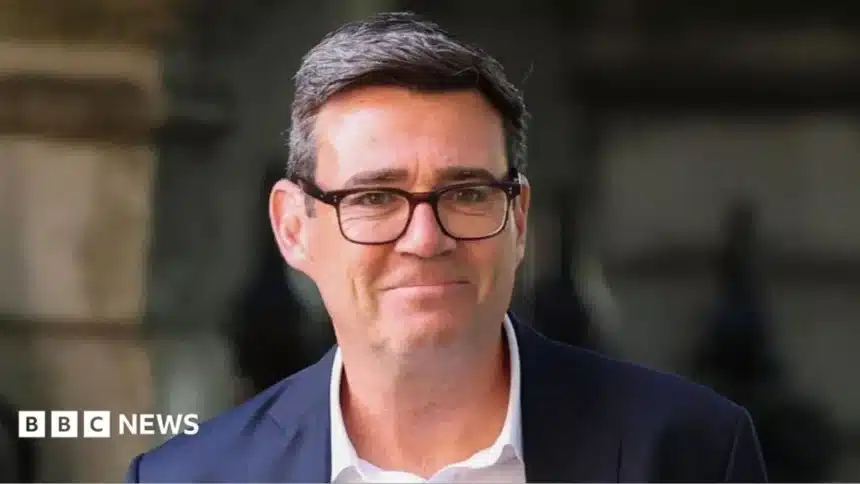
Andy Burnham is set to become the next leader of the Labour Party, with the nomination process opening and no other candidates having formally entered the race. Labour Members of Parliament (MPs) began endorsing contenders to succeed Sir Keir Starmer from 09:00 BST on Thursday. An initial tally of nominations is expected from the party around 19:00 BST the same day.
Barring any unexpected late entries, the former Mayor of Greater Manchester is on track to be declared leader at a party event scheduled for the end of the following week. This would position him to potentially enter Downing Street on July 20th, a little over two weeks after his return to Parliament. Burnham recently secured a seat in the House of Commons via a by-election in Makerfield, marking his return after a decade away from national politics.
The path for Burnham to run unopposed was cleared when former defence minister Alistair Carns, who had previously indicated he might consider a leadership bid, announced on Wednesday evening that he would not be standing. Several potential rivals, including Wes Streeting, have already publicly declared their support for Burnham’s leadership campaign.
The Nomination Process Explained
Under Labour’s party rules, any candidate seeking the leadership must secure formal nominations from at least 81 Labour MPs. Additionally, they need to gain support from either 32 of the party’s 634 local constituency Labour parties (CLPs) or three affiliated socialist societies and trade unions, with a minimum of two of these affiliations needing to be trade unions.
The deadline for candidates to gather the required parliamentary nominations is Wednesday of the following week. However, the initial running total expected later on Thursday evening will offer a significant indication of the level of support Burnham has garnered among the parliamentary Labour Party for his bid.
Burnham’s effective confirmation as leader could occur even earlier if he secures 323 nominations from MPs. This number would make it mathematically impossible for any rival to reach the 81-MP threshold necessary to contest the leadership, thereby guaranteeing his victory without a vote from the wider Labour membership or affiliated trade union supporters.
Implications of an Unopposed Leadership Bid
If Burnham secures the leadership without opposition, he may be the sole participant in the official parliamentary hustings event planned for Monday of the following week. During this event, he would likely field questions from fellow Labour MPs regarding his policy agenda and vision for the country.
Burnham has already outlined some key aspects of his proposed governance blueprint. In a recent speech delivered in Manchester, he detailed plans to establish a new Prime Minister’s Office (No. 10) unit based in the city. This unit, he suggested, would be tasked with devolving greater powers to local government in critical areas such as housing and transport, aiming to foster more localized decision-making and responsiveness.
Policy Stances and National Security
In an article published on Thursday, Burnham also articulated his desire to retain Jonathan Powell, a former aide to Prime Minister Tony Blair, as his National Security Adviser. This indicates a potential continuity in foreign policy and national security advisory roles.
Furthermore, Burnham expressed his support for a “sustained increase” in defence investment. While he stopped short of committing to a specific percentage or financial target, he emphasized the importance of bolstering the UK’s defense capabilities. Alongside this, he advocated for greater transparency with the public regarding any cost overruns or delays encountered in military procurement projects, signaling a commitment to openness in government spending and project management.
Burnham’s Political Trajectory
Burnham’s potential ascent to the Labour leadership follows a significant period of rebuilding his political profile outside of Westminster. After serving in various ministerial roles during Gordon Brown’s premiership, including Secretary of State for Health and Secretary of State for the Home Department, he left Parliament in 2015 to become the first Mayor of Greater Manchester. In this role, he gained considerable experience in regional governance, focusing on issues like transport, policing, and economic development.
His return to Parliament via the Makerfield by-election signifies a strategic move back into national politics, positioning him perfectly to contend for the party’s top job. His tenure as Mayor has been credited by supporters with delivering tangible improvements in Greater Manchester, enhancing his reputation as a capable leader with a focus on practical solutions.
Key Policy Areas and Future Direction
Burnham’s stated policy priorities suggest a focus on strengthening public services, empowering local communities, and maintaining a robust national defense. The proposed No. 10 unit in Manchester underscores his commitment to devolution and addressing regional inequalities. His emphasis on transparency in defense spending aligns with broader calls for accountability in government.
The Labour leadership contest, even if uncontested by other candidates, provides a platform for Burnham to articulate his vision for the party and the nation. His policy proposals, particularly those concerning the economy, public services, and the UK’s place in the world, will be closely scrutinized as he prepares to potentially lead the Labour Party into the next general election.
The coming days will be crucial as the nomination figures are finalized and the party formally confirms its next leader. Should Burnham indeed secure the leadership unopposed, his immediate focus will likely shift to uniting the party and preparing its platform for future electoral challenges.