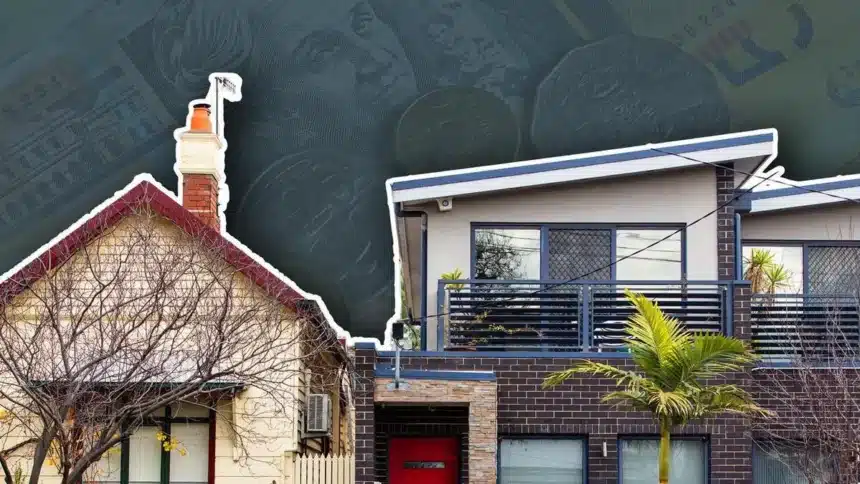
Achieving genuine housing affordability in Australia may require a prolonged period of falling property prices, potentially lasting for decades, according to housing market experts. Recent data indicates a nationwide dip in home values, yet this decline has done little to offset the significant affordability gap that has widened over years of prices outpacing wage growth.
The Scale of the Affordability Challenge
Home prices across Australia saw a 0.4 per cent decrease in June, following a 0.3 per cent fall in May, according to data compiled by Cotality. However, housing expert Peter Tulip, Chief Economist at the Centre for Independent Studies, stated that these recent downturns have barely made a dent in the affordability crisis. “We would need decades more of this,” Dr. Tulip commented, suggesting that a generational or even two-generation period of declining prices might be necessary before the housing crisis can be considered over.
Several factors have contributed to a cooling buyer sentiment. These include multiple interest rate hikes by the Reserve Bank, increasing constraints on affordability, and changes to government tax incentives for property investors. Consequently, property clearance rates have consistently remained below 50 per cent in recent weeks.
Understanding Price Cycles
Nicola Powell, Chief Economist at Domain, noted that while prices are falling, the overall scale of the downturn is still modest. To return to the previous low point recorded in March 2023, capital city prices would need to drop by approximately 22.8 per cent. This level of decline is significantly greater than anything observed in housing cycles over the past three decades.
Dr. Powell analyzed housing price cycles since the mid-1990s, observing a pattern where periods of price growth tend to be longer and more substantial than the subsequent downturns. She identified two key dynamics that typically provide a floor for prices during a market slump:
- Homeowner Behavior: Existing homeowners often become reluctant to sell when prices are falling, reducing the overall supply of properties on the market.
- Construction Sector Constraints: The capacity of the construction industry to rapidly build new homes is limited, which helps to constrain supply even when demand fluctuates.
The Fundamental Issue: Undersupply
Dr. Tulip reiterated that the core reason for housing unaffordability remains a fundamental undersupply of homes. Despite this, he views falling prices as a positive development. “And I really don’t understand why the government doesn’t welcome it,” he remarked. “How can you say housing is too expensive and not want prices to be lower?”
The current housing market dynamics have drawn political commentary. Opposition Leader Angus Taylor has questioned Prime Minister Anthony Albanese regarding the ongoing price falls, seeking assurances that prices will not decline further. The coalition has raised concerns that the downturn could lead to homeowners falling into negative equity, where the value of their property is less than the amount they owe on their mortgage.
Risks for First Home Buyers
Tim Lawless, Research Director at Cotality, acknowledged the risk for first-time buyers who utilized government schemes, such as the five per cent deposit guarantee. If prices continue to fall, these individuals could potentially face negative equity. However, Lawless suggested this would likely not become a widespread problem unless homeowners are forced to sell. Given the current robust labor market and Australia’s strict lending regulations, forced sales are considered relatively uncommon.
Dr. Tulip expressed confidence that there is no immediate prospect of significant mortgage defaults. He pointed to public opinion, noting that “Opinion polls show large majorities of voters, including large majorities of home owners, want lower prices.”
Calls for Increased Social and Affordable Housing
Independent Senator David Pocock emphasized that addressing the housing crisis is an ongoing task and urged the government to increase investment in social and affordable housing initiatives. Senator Pocock is reportedly preparing to introduce legislation that would mandate developers to allocate 30 per cent of homes for affordable housing on land sold by the federal government.
The ongoing debate highlights the complex interplay of market forces, government policy, and individual circumstances shaping Australia’s housing landscape. While a modest price correction is underway, experts suggest that a much more significant and prolonged downturn may be necessary to restore housing affordability for a generation of Australians.