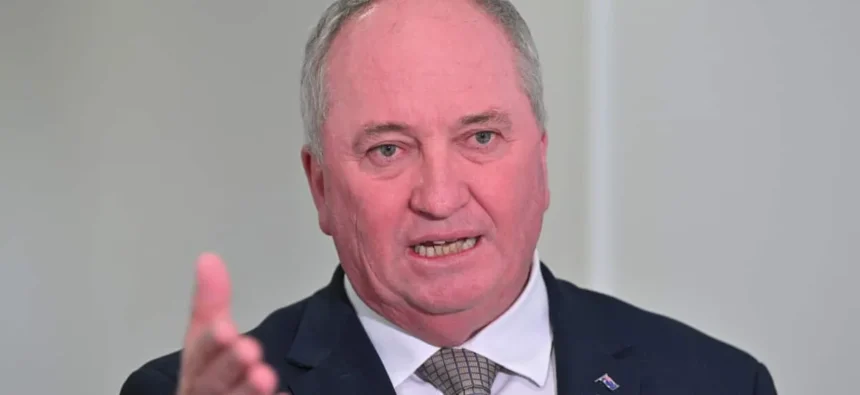
Former Australian Deputy Prime Minister Barnaby Joyce has explicitly distanced his political party, One Nation, from Germany’s far-right Alternative for Germany (AfD) party, particularly in the wake of the AfD’s significant gains in a recent state election. The AfD secured first place in the Saxony-Anhalt state election, capturing 44 percent of the vote, a result that presents a considerable challenge to Chancellor Friedrich Merz’s conservative bloc, though it fell short of an outright majority.
AfD’s Electoral Success and Political Stance
The AfD, which has been officially classified as ‘far-right extremist’ by Germany’s domestic intelligence agencies, faces substantial hurdles in forming a government due to widespread refusal among other political parties to cooperate. The party’s agenda reportedly includes stringent immigration controls, a re-establishment of ties with Russia, a reduction in aid to Ukraine, and a potential withdrawal from the Eurozone. This electoral victory places a far-right party in a position of potential power at the state level in Germany for the first time since the end of World War II, mirroring a broader trend of rising right-wing populism across Europe in recent years.
Joyce’s Rejection of AfD Comparison
When questioned about potential parallels between One Nation’s platform and the AfD’s recent success, Joyce was unequivocal. “I’m not — We are not the AfD. That is a different party,” he stated. He elaborated on his distinct views regarding the AfD compared to other prominent conservative and right-wing figures.
Distinguishing Between Right-Wing Leaders
Joyce drew a contrast between the AfD and figures such as Italy’s Giorgia Meloni, whom he described as “a very direct and competent lady doing a good job.” He also commented on other leaders and movements associated with right-wing populism:
- Nigel Farage (UK Reform leader): Joyce indicated he does not perceive Farage as “dangerous at all.”
- MAGA Movement (Donald Trump-linked): He characterized the MAGA movement as “just conservatives, and they’re deciding now whether Trump’s in them or not.”
- Marine Le Pen (French presidential hopeful): Joyce acknowledged Le Pen is “slightly to the right but, you know, tolerable.”
However, when the AfD was mentioned, Joyce’s tone shifted significantly. “Oooh, that starts to ring alarm bells for me,” he remarked. He explained this strong reaction by referencing his family’s history, stating, “I have a family who fought against the fascists. We are very aware of what fascism does; it’s a disgusting, horrendous thing, and it’s got nothing to do with One Nation or anything I would be involved with.”
Public Reaction and Protests in Germany
Following the AfD’s electoral performance, thousands of individuals across Germany participated in protests against the party. Demonstrators carried banners with messages such as “Fascism is not an alternative” and “Stop AfD Nazis! End racism and social cuts.” Chants of “All together against fascism!” echoed through the crowds, highlighting significant public opposition to the rise of the far-right.
Context of European Populism
The AfD’s surge in Saxony-Anhalt is part of a larger pattern observed across Europe, where various right-wing populist and nationalist parties have seen increased support in recent years. These parties often campaign on platforms emphasizing stricter border controls, national sovereignty, and cultural identity, resonating with segments of the electorate concerned about immigration, economic changes, and globalization. The AfD’s success in a state election marks a critical juncture, potentially signaling a shift in the German political landscape and raising questions about the future direction of European politics.
Understanding Political Labels
The classification of political parties, particularly those on the right of the political spectrum, can be complex and contentious. While the AfD has been labeled ‘far-right extremist’ by German intelligence, the party itself often rejects such categorizations, positioning itself as a patriotic or conservative alternative. Joyce’s comments underscore the varying perceptions and distinctions that political figures draw between different right-wing movements, even while acknowledging a broader trend of populist sentiment.
Conclusion
Barnaby Joyce’s firm rejection of any association with the German AfD party, coupled with his historical reference to fighting fascism, serves to delineate his political position clearly. His remarks highlight the sensitive nature of far-right politics in Germany and Europe, emphasizing the historical context and the strong opposition such movements can face. The AfD’s electoral success, while significant, remains a point of contention and concern for many, both within Germany and internationally, with political actors like Joyce actively seeking to differentiate themselves from parties perceived as extreme.