Canada has announced it will implement retaliatory tariffs on a range of United States products following the imposition of significant tariffs by the U.S. on Canadian goods. The decision comes after last-ditch trade negotiations between the two North American neighbors failed to yield an agreement, escalating recent trade tensions.
Canada’s Retaliatory Measures
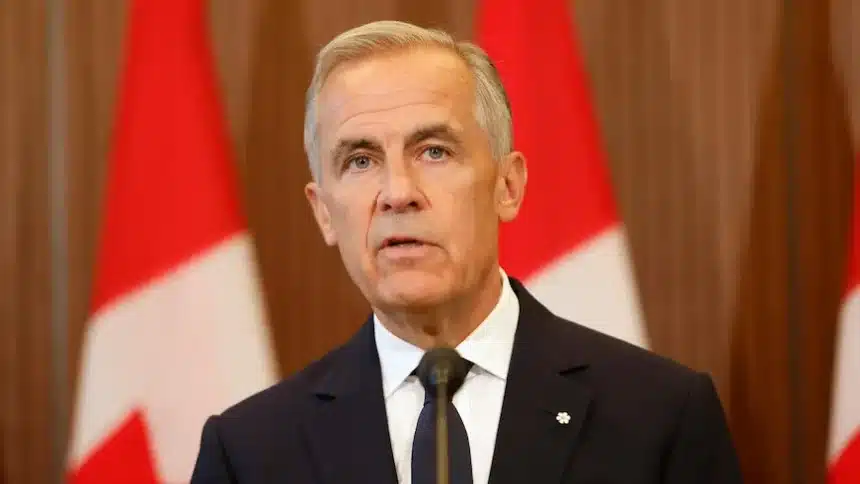
Canadian Prime Minister Mark Carney stated on Saturday that the new tariffs would take effect on September 8th. “In the coming days, we’ll release details of these new tariff measures, measures which will come into force the Tuesday after Labor Day,” Mr. Carney informed reporters at a press conference in Ottawa. This move represents a direct response to the United States’ decision to levy a 50 percent tariff on approximately $US20 billion ($AU1.4 billion) worth of Canadian products.
The Canadian government’s retaliatory tariffs are designed to mirror the U.S. action on a dollar-for-dollar basis. The targeted sectors include key Canadian exports such as steel, dairy, appliances, agricultural equipment, pulp and paper, and electronics. These measures are expected to impact a portion of the goods Canada exports to the United States annually.
Breakdown of Negotiations
The failure to reach a trade deal marks a significant strain on the relationship between the two historic allies. U.S. Trade Representative Jamieson Greer issued a statement indicating that Canada had declined to finalize a trade deal under terms previously agreed upon. “Despite the U.S. offer to Canada to receive the best treatment of any major exporter to our market, new demands and walk-backs of other commitments by Canada have up-ended the careful balance reached in the past days,” Mr. Greer stated.
Prime Minister Carney, however, placed the blame on the Republican administration for the negotiation’s collapse. He characterized the last-minute changes to the U.S. proposed terms as “unfair, uneconomic, and called into question the reliability of any deal.” Mr. Carney emphasized that Canada’s objective throughout the negotiations was to secure the best possible agreement, not simply any deal under pressure. “Canada had never a deal at any price or on any deadline,” he asserted.
According to Mr. Carney, Canada had been prepared to drop remaining retaliatory tariffs on steel, aluminum, and autos, and to encourage provinces to reinstate U.S. alcohol sales, provided the United States made substantial reductions to its own tariffs. However, he indicated that Washington’s final demands were excessive, stating, “They asked too much and offered too little.”
Impact on North American Trade
The escalating trade dispute raises questions about the future of the North American Free Trade Agreement (NAFTA), a critical pact for the economies of the United States, Canada, and Mexico. The breakdown in talks also comes after a period of apparent progress, with officials from both countries expressing optimism just days prior to the collapse.
The U.S. tariffs were initially set to take effect early Wednesday, but President Donald Trump extended the deadline by three days to allow for continued discussions. Despite this extension, a resolution could not be reached.
Historical Context and Future Outlook
Trade disagreements between the U.S. and Canada are not new, with historical disputes often centering on issues like Canadian softwood lumber imports and U.S. access to Canada’s dairy market. Despite these recurring frictions, the two nations have historically maintained a strong alliance and a robust trading partnership, underscored by deep economic ties and shared security interests.
The current approach taken by the U.S. administration represents a notable departure from the traditionally cooperative relationship. President Trump has previously imposed tariffs on Canadian goods as part of an effort to boost domestic manufacturing and has made public remarks that have been perceived as critical of Canada.
In response to the trade disruptions, Prime Minister Carney indicated that his government would announce measures to support Canadian workers and businesses affected by the new tariffs. While no further talks are currently scheduled, the situation highlights the complex and evolving dynamics of international trade relations.
The U.S. Trade Representative’s office described its offer as “forward-looking” and encompassing “a historic economic and national security partnership.” However, the divergence in stated positions suggests a significant challenge in bridging the gap between the two countries’ trade objectives.